The Fliegl Büffel, which combines elements of silage pick-up wagons with multi-trailer transport systems, is a potential game-changer. Whether it succeeds is difficult to predict, but the design has merits which cannot be ignored by the industry.
On first sight, the prototype Fliegl Büffel looks awkward and unwieldy because it’s not what we are used to. It appears to be an unusual mix of silage pickup wagon parts with a mechanical crop elevator; a concept that has not been seen on a commercial harvester for generations. But delve a little deeper and there is a lot more to this machine than meets the eye. It is indeed a concept that has been around for some time, ie slow speed cutting and mechanical grass delivery.
Its origins are in the very first silage-making machines, and since the early 1980s, there has been independent research which has shown the potential for developing a modern power-efficient harvesting system based on these principles.
The machine concept
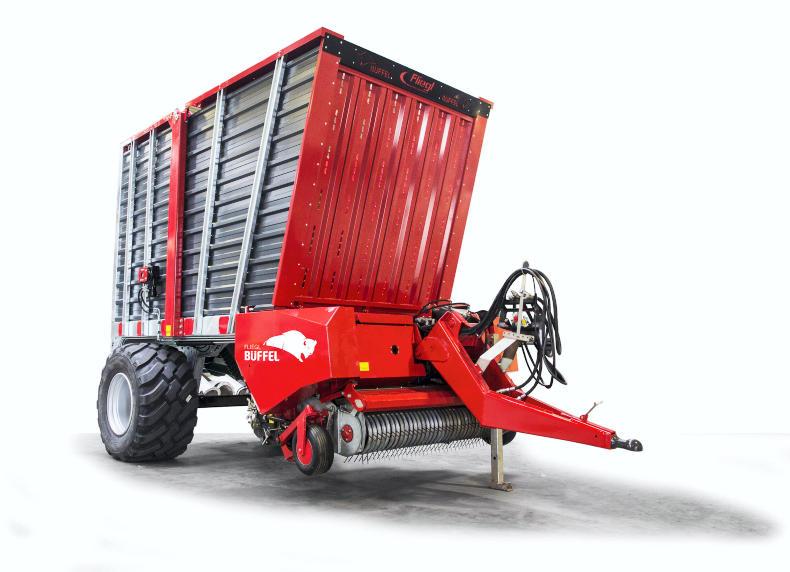
The Fliegl Büffel consists of a grass pick-up and chopping unit from a silage wagon coupled with a mechanical grass elevator. The pickup and knife unit on the prototype is Lely-sourced.
The grass is then delivered into the front part of the holding hopper, which is like the first metre length of a pickup wagon.
What is unique about this concept is that it allows a silage wagon harvesting system to work continuously in the field and eliminate the huge disadvantage of the wagon system
Rotating feeding beaters then deliver the grass from the holding hopper rearwards to a cross-conveyor and a load-over elevator that mechanically delivers the grass to a silage trailer.
The hopper allows the machine to temporarily hold the harvested grass while turning at field headlands or while changing trailers, allowing a true continuous harvesting system. A sensor on the elevator automatically detects whether a trailer is in position and controls the elevator grass flow accordingly, allowing the harvester operator to focus on harvesting.
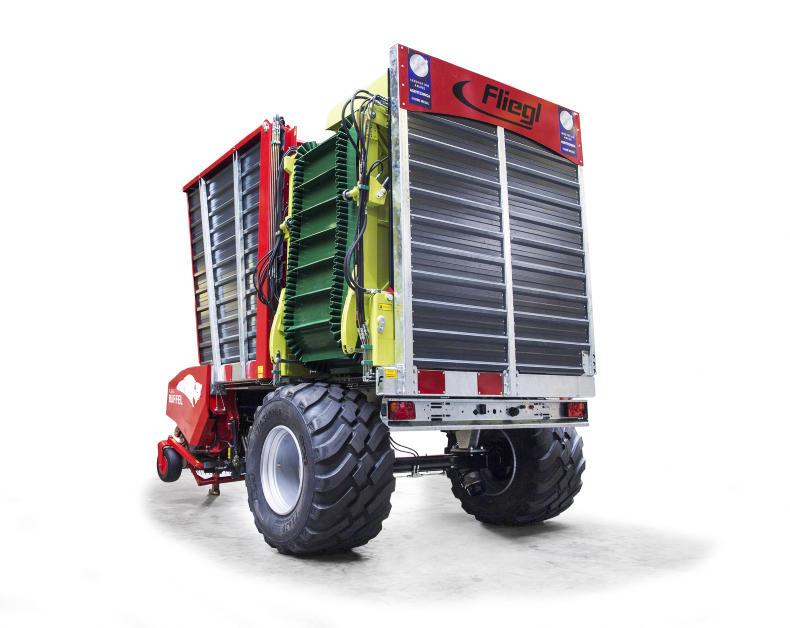
What is unique about this concept is that it allows a silage wagon harvesting system to work continuously in the field and eliminate the huge disadvantage of the wagon system, which is the proportion of time that the whole harvesting unit spends transporting, rather than harvesting, grass. And of course as the distance between the field and storage clamp increases, the greater the loss of efficiency is. With precision chop silage, the transport is separated from harvesting allowing continuous operation in the field.
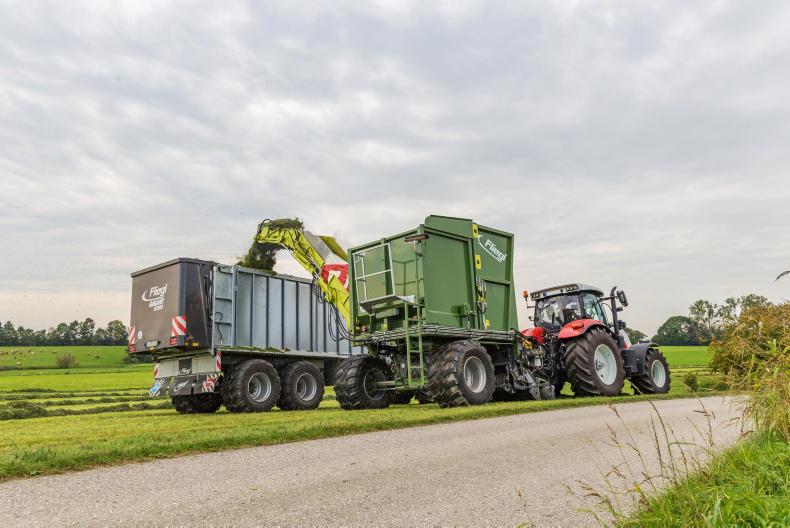
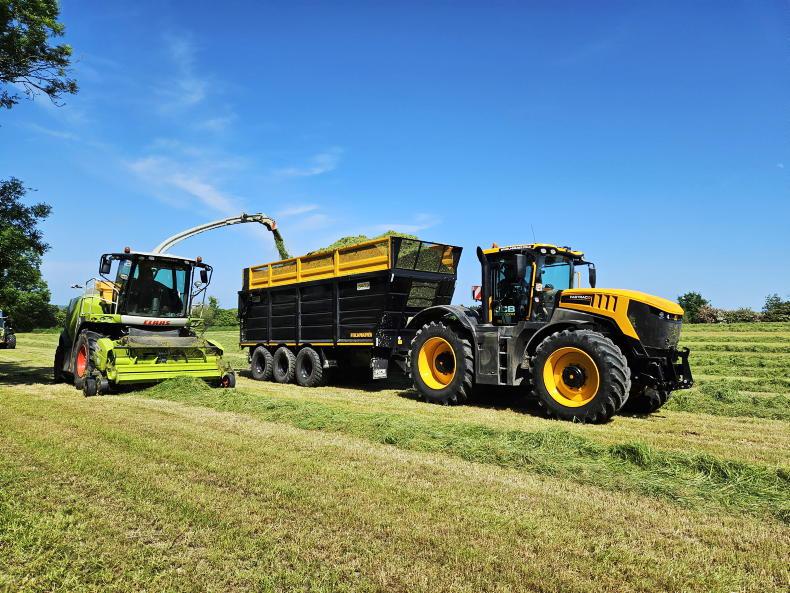
Where the transport distance gets large, you can simply add tractors and trailers to keep the harvester working in the field.
But today’s conventional forage harvesting systems, particularly in their self-propelled guise, are at the peak of their development and capable of tremendous work-rates, and are relatively reliable, if costly, machines to operate. How can an alternative system compete? The answer is simple; lower power requirement.
The power game
Conventional forage harvesters consume massive amounts of power for the work that they do.
Chopping grass with a high-speed chopper and delivering that grass by throwing it and blowing it up a chute wastes an awful lot of energy. However, it is a simple and effective means of cutting and delivering grass. But energy is expensive.
While the effect on fuel use is obvious, systems that demand more power also have a higher initial cost (bigger engines, etc) and potentially higher depreciation and repair costs.
Cutting the grass at a slower speed with a slicing action and, in particular, delivering the silage to the trailer mechanically, can effectively halve the power requirement. But this has been known for some time – why has it not been put forward until now?
The answer is largely because the simpler, but power-hungry route, was the one that was most easily developed.
Low-powered forage harvesting research
Following the oil crisis of the 1970s, agricultural engineering research in the 1980s focused on energy efficiency.
Andy Knight of the UK’s National Institute of Agricultural Engineering, Silsoe, developed a prototype forage harvester that combined a slow-speed crop slicer with a mechanical elevator to deliver grass to the trailer. In trials, this system finely cut and delivered grass to a trailer with a power saving of up to 62%. However, the crop slicing mechanism developed was complex and this particular system was not taken up commercially.
Since the 1980s, the chopping mechanism of forage wagons has improved both in strength, throughput and chop length. It has been speculated for some time that the combination of a wagon cutting /loading system and separate trailer transport could be a game-changer, but until now no manufacturer has shown a fully developed prototype.
The Fliegl Büffel combines wagon-type cutting, mechanical grass delivery and separate harvesting and transport elements. There is no doubt that the Büffel is at an early stage of development with commercial models still perhaps more than a season away. While power-efficiency figures have not been published, the cutting and delivery technique has the potential to halve the power required to harvest, cut and deliver the grass into a trailer. This huge efficiency advantage cannot be ignored as it could reduce costs. However, there are a lot of challenges to be overcome:
The existing systems are so well-developed in terms of output and machine optimisation that potential purchasers will require convincing evidence of the merits of an alternative system.The new approach will require thorough testing and development in all grass crops to allow it compete with existing systems.Operators will need to take particular care with the elevator system in the field to avoid damage.The density of grass in the trailer will require either higher cubic volume trailers to allow the same load to be carried, or compactor-type trailers to optimise the carrying capacity with loosely loaded grass.As with all wagon cut silage, extra care is needed to pack and seal the silo to ensure satisfactory preservation.Finally, Fliegl has made a brave move to develop this product. Because of its efficiency potential, it deserves to be fully developed. In practice, a 250hp tractor-pulled unit could achieve the output of a 500hp self-propelled harvester or a self-propelled Fliegl-type machine could double the output of a conventional harvester of the same power. We may be going back to the future.
Silage-making history
The Fliegl Büffel shares its power-efficient grass transport system with the original mechanised silage harvester; the green crop loader.
The green crop loader was a simple crop pickup and elevator mechanism that loaded grass from the field directly into a trailer. While in Ireland the tractor-mounted buckrake was the primary grass collection mechanism in the early days of silage, the green crop loader was the first fully mechanised, trailer-based system and was power-efficient.
At this point, silage-harvesting machinery development took two directions.
Europe
On mainland Europe, the pickup wagon, which could be seen as a direct development of the green crop loader, but combined loading and transport into a single machine, became the most popular system. 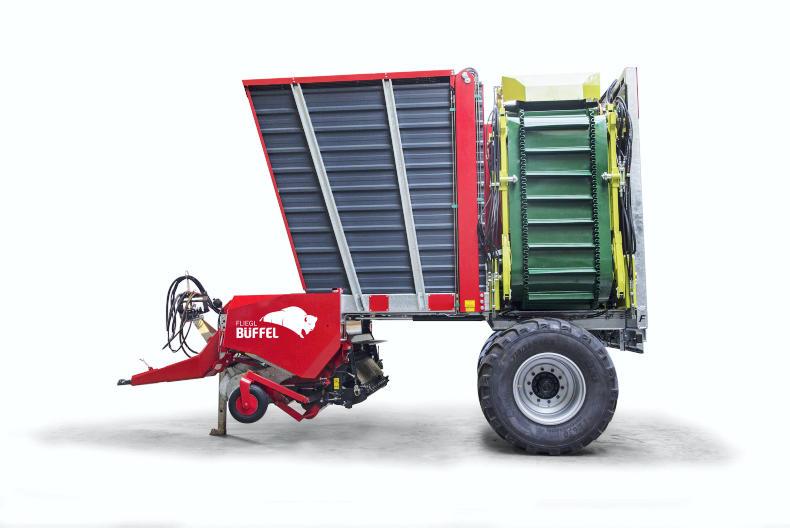
In Ireland and the UK, direct-cut flail harvested silage, where a single-cutting rotor both cut and threw/blew the grass into a trailer became the norm and this quickly evolved into other chop and throw systems such as the double-chop and the precision-chop harvester, which dominates today.
The precision chop harvester and, separately, the pickup wagon have evolved to become highly sophisticated machines. But now, a system which combines elements of both with the old green crop loader may present an alternative approach.
The Fliegl Büffel, which combines elements of silage pick-up wagons with multi-trailer transport systems, is a potential game-changer. Whether it succeeds is difficult to predict, but the design has merits which cannot be ignored by the industry.
On first sight, the prototype Fliegl Büffel looks awkward and unwieldy because it’s not what we are used to. It appears to be an unusual mix of silage pickup wagon parts with a mechanical crop elevator; a concept that has not been seen on a commercial harvester for generations. But delve a little deeper and there is a lot more to this machine than meets the eye. It is indeed a concept that has been around for some time, ie slow speed cutting and mechanical grass delivery.
Its origins are in the very first silage-making machines, and since the early 1980s, there has been independent research which has shown the potential for developing a modern power-efficient harvesting system based on these principles.
The machine concept
The Fliegl Büffel consists of a grass pick-up and chopping unit from a silage wagon coupled with a mechanical grass elevator. The pickup and knife unit on the prototype is Lely-sourced.
The grass is then delivered into the front part of the holding hopper, which is like the first metre length of a pickup wagon.
What is unique about this concept is that it allows a silage wagon harvesting system to work continuously in the field and eliminate the huge disadvantage of the wagon system
Rotating feeding beaters then deliver the grass from the holding hopper rearwards to a cross-conveyor and a load-over elevator that mechanically delivers the grass to a silage trailer.
The hopper allows the machine to temporarily hold the harvested grass while turning at field headlands or while changing trailers, allowing a true continuous harvesting system. A sensor on the elevator automatically detects whether a trailer is in position and controls the elevator grass flow accordingly, allowing the harvester operator to focus on harvesting.
What is unique about this concept is that it allows a silage wagon harvesting system to work continuously in the field and eliminate the huge disadvantage of the wagon system, which is the proportion of time that the whole harvesting unit spends transporting, rather than harvesting, grass. And of course as the distance between the field and storage clamp increases, the greater the loss of efficiency is. With precision chop silage, the transport is separated from harvesting allowing continuous operation in the field.
Where the transport distance gets large, you can simply add tractors and trailers to keep the harvester working in the field.
But today’s conventional forage harvesting systems, particularly in their self-propelled guise, are at the peak of their development and capable of tremendous work-rates, and are relatively reliable, if costly, machines to operate. How can an alternative system compete? The answer is simple; lower power requirement.
The power game
Conventional forage harvesters consume massive amounts of power for the work that they do.
Chopping grass with a high-speed chopper and delivering that grass by throwing it and blowing it up a chute wastes an awful lot of energy. However, it is a simple and effective means of cutting and delivering grass. But energy is expensive.
While the effect on fuel use is obvious, systems that demand more power also have a higher initial cost (bigger engines, etc) and potentially higher depreciation and repair costs.
Cutting the grass at a slower speed with a slicing action and, in particular, delivering the silage to the trailer mechanically, can effectively halve the power requirement. But this has been known for some time – why has it not been put forward until now?
The answer is largely because the simpler, but power-hungry route, was the one that was most easily developed.
Low-powered forage harvesting research
Following the oil crisis of the 1970s, agricultural engineering research in the 1980s focused on energy efficiency.
Andy Knight of the UK’s National Institute of Agricultural Engineering, Silsoe, developed a prototype forage harvester that combined a slow-speed crop slicer with a mechanical elevator to deliver grass to the trailer. In trials, this system finely cut and delivered grass to a trailer with a power saving of up to 62%. However, the crop slicing mechanism developed was complex and this particular system was not taken up commercially.
Since the 1980s, the chopping mechanism of forage wagons has improved both in strength, throughput and chop length. It has been speculated for some time that the combination of a wagon cutting /loading system and separate trailer transport could be a game-changer, but until now no manufacturer has shown a fully developed prototype.
The Fliegl Büffel combines wagon-type cutting, mechanical grass delivery and separate harvesting and transport elements. There is no doubt that the Büffel is at an early stage of development with commercial models still perhaps more than a season away. While power-efficiency figures have not been published, the cutting and delivery technique has the potential to halve the power required to harvest, cut and deliver the grass into a trailer. This huge efficiency advantage cannot be ignored as it could reduce costs. However, there are a lot of challenges to be overcome:
The existing systems are so well-developed in terms of output and machine optimisation that potential purchasers will require convincing evidence of the merits of an alternative system.The new approach will require thorough testing and development in all grass crops to allow it compete with existing systems.Operators will need to take particular care with the elevator system in the field to avoid damage.The density of grass in the trailer will require either higher cubic volume trailers to allow the same load to be carried, or compactor-type trailers to optimise the carrying capacity with loosely loaded grass.As with all wagon cut silage, extra care is needed to pack and seal the silo to ensure satisfactory preservation.Finally, Fliegl has made a brave move to develop this product. Because of its efficiency potential, it deserves to be fully developed. In practice, a 250hp tractor-pulled unit could achieve the output of a 500hp self-propelled harvester or a self-propelled Fliegl-type machine could double the output of a conventional harvester of the same power. We may be going back to the future.
Silage-making history
The Fliegl Büffel shares its power-efficient grass transport system with the original mechanised silage harvester; the green crop loader.
The green crop loader was a simple crop pickup and elevator mechanism that loaded grass from the field directly into a trailer. While in Ireland the tractor-mounted buckrake was the primary grass collection mechanism in the early days of silage, the green crop loader was the first fully mechanised, trailer-based system and was power-efficient.
At this point, silage-harvesting machinery development took two directions.
Europe
On mainland Europe, the pickup wagon, which could be seen as a direct development of the green crop loader, but combined loading and transport into a single machine, became the most popular system.
In Ireland and the UK, direct-cut flail harvested silage, where a single-cutting rotor both cut and threw/blew the grass into a trailer became the norm and this quickly evolved into other chop and throw systems such as the double-chop and the precision-chop harvester, which dominates today.
The precision chop harvester and, separately, the pickup wagon have evolved to become highly sophisticated machines. But now, a system which combines elements of both with the old green crop loader may present an alternative approach.






SHARING OPTIONS