As the silage season is now just a few weeks away, grass growth and with weather permitting, contractors are facing into a period of uncertain costs, as agricultural diesel prices continue to fluctuate in an unpredictable way.
This sharply focuses on the need to firstly identify how much agri diesel accounts for machinery running costs in a typical silage contracting outfit and then, secondly, to look at strategies to help reduce your diesel fuel running costs.
The price for diesel fuel cannot be influenced by the tractor or harvester driver, but the level of consumption can be. At current prices for diesel fuel, a saving of 10% creates a potential significant reduction in the fuel bill.
For many larger silage contractors using self-propelled harvesters, the fuel consumption levels associated with running the entire outfit are in excess of 3,000 litres per day. If the peak fuel prices, as quoted to contractors for bulk deliveries in recent weeks are sustained, then adopting fuel saving strategies, where possible, has the potential to deliver a seasonal saving of close to €20,000 in fuel costs alone.
When we look at tractor operating costs in a modern silage contractor fleet, we can see the impact of the near 50% increase in fuel costs on overall operating costs. The diesel cost now accounts for 36% of the operating costs, up from just over 13% a year ago.
When we examine the fuel costs of the entire silage harvesting outfit on a daily basis, we see that the 50% increase in fuel costs will add another €1,500 per day to the daily fuel bill, based on a usage level of 3,000 litres per day.
With an average harvesting output of 100 acres per day, this means an additional fuel cost to the contractor of a minimum of €15 per acre.
There may be limited strategies for fuel saving, and now they must be explored even closer than ever before. Weather conditions may also add further costs.
Tilling ground in wetter than ideal conditions, which has already been delayed due to wet February and March, will demand more tractor power and fuel usage to get spring crops established. There are few options for fuel saving there.
If we have a wet silage harvest, this will increase crop loads and trailer weights due a combination of more bulk and wetter grass, all adding further to costs. This will be a year to challenge many agricultural contracting businesses, if fuel costs remain a high level and in the absence of some Government agri diesel price intervention. Fuel availability is being hinted as being another concern.
Contractors will need to be able to optimise their machine use by skilful use of technology for maximum field efficiency. This is a time for careful matching of machines where raw output may need to take second place to fuel efficiency, as fuel cost management takes a new priority.
Regular maintenance saves fuel
Regular tractor, harvester and machine maintenance, irrespective of the work being done, will have a significant effect on fuel consumption. Regular maintenance includes maintaining correct oil levels, changing oil at designated intervals and regularly changing filters.
It is going to be especially important to keep the engine radiator clean because if allowed to block, the engine cooling fan will need to turn faster, and this takes more power and will result in more fuel usage. It is generally accepted that correct maintenance will save you 5%-15% fuel consumption when compared to a badly maintained tractor.
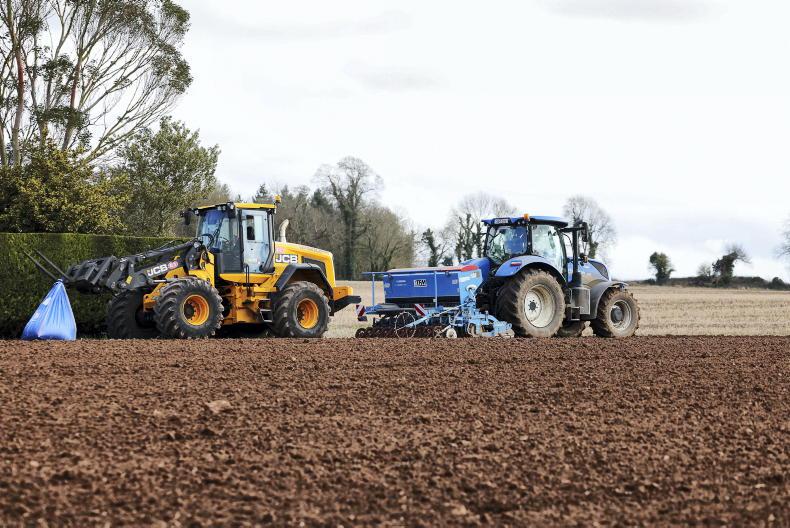
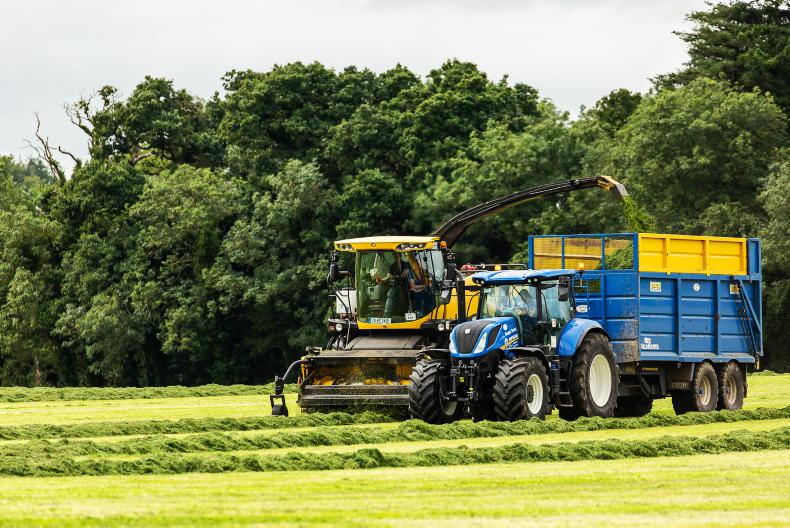
Silage season. \ Odhran Ducie
Optimising tractor work in the field
The way the tractor and its implement are operated in the field can also have a significant effect on fuel consumption and total fuel costs. Research has shown there can be up to 15% difference in fuel consumption between operators.
How the implement is set up on the tractor can also have a dramatic effect on fuel efficiency. German studies have shown that in ploughing if the plough is not pulling straight, then fuel consumption can be 20% higher than if correctly aligned – if it is also at the wrong angle, then there can be a third more fuel used. Similar studies have found significant fuel losses if welded parts are used instead of genuine parts.
Other studies have shown blunt knives on disc mowers can increase power requirement by 20%, while 10% power losses have been observed on balers with blunt blades. Wrong tyre pressures have been shown to have a 20% loss of tractive power. To achieve the lowest fuel use per hectare, follow these few simple rules:
Idling the engine: switch off the engine; if it is not running then it is not burning fuel. Idling a larger tractor uses about 7.5l of diesel per hour, or equivalent to over €11/hour. It has been estimated that tractor engine idling accounts for 6% of fuel usage, which is equivalent to more than €200/year. With modern tractor technology, which uses electronic starters, idling a vehicle instead of shutting off the engine does not save any money in the long run. In fact, research shows that more than 10 seconds of idling uses more fuel than restarting.Where possible, reduce engine rpm by up to 15% in the field and with lighter loads on the tractor you can drop the engine rpm even further. Shift up: throttle down is the well accepted driving technique to save fuel, while also maintaining your ground speed. Do not overload the engine.Don’t operate at too high forward speeds as fuel consumption increases with forward speed.Use automatic functions like transmission shifting if available.Use a guidance system if fitted to minimise overlaps and give more in-field efficient work.Reducing wheel slip and tyre management
For all draft operations, whether it is towing a plough, one-pass drill or loaded trailer, tanker or spreader, a measure of wheel slip will indicate if balance, ballast and tyre pressures are correct.
If you can see or notice the tractor wheel slip easily, it is probably over 15%, which is significantly higher than the accepted level of between 8%-12% for wheeled tractors although up to 15-20% in very soft or sandy soils can be acceptable.
You should make a special effort to minimise wheel slip.
You may have to adjust the ballast on the tractor and implement and then reset your tyre pressures. This will only be done once for each implement, so write your settings down so you can easily set up the tractor next year.
For all draft operations a measure of wheel slip will indicate if balance, ballast and tyre pressures are correct.
Tyre choice has a greater impact on fuel efficiency than many would think. On the road, tractor tyres should be sufficiently inflated to limit sidewall deformation.
Trials have shown that when using a 100hp tractor and a 12-tonne trailer on the road, a tyre pressure increase of 1.2 to 3 bars will reduce fuel consumption by 15%. On the other hand, driving on land, reducing the tyre pressure by 1.2 to 3 bars saves 16% in fuel usage.
Diesel theft
As agri diesel gets more expensive, unfortunately, the risk of fuel theft increases.
Make sure that your diesel tanks have locks or coded security systems and are behind lockable gates and secure fencing. Check tank levels regularly and where possible, install motion sensor lighting to cover the tank and surrounding area.
Silage harvesting fuel-saving tips
Machine throughput
The level of grass through the machine determines the fuel cost per tonne harvested. To increase fuel efficiency, the driver must achieve high chopping throughputs by picking up wide/large grass swaths.
The level of throughput influences fuel consumption by up to 20%.
Harvesters and balers work more efficiently and take less fuel per tonne of crop if they are operated close to capacity. If the harvester is picking up a single swath and not loaded near machine capacity, it will not only take longer, but also wastes fuel.
Forward speed
Reducing the forward speed of the harvester and tractors by 5km/h, by having wider swaths can lower the overall fuel consumption of the harvester by up to 30%. Going from 30km/h to 40km/h with a 100hp tractor will increase average fuel consumption by 35.8% with a full load and by 16.5% when empty.
Length of chop
Increasing the length-of-cut reduces fuel consumption, but must be weighed against the nutritional requirements of the animals and storage facility. If you have a choice, longer length cuts will save energy and money. The higher the number of knives and the shorter the chop length, the more power and fuel will be used.
Knife sharpness
The driver’s main focus must be the chopper. The operator determines fuel consumption by knife sharpness and shearbar-to-knife clearance in the chopper area. High fuel consumption is caused by dull knives. Chopper knives need to be sharpened several times each day.
Roughly 40% of the energy used by a harvester is consumed by the chopping drum, so the effect on fuel consumption can be considerable from dull knives and worn shear-bars.
Harvester operators can reduce the effort and cost of grinding and increase the life of their knives. Every driver has to develop their appropriate grinding strategy depending on the quality of their used knives and the prevailing operating conditions.
This requires regular monitoring of the cutterhead. Experienced operators will know by looking at the knives and shear bar to identify the sharpness of knives.
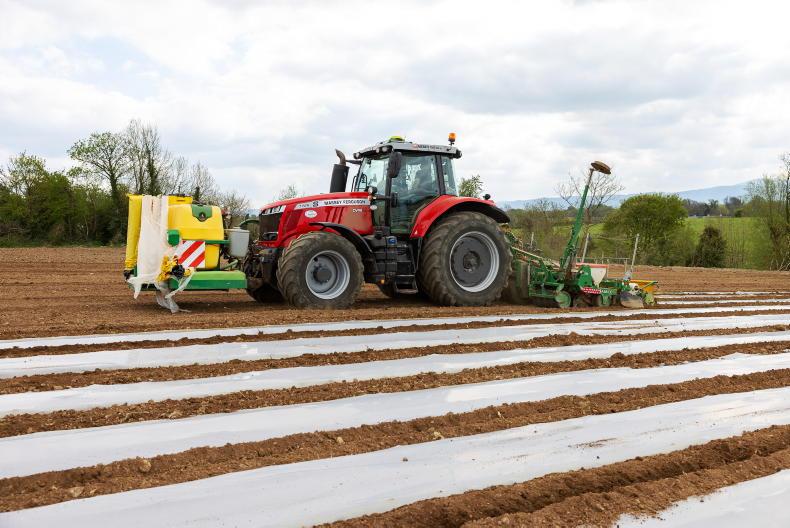
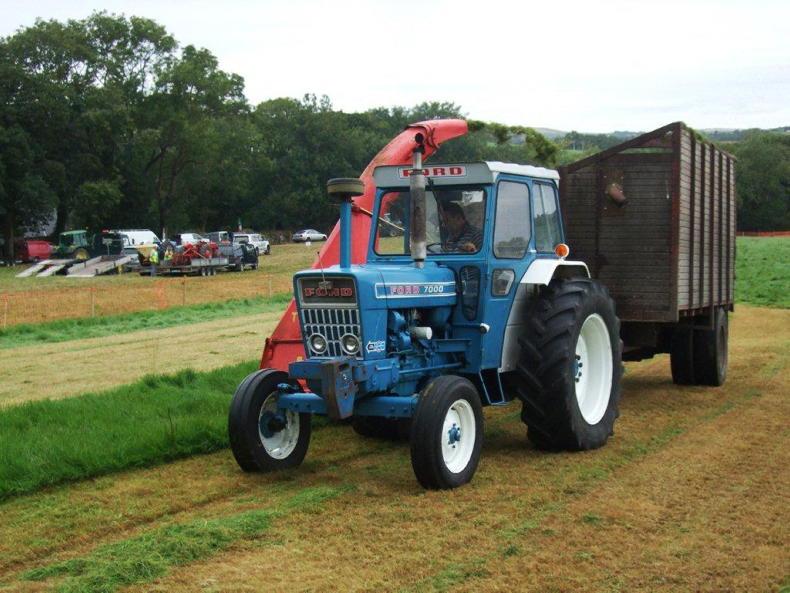
Laying the ground work. \ Odhran Ducie
Chopper settings
More cutting energy can be wasted with a large shear-bar-to-knife clearance than with dull knives. Sharp knives, and good clearance from the shear-bar, reduce the energy required to chop and helps to produce good quality silage. You need to adjust the shear-bar clearance after at least every second sharpening.
Silage wagons
Depending on the farm circumstances, switching to a self-loading silage wagon can reduce silage harvesting costs. The amount of fuel used to harvest and transport grass silage to the pit with a self-loading silage wagon has been proven to be half of that required by a self-propelled silage harvester; 0.67l/tonne compared to 1.32l/tonne.
Northern Ireland research has shown that three people, each with a self-loading silage wagon, could harvest and transport 39% more grass silage in a given time than five people with the self-propelled silage harvester system.
Round balers
Lubricating and making adjustments according to the manufacturer’s recommendations will reduce down time and maintenance issues. Balers, like silage harvesters are most efficient if operated near capacity, so combining windrows to maximise baler capacity will reduce the time and energy required.
Dull knives in the baler chopper unit will increase power consumption significantly. Sharp knives reduce power requirements, maximise fuel efficiency and minimise stress on the machine.
Sharpened baler knives decrease the torque load on drivelines by up to 30% and reduce fuel consumption by up to 10%. Blunt knives have been shown to add an additional 5hp in power requirement for a round baler. If the baler requires less power, the tractor consumes less diesel.
Mowers
Rotary or disc mower knives are typically subjected to high rates of wear and are prone to risk of breakage because of their exposure. Dull knives increase power requirements. Check knives and knife bolts each day before mowing and immediately after striking an object. Replace broken, worn or distorted knives, bolts and nuts.
Combining mowing with conditioning can save up to 24% in fuel usage.
Rakes
Raking should be efficient without incorporating soil into the grass and without friction. Merging windrows saves fuel by better matching harvester or baler capacity with crop yield.
Very often larger tractors than necessary are used for raking or windrowing. The power requirement for parallel bar or wheel rakes ranges from 20 to 40hp, while the power needed for rotary rakes can range from 20 to 55hp and larger windrowers in heavy grass may require between 50 and 70hp.
Based on the OECD tractor tests a 45hp utility tractor consumes about half the level of diesel per hour compared with a 100hp where the raking power requirement is just 30hp. This means that it will cost in the region of €5 per hour extra when using a smaller tractor to do a light-duty job such as raking grass. Select a tractor for raking that uses an economy PTO drive to save on fuel by working at lower engine revs.
As the silage season is now just a few weeks away, grass growth and with weather permitting, contractors are facing into a period of uncertain costs, as agricultural diesel prices continue to fluctuate in an unpredictable way.
This sharply focuses on the need to firstly identify how much agri diesel accounts for machinery running costs in a typical silage contracting outfit and then, secondly, to look at strategies to help reduce your diesel fuel running costs.
The price for diesel fuel cannot be influenced by the tractor or harvester driver, but the level of consumption can be. At current prices for diesel fuel, a saving of 10% creates a potential significant reduction in the fuel bill.
For many larger silage contractors using self-propelled harvesters, the fuel consumption levels associated with running the entire outfit are in excess of 3,000 litres per day. If the peak fuel prices, as quoted to contractors for bulk deliveries in recent weeks are sustained, then adopting fuel saving strategies, where possible, has the potential to deliver a seasonal saving of close to €20,000 in fuel costs alone.
When we look at tractor operating costs in a modern silage contractor fleet, we can see the impact of the near 50% increase in fuel costs on overall operating costs. The diesel cost now accounts for 36% of the operating costs, up from just over 13% a year ago.
When we examine the fuel costs of the entire silage harvesting outfit on a daily basis, we see that the 50% increase in fuel costs will add another €1,500 per day to the daily fuel bill, based on a usage level of 3,000 litres per day.
With an average harvesting output of 100 acres per day, this means an additional fuel cost to the contractor of a minimum of €15 per acre.
There may be limited strategies for fuel saving, and now they must be explored even closer than ever before. Weather conditions may also add further costs.
Tilling ground in wetter than ideal conditions, which has already been delayed due to wet February and March, will demand more tractor power and fuel usage to get spring crops established. There are few options for fuel saving there.
If we have a wet silage harvest, this will increase crop loads and trailer weights due a combination of more bulk and wetter grass, all adding further to costs. This will be a year to challenge many agricultural contracting businesses, if fuel costs remain a high level and in the absence of some Government agri diesel price intervention. Fuel availability is being hinted as being another concern.
Contractors will need to be able to optimise their machine use by skilful use of technology for maximum field efficiency. This is a time for careful matching of machines where raw output may need to take second place to fuel efficiency, as fuel cost management takes a new priority.
Regular maintenance saves fuel
Regular tractor, harvester and machine maintenance, irrespective of the work being done, will have a significant effect on fuel consumption. Regular maintenance includes maintaining correct oil levels, changing oil at designated intervals and regularly changing filters.
It is going to be especially important to keep the engine radiator clean because if allowed to block, the engine cooling fan will need to turn faster, and this takes more power and will result in more fuel usage. It is generally accepted that correct maintenance will save you 5%-15% fuel consumption when compared to a badly maintained tractor.
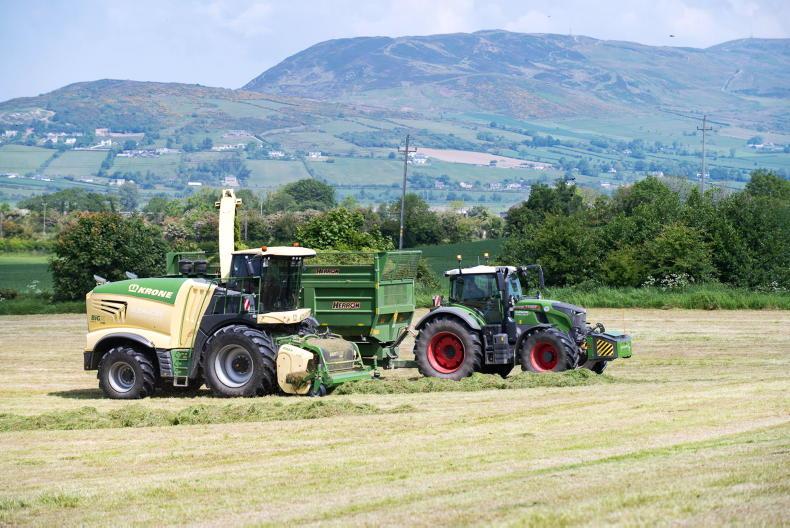
Silage season. \ Odhran Ducie
Optimising tractor work in the field
The way the tractor and its implement are operated in the field can also have a significant effect on fuel consumption and total fuel costs. Research has shown there can be up to 15% difference in fuel consumption between operators.
How the implement is set up on the tractor can also have a dramatic effect on fuel efficiency. German studies have shown that in ploughing if the plough is not pulling straight, then fuel consumption can be 20% higher than if correctly aligned – if it is also at the wrong angle, then there can be a third more fuel used. Similar studies have found significant fuel losses if welded parts are used instead of genuine parts.
Other studies have shown blunt knives on disc mowers can increase power requirement by 20%, while 10% power losses have been observed on balers with blunt blades. Wrong tyre pressures have been shown to have a 20% loss of tractive power. To achieve the lowest fuel use per hectare, follow these few simple rules:
Idling the engine: switch off the engine; if it is not running then it is not burning fuel. Idling a larger tractor uses about 7.5l of diesel per hour, or equivalent to over €11/hour. It has been estimated that tractor engine idling accounts for 6% of fuel usage, which is equivalent to more than €200/year. With modern tractor technology, which uses electronic starters, idling a vehicle instead of shutting off the engine does not save any money in the long run. In fact, research shows that more than 10 seconds of idling uses more fuel than restarting.Where possible, reduce engine rpm by up to 15% in the field and with lighter loads on the tractor you can drop the engine rpm even further. Shift up: throttle down is the well accepted driving technique to save fuel, while also maintaining your ground speed. Do not overload the engine.Don’t operate at too high forward speeds as fuel consumption increases with forward speed.Use automatic functions like transmission shifting if available.Use a guidance system if fitted to minimise overlaps and give more in-field efficient work.Reducing wheel slip and tyre management
For all draft operations, whether it is towing a plough, one-pass drill or loaded trailer, tanker or spreader, a measure of wheel slip will indicate if balance, ballast and tyre pressures are correct.
If you can see or notice the tractor wheel slip easily, it is probably over 15%, which is significantly higher than the accepted level of between 8%-12% for wheeled tractors although up to 15-20% in very soft or sandy soils can be acceptable.
You should make a special effort to minimise wheel slip.
You may have to adjust the ballast on the tractor and implement and then reset your tyre pressures. This will only be done once for each implement, so write your settings down so you can easily set up the tractor next year.
For all draft operations a measure of wheel slip will indicate if balance, ballast and tyre pressures are correct.
Tyre choice has a greater impact on fuel efficiency than many would think. On the road, tractor tyres should be sufficiently inflated to limit sidewall deformation.
Trials have shown that when using a 100hp tractor and a 12-tonne trailer on the road, a tyre pressure increase of 1.2 to 3 bars will reduce fuel consumption by 15%. On the other hand, driving on land, reducing the tyre pressure by 1.2 to 3 bars saves 16% in fuel usage.
Diesel theft
As agri diesel gets more expensive, unfortunately, the risk of fuel theft increases.
Make sure that your diesel tanks have locks or coded security systems and are behind lockable gates and secure fencing. Check tank levels regularly and where possible, install motion sensor lighting to cover the tank and surrounding area.
Silage harvesting fuel-saving tips
Machine throughput
The level of grass through the machine determines the fuel cost per tonne harvested. To increase fuel efficiency, the driver must achieve high chopping throughputs by picking up wide/large grass swaths.
The level of throughput influences fuel consumption by up to 20%.
Harvesters and balers work more efficiently and take less fuel per tonne of crop if they are operated close to capacity. If the harvester is picking up a single swath and not loaded near machine capacity, it will not only take longer, but also wastes fuel.
Forward speed
Reducing the forward speed of the harvester and tractors by 5km/h, by having wider swaths can lower the overall fuel consumption of the harvester by up to 30%. Going from 30km/h to 40km/h with a 100hp tractor will increase average fuel consumption by 35.8% with a full load and by 16.5% when empty.
Length of chop
Increasing the length-of-cut reduces fuel consumption, but must be weighed against the nutritional requirements of the animals and storage facility. If you have a choice, longer length cuts will save energy and money. The higher the number of knives and the shorter the chop length, the more power and fuel will be used.
Knife sharpness
The driver’s main focus must be the chopper. The operator determines fuel consumption by knife sharpness and shearbar-to-knife clearance in the chopper area. High fuel consumption is caused by dull knives. Chopper knives need to be sharpened several times each day.
Roughly 40% of the energy used by a harvester is consumed by the chopping drum, so the effect on fuel consumption can be considerable from dull knives and worn shear-bars.
Harvester operators can reduce the effort and cost of grinding and increase the life of their knives. Every driver has to develop their appropriate grinding strategy depending on the quality of their used knives and the prevailing operating conditions.
This requires regular monitoring of the cutterhead. Experienced operators will know by looking at the knives and shear bar to identify the sharpness of knives.
Laying the ground work. \ Odhran Ducie
Chopper settings
More cutting energy can be wasted with a large shear-bar-to-knife clearance than with dull knives. Sharp knives, and good clearance from the shear-bar, reduce the energy required to chop and helps to produce good quality silage. You need to adjust the shear-bar clearance after at least every second sharpening.
Silage wagons
Depending on the farm circumstances, switching to a self-loading silage wagon can reduce silage harvesting costs. The amount of fuel used to harvest and transport grass silage to the pit with a self-loading silage wagon has been proven to be half of that required by a self-propelled silage harvester; 0.67l/tonne compared to 1.32l/tonne.
Northern Ireland research has shown that three people, each with a self-loading silage wagon, could harvest and transport 39% more grass silage in a given time than five people with the self-propelled silage harvester system.
Round balers
Lubricating and making adjustments according to the manufacturer’s recommendations will reduce down time and maintenance issues. Balers, like silage harvesters are most efficient if operated near capacity, so combining windrows to maximise baler capacity will reduce the time and energy required.
Dull knives in the baler chopper unit will increase power consumption significantly. Sharp knives reduce power requirements, maximise fuel efficiency and minimise stress on the machine.
Sharpened baler knives decrease the torque load on drivelines by up to 30% and reduce fuel consumption by up to 10%. Blunt knives have been shown to add an additional 5hp in power requirement for a round baler. If the baler requires less power, the tractor consumes less diesel.
Mowers
Rotary or disc mower knives are typically subjected to high rates of wear and are prone to risk of breakage because of their exposure. Dull knives increase power requirements. Check knives and knife bolts each day before mowing and immediately after striking an object. Replace broken, worn or distorted knives, bolts and nuts.
Combining mowing with conditioning can save up to 24% in fuel usage.
Rakes
Raking should be efficient without incorporating soil into the grass and without friction. Merging windrows saves fuel by better matching harvester or baler capacity with crop yield.
Very often larger tractors than necessary are used for raking or windrowing. The power requirement for parallel bar or wheel rakes ranges from 20 to 40hp, while the power needed for rotary rakes can range from 20 to 55hp and larger windrowers in heavy grass may require between 50 and 70hp.
Based on the OECD tractor tests a 45hp utility tractor consumes about half the level of diesel per hour compared with a 100hp where the raking power requirement is just 30hp. This means that it will cost in the region of €5 per hour extra when using a smaller tractor to do a light-duty job such as raking grass. Select a tractor for raking that uses an economy PTO drive to save on fuel by working at lower engine revs.






SHARING OPTIONS