Land Rover in Ireland has put fresh impetus behind the Defender 4X4 models. It now offers two commercial versions, to compete with the best-selling Toyota Land Cruiser and the emerging Ineos Grenadier N1.
The question is: is the updated Defender ready to challenge the Land Cruiser?
I had a recent off-road test drive in the larger Defender 110 version in the Kilruddery Estate in Wicklow, where its go-anywhere credentials were well tested. This was followed by a longer test drive, mostly on the road, with the Defender 90 version; and both vehicles were commercial hard tops.
This current generation Land Rover Defender is a completely different 4x4 compared with the models of the past. The focus with this model has been on comfort and good road driving coupled with that off-road ability for which the name Land Rover has been synonymous.
The commercial or van versions of the Defender have been developed with full N1 commercial vehicle status, which means that VAT-registered farmers and other businesses can get a VAT refund on their purchase and also claim their diesel running costs against their business.
These two financial incentives are driving the widespread use of 4x4 commercials, supported by good towing ability and flexible use on and off the roads.
This new Land Rover Defender is available in two sizes: the short wheelbase 90 model and the longer wheelbase 110 version.
The 90 model has a significant vehicle registration tax (VRT) payment, while for the longer one the VRT is just €200. This means that the price difference between both models is not that significant.
What is significant is that the price difference between the Defender 110 and the market leading Toyota Land Cruiser has narrowed. This latest generation Land Cruiser is a mild hybrid vehicle which now accrues a VRT payment of €9,315, pushing the ex-VAT price up from €57,116 to €64,877.
Land Rover is fitting a six-cylinder turbo-diesel engine to the Defender commercial that pumps out more power and torque than Toyota’s four-cylinder turbo unit
So, all of a sudden, the Defender 110 looks like an option. The price difference is now just over €4,000, so is it worth it? In this article I’ll compare the new Defender Hard Top with the latest generation Toyota Land Cruiser and the Ineos Grenadier.
Having driven both versions of the Defender, and looked at their specification details, there is now a lot to consider. Land Rover is fitting a six-cylinder turbo-diesel engine to the Defender commercial that pumps out more power and torque than Toyota’s four-cylinder turbo unit.
The Defender engine, now with mild-hybrid technology, also beats the rest in terms of rated fuel economy and has the largest fuel tank capacity for longer working days. Towing ratings are comparable across all models, which means that this Defender can muscle up a 3.5 tonne towing load.
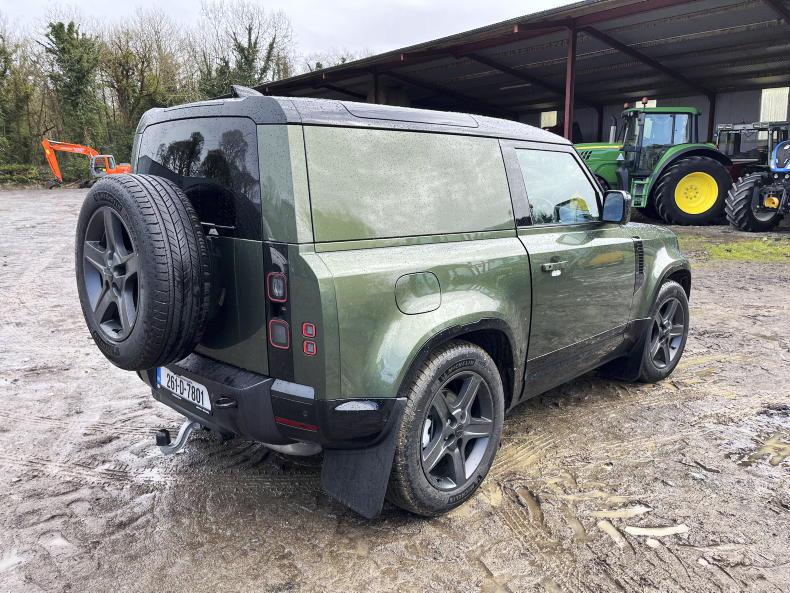
Land Rover Defender 90 Rear: The rear includes a full-size spare wheel bolted to the rear door and a well-designed and practical storage area.
Out on the road, the Defender is the most refined vehicle to drive of the three in this comparison, helped by the standard air suspension.
The engine performance is responsive as is the automatic gearbox. The steering wheel is large and feels solid, incorporating lots of additional functions which are easy to get used to.
The off-road ability is technology driven, with no floor levers and full control by means of a button function central console well positioned below the large Pivi Pro 11.4-inch touchscreen infotainment system to control of all the major vehicle functions.
The smartphone integration was seamless using both Apple CarPlay and Android Auto.
This commercial version comes with what Land Rover calls durable Ebony fabric seats and rubber flooring throughout. The Defender 110 Hard Top specification includes side steps as standard. There are two seats plus a smaller central seat that folds for cup holding when not in use.
The storage area to the rear is divided by a solid fixed full-height bulkhead partition for safety. The partition has four hanging hooks on the loadspace side, and two stowage nets on the cabin side of 110 models for small items.
This Land Rover Defender has a five-star Euro NCAP safety rating with a host of safety features as standard on the Hard Top versions.
These include 3D surround camera and 3D exterior perspectives alongside a 360° overhead view of the vehicle to help manoeuvre with confidence.
There’s also the ClearSight Ground View2 system to give the benefit of being able to ‘see through’ the bonnet, giving additional confidence when manoeuvring around any obstacles.
This Defender 110 version is now an attractive commercial 4x4 option not just due to features and driving comfort, it is closer to being price attractive. Entry prices for the Defender 110 version start at €69,030 plus VAT, now just €4,153 now more expensive than the Toyota Land Cruiser.
The shorter Defender 90 version will cost only €2,000 less due to the higher VRT payment.
There has been only one lingering issue with the Land Rover Defender – reliability.
Land Rover is confident that this has changed and quotes significantly improved reliability survey data. Maybe that’s because this Defender is now manufactured in Slovakia rather than Britain.
This new Defender 110 is a real challenger for the 4x4 commercial market, adding more competitive pricing to what is truly a most refined and comfortable option.
Land Rover in Ireland has put fresh impetus behind the Defender 4X4 models. It now offers two commercial versions, to compete with the best-selling Toyota Land Cruiser and the emerging Ineos Grenadier N1.
The question is: is the updated Defender ready to challenge the Land Cruiser?
I had a recent off-road test drive in the larger Defender 110 version in the Kilruddery Estate in Wicklow, where its go-anywhere credentials were well tested. This was followed by a longer test drive, mostly on the road, with the Defender 90 version; and both vehicles were commercial hard tops.
This current generation Land Rover Defender is a completely different 4x4 compared with the models of the past. The focus with this model has been on comfort and good road driving coupled with that off-road ability for which the name Land Rover has been synonymous.
The commercial or van versions of the Defender have been developed with full N1 commercial vehicle status, which means that VAT-registered farmers and other businesses can get a VAT refund on their purchase and also claim their diesel running costs against their business.
These two financial incentives are driving the widespread use of 4x4 commercials, supported by good towing ability and flexible use on and off the roads.
This new Land Rover Defender is available in two sizes: the short wheelbase 90 model and the longer wheelbase 110 version.
The 90 model has a significant vehicle registration tax (VRT) payment, while for the longer one the VRT is just €200. This means that the price difference between both models is not that significant.
What is significant is that the price difference between the Defender 110 and the market leading Toyota Land Cruiser has narrowed. This latest generation Land Cruiser is a mild hybrid vehicle which now accrues a VRT payment of €9,315, pushing the ex-VAT price up from €57,116 to €64,877.
Land Rover is fitting a six-cylinder turbo-diesel engine to the Defender commercial that pumps out more power and torque than Toyota’s four-cylinder turbo unit
So, all of a sudden, the Defender 110 looks like an option. The price difference is now just over €4,000, so is it worth it? In this article I’ll compare the new Defender Hard Top with the latest generation Toyota Land Cruiser and the Ineos Grenadier.
Having driven both versions of the Defender, and looked at their specification details, there is now a lot to consider. Land Rover is fitting a six-cylinder turbo-diesel engine to the Defender commercial that pumps out more power and torque than Toyota’s four-cylinder turbo unit.
The Defender engine, now with mild-hybrid technology, also beats the rest in terms of rated fuel economy and has the largest fuel tank capacity for longer working days. Towing ratings are comparable across all models, which means that this Defender can muscle up a 3.5 tonne towing load.
Land Rover Defender 90 Rear: The rear includes a full-size spare wheel bolted to the rear door and a well-designed and practical storage area.
Out on the road, the Defender is the most refined vehicle to drive of the three in this comparison, helped by the standard air suspension.
The engine performance is responsive as is the automatic gearbox. The steering wheel is large and feels solid, incorporating lots of additional functions which are easy to get used to.
The off-road ability is technology driven, with no floor levers and full control by means of a button function central console well positioned below the large Pivi Pro 11.4-inch touchscreen infotainment system to control of all the major vehicle functions.
The smartphone integration was seamless using both Apple CarPlay and Android Auto.
This commercial version comes with what Land Rover calls durable Ebony fabric seats and rubber flooring throughout. The Defender 110 Hard Top specification includes side steps as standard. There are two seats plus a smaller central seat that folds for cup holding when not in use.
The storage area to the rear is divided by a solid fixed full-height bulkhead partition for safety. The partition has four hanging hooks on the loadspace side, and two stowage nets on the cabin side of 110 models for small items.
This Land Rover Defender has a five-star Euro NCAP safety rating with a host of safety features as standard on the Hard Top versions.
These include 3D surround camera and 3D exterior perspectives alongside a 360° overhead view of the vehicle to help manoeuvre with confidence.
There’s also the ClearSight Ground View2 system to give the benefit of being able to ‘see through’ the bonnet, giving additional confidence when manoeuvring around any obstacles.
This Defender 110 version is now an attractive commercial 4x4 option not just due to features and driving comfort, it is closer to being price attractive. Entry prices for the Defender 110 version start at €69,030 plus VAT, now just €4,153 now more expensive than the Toyota Land Cruiser.
The shorter Defender 90 version will cost only €2,000 less due to the higher VRT payment.
There has been only one lingering issue with the Land Rover Defender – reliability.
Land Rover is confident that this has changed and quotes significantly improved reliability survey data. Maybe that’s because this Defender is now manufactured in Slovakia rather than Britain.
This new Defender 110 is a real challenger for the 4x4 commercial market, adding more competitive pricing to what is truly a most refined and comfortable option.






SHARING OPTIONS