Hybrid mid-size SUVs are now the most popular car segment on the Irish market and for good reasons. They are relatively spacious, easy to drive with good road visibility and their height provides easy entry and exit.
Diesel engine options are largely now gone apart from the Hyundai Tucson and Kia Sportage, so the offers are now either petrol hybrid or electric drive. So, it’s timely to see where Opel’s new Frontera can fit in when compared with Toyota’s high-selling Corolla Cross, its second best-selling car, so far, in Ireland in 2026.
I’ve had the new look Toyota Corolla Cross, with new front grille and some extra design features, on the road in recent weeks, while last week, I took the Opel Frontera for a run.
The new Corolla Cross is considered to be at the smaller end of the C-segment SUV, while the Frontera is rated slightly smaller, as a bigger B-segment SUV which is just 75mm (3in) shorter in overall length.
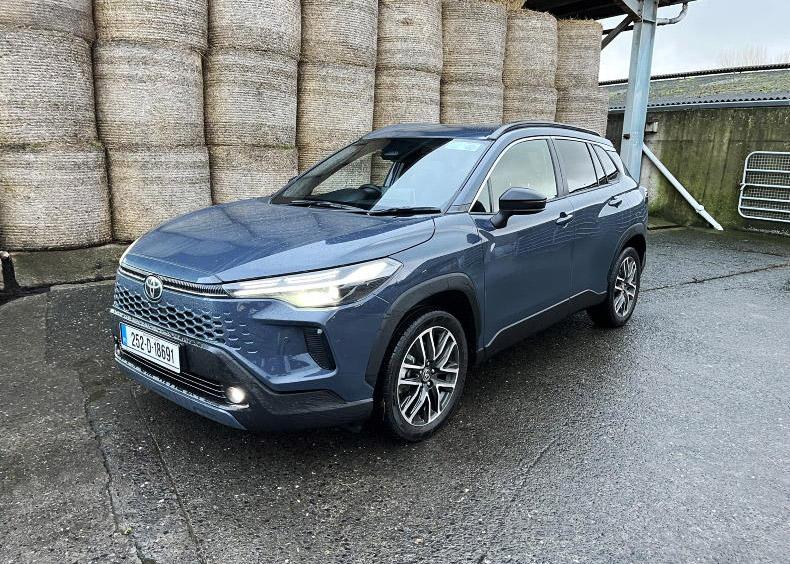
This new Corolla Cross comes with some exterior styling changes to the front grille, a bigger infotainment screen and some changes to the centre console for the automatic transmission control.
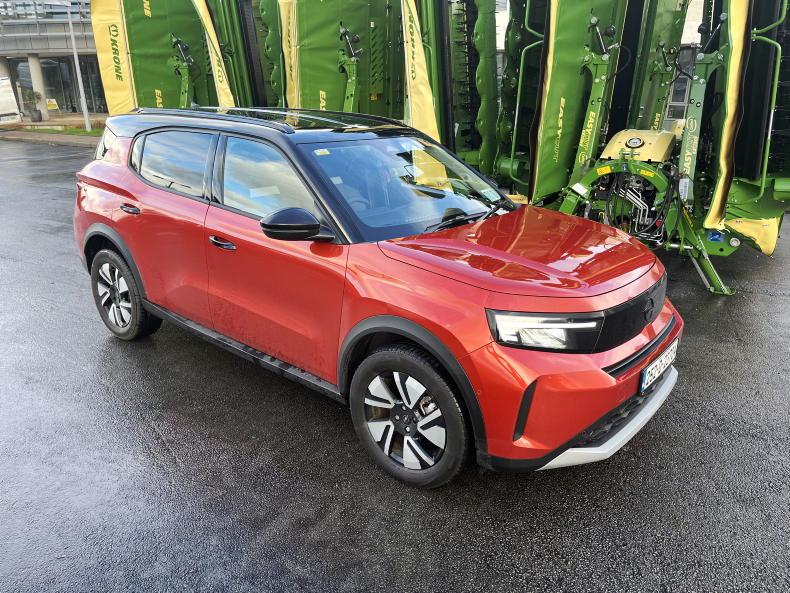
The new Opel Frontera is attractively designed and priced with entry models starting from €27,995 or £24,255 NI.
The version that I drove came with a 1.8-litre petrol engine and enhanced Toyota hybrid drive, that was smooth and easy to drive with a range of drive modes accessed through a simple button control.
It was also fitted with electric boot door opening and wireless phone charging, compared with the previous version of the car that I last drove in 2023.
Opel’s new Frontera is a brand new model in its range, using an older 4x4 Opel name.
This Frontera is nothing like the diesel-engine version of the past that was strong on pulling power if a little crude in terms of smoothness.
This new Frontera that I drove was powered by a three-cylinder Stellantis 1.2-litre turbo-petrol engine linked to a new hybrid drive based around a very smooth and gentle automatic transmission.
The engine is rated lower in power than the Corolla Cross, while delivering more torque and that converts into half decent towing power that’s nearly double that of the Toyota offering. The Corolla Cross in the past appeared to have had better economy performance but this new one felt a little thirstier as the 36-litre capacity fuel tank meant a rated range of 730km.
That bit I failed to achieve, getting closer to 550km, even though the car’s economy computer system credited me with being an economical driver.
Despite the smaller engine, the Opel Frontera showed no lack of acceleration energy, even if on paper its speed is rated slightly slower.
You’ll get that three-cylinder feel at idling speed, add a bit of weight to the pedal and that soon disappears.
The fuel economy figures were nearer to the rated figure, so the bigger 44-litre capacity fuel tank predictably gave a longer driving range between stops.
The Frontera is spacious and its deep boot gives great load space.
The Corolla Cross rear seats don’t fold flat so loading can be a little compromised from its marginally bigger capacity boot.
The electric boot door opening is an extra cost, while the basic Frontera car has steel wheels, and lacks a rear view parking camera and sensors system.
These features will add some €2,100 to the entry price to bring it up to the Elegance grade.
Otherwise, this new Frontera has a full safety compliment, including hill start assist, but entry models do not come with the blind spot safety alert.
Maybe that’s why there is no Euro NCAP rating yet for the Frontera while the Corolla Cross lives off its 2022 five-star rating.
Both cars are practical in their appeal, while the Frontera has more style features to offer than the Corolla Cross.
The roof bars give the car an extra height look while the two-tone colour with stand-out door handles in the test car, delivered on Opel’s style promise.
Toyota’s reputation for reliability reigns supreme across all sectors and that’s part of the challenge for Opel’s new Frontera.
Toyota’s Corolla might be boringly simple and easy to drive to be compared with Opel’s new styling and attractive pricing where even the range topping GS version leaves little in the extras listing and is still significantly more affordable.
Opel is aiming to deliver a seven-seat version of the Frontera for mid-year 2026, I simply don’t know where it is going to fit the seats.
Toyota has no such ambitions for the Corolla Cross.
Hybrid mid-size SUVs are now the most popular car segment on the Irish market and for good reasons. They are relatively spacious, easy to drive with good road visibility and their height provides easy entry and exit.
Diesel engine options are largely now gone apart from the Hyundai Tucson and Kia Sportage, so the offers are now either petrol hybrid or electric drive. So, it’s timely to see where Opel’s new Frontera can fit in when compared with Toyota’s high-selling Corolla Cross, its second best-selling car, so far, in Ireland in 2026.
I’ve had the new look Toyota Corolla Cross, with new front grille and some extra design features, on the road in recent weeks, while last week, I took the Opel Frontera for a run.
The new Corolla Cross is considered to be at the smaller end of the C-segment SUV, while the Frontera is rated slightly smaller, as a bigger B-segment SUV which is just 75mm (3in) shorter in overall length.
This new Corolla Cross comes with some exterior styling changes to the front grille, a bigger infotainment screen and some changes to the centre console for the automatic transmission control.
The new Opel Frontera is attractively designed and priced with entry models starting from €27,995 or £24,255 NI.
The version that I drove came with a 1.8-litre petrol engine and enhanced Toyota hybrid drive, that was smooth and easy to drive with a range of drive modes accessed through a simple button control.
It was also fitted with electric boot door opening and wireless phone charging, compared with the previous version of the car that I last drove in 2023.
Opel’s new Frontera is a brand new model in its range, using an older 4x4 Opel name.
This Frontera is nothing like the diesel-engine version of the past that was strong on pulling power if a little crude in terms of smoothness.
This new Frontera that I drove was powered by a three-cylinder Stellantis 1.2-litre turbo-petrol engine linked to a new hybrid drive based around a very smooth and gentle automatic transmission.
The engine is rated lower in power than the Corolla Cross, while delivering more torque and that converts into half decent towing power that’s nearly double that of the Toyota offering. The Corolla Cross in the past appeared to have had better economy performance but this new one felt a little thirstier as the 36-litre capacity fuel tank meant a rated range of 730km.
That bit I failed to achieve, getting closer to 550km, even though the car’s economy computer system credited me with being an economical driver.
Despite the smaller engine, the Opel Frontera showed no lack of acceleration energy, even if on paper its speed is rated slightly slower.
You’ll get that three-cylinder feel at idling speed, add a bit of weight to the pedal and that soon disappears.
The fuel economy figures were nearer to the rated figure, so the bigger 44-litre capacity fuel tank predictably gave a longer driving range between stops.
The Frontera is spacious and its deep boot gives great load space.
The Corolla Cross rear seats don’t fold flat so loading can be a little compromised from its marginally bigger capacity boot.
The electric boot door opening is an extra cost, while the basic Frontera car has steel wheels, and lacks a rear view parking camera and sensors system.
These features will add some €2,100 to the entry price to bring it up to the Elegance grade.
Otherwise, this new Frontera has a full safety compliment, including hill start assist, but entry models do not come with the blind spot safety alert.
Maybe that’s why there is no Euro NCAP rating yet for the Frontera while the Corolla Cross lives off its 2022 five-star rating.
Both cars are practical in their appeal, while the Frontera has more style features to offer than the Corolla Cross.
The roof bars give the car an extra height look while the two-tone colour with stand-out door handles in the test car, delivered on Opel’s style promise.
Toyota’s reputation for reliability reigns supreme across all sectors and that’s part of the challenge for Opel’s new Frontera.
Toyota’s Corolla might be boringly simple and easy to drive to be compared with Opel’s new styling and attractive pricing where even the range topping GS version leaves little in the extras listing and is still significantly more affordable.
Opel is aiming to deliver a seven-seat version of the Frontera for mid-year 2026, I simply don’t know where it is going to fit the seats.
Toyota has no such ambitions for the Corolla Cross.





SHARING OPTIONS