There has been a 40% increase in new electric car registrations for the first three months of 2026, compared with last year.
Opel’s new Frontera is one of the new smaller to mid-size SUVs on the market and is being offered with the option of a petrol hybrid drive system or pure battery electric (BEV) drive.
Opel in Ireland has offered the BEV version of the Frontera at a more competitive price than the hybrid one, in an effort to drive demand.
So, for this week, having driven both cars relatively recently, I’ve compared the offer. Despite the higher fuel prices, it is still the same question, choose a BEV or not?
I’ve looked at the specification differences, and they are clear in the accompanying table, but ownership is not just about the bottom line price. In terms of the car’s dimensions, they are identical and side by side in a car park, you would struggle to see the difference.
The BEV version is noticeably heavier by 264kg, and I found that this impacts on the driving range of the car with a fully charged battery.
Out on the road, the Frontera hybrid is powered by a 1.2 litre turbo-petrol engine. This engine is coupled with a six-speed automatic transmission that makes driving easy.
The BEV version uses a single-speed electric motor drive system with a very similar looking range shifter that gives the option of Park, Reverse, Neutral, Drive.
There is also a Braking setting that lets you manage the level of regenerative braking to maximise economy and therefore range. For obvious reasons, the BEV version is quieter and smoother to accelerate, but actually slightly slower to accelerate than the hybrid drive version.
The single 54kW battery is rated for more power but lower torque than the petrol hybrid version. And it is the torque that boosts that acceleration performance.
That lower torque figure also impacts on the car’s towing ability which shows that the BEV version has less than half the towing capacity of the petrol hybrid Frontera.
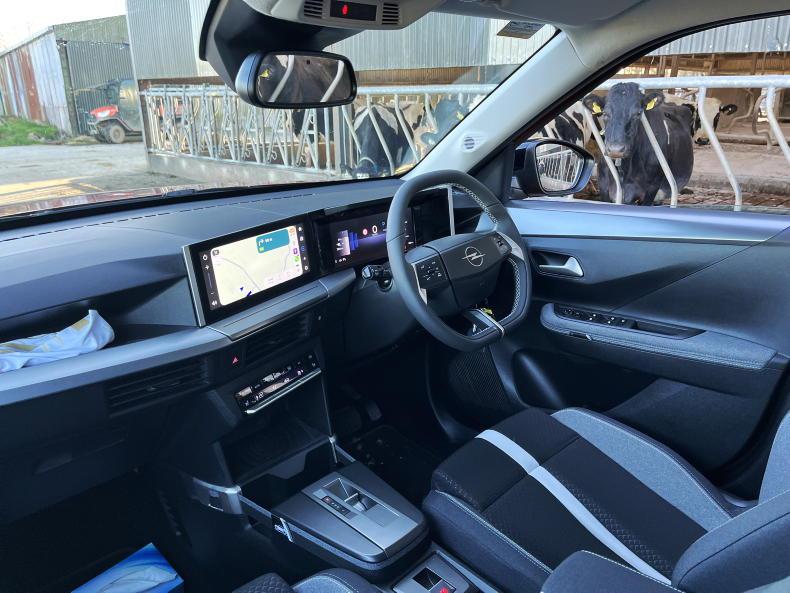
The modern and clear dash layout of the Opel Frontera BEV is almost identical to that of the hybrid version.
The other issue is, can you live with the BEV version even if it comes at a lower cost? I found that the rated range of 300km on a fully charged battery was difficult to achieve.
The Frontera BEV needs a higher capacity battery, especially for longer drives, because once out on the motorway and even at a steady 100km/hour speed, the range capacity falls too quickly. The other feature that became a little frustrating was the charging time.
On a low-power public charger, the Frontera BEV took longer to achieve a fully charged battery than the almost three-hour rating.
When plugged into a fast charger, the performance was not as fast as I had expected, based on the rated charge time of 26 minutes from 20% to 80% charge.
That level of battery performance from the Frontera BEV will not win over enough drivers to electric drive when some of the Korean and Chinese car competition deliver far better results. This battery system is fitted to other cars in the Stellantis range, but it needs to deliver improved performance and range to be competitive, despite the keen entry prices.
On balance, the hybrid Opel Frontera remains my preferred choice if you drive longer distances rather than a local town or village commute. Even though there are two battery options, further improved battery performance is needed.
The Opel Frontera is available in three specification levels SC, Elegance and GS.
The entry level SC versions of both the hybrid and BEV versions have a full range of safety systems but lack reversing camera, blind spot recognition and front and rear parking sensors. That’s possibly why there is no Euro NCAP rating yet for the Frontera.
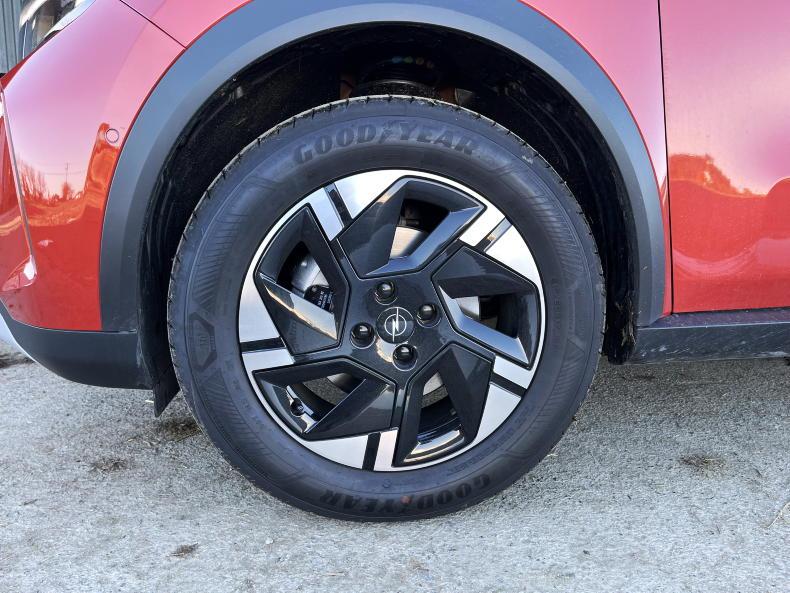
The test Opel Frontera BEV was the higher specification GS version that came on Goodyear 215/60 R17 tyres on alloy wheels.
Entry prices for SC version of the Frontera BEV start at €24,606 or £23,995 in N Ireland and that’s almost €3,400 lower than the prices of the hybrid version in Ireland. That’s a significant difference if you can cope with the lower range and slower charging ability for what is a spacious and flexible mid-size SUV.
This Opel Frontera BEV is not yet ready for wider use, let’s hope that the improved battery version comes soon.
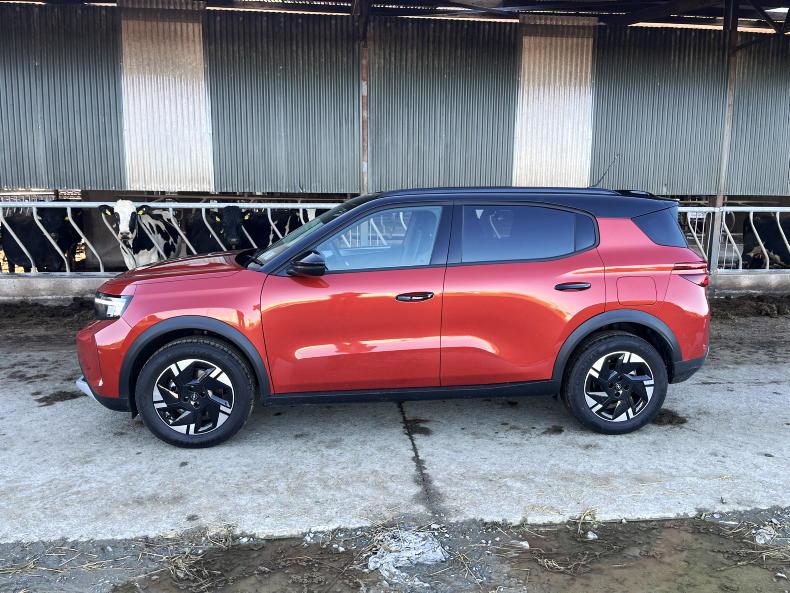
The battery electric (BEV) Opel Frontera had lower than expected driving range while starting prices are competitive at €24,606 or £23,995 in N. Ireland, the GS version shown starts at €27,417 after SEAI grants.
There has been a 40% increase in new electric car registrations for the first three months of 2026, compared with last year.
Opel’s new Frontera is one of the new smaller to mid-size SUVs on the market and is being offered with the option of a petrol hybrid drive system or pure battery electric (BEV) drive.
Opel in Ireland has offered the BEV version of the Frontera at a more competitive price than the hybrid one, in an effort to drive demand.
So, for this week, having driven both cars relatively recently, I’ve compared the offer. Despite the higher fuel prices, it is still the same question, choose a BEV or not?
I’ve looked at the specification differences, and they are clear in the accompanying table, but ownership is not just about the bottom line price. In terms of the car’s dimensions, they are identical and side by side in a car park, you would struggle to see the difference.
The BEV version is noticeably heavier by 264kg, and I found that this impacts on the driving range of the car with a fully charged battery.
Out on the road, the Frontera hybrid is powered by a 1.2 litre turbo-petrol engine. This engine is coupled with a six-speed automatic transmission that makes driving easy.
The BEV version uses a single-speed electric motor drive system with a very similar looking range shifter that gives the option of Park, Reverse, Neutral, Drive.
There is also a Braking setting that lets you manage the level of regenerative braking to maximise economy and therefore range. For obvious reasons, the BEV version is quieter and smoother to accelerate, but actually slightly slower to accelerate than the hybrid drive version.
The single 54kW battery is rated for more power but lower torque than the petrol hybrid version. And it is the torque that boosts that acceleration performance.
That lower torque figure also impacts on the car’s towing ability which shows that the BEV version has less than half the towing capacity of the petrol hybrid Frontera.
The modern and clear dash layout of the Opel Frontera BEV is almost identical to that of the hybrid version.
The other issue is, can you live with the BEV version even if it comes at a lower cost? I found that the rated range of 300km on a fully charged battery was difficult to achieve.
The Frontera BEV needs a higher capacity battery, especially for longer drives, because once out on the motorway and even at a steady 100km/hour speed, the range capacity falls too quickly. The other feature that became a little frustrating was the charging time.
On a low-power public charger, the Frontera BEV took longer to achieve a fully charged battery than the almost three-hour rating.
When plugged into a fast charger, the performance was not as fast as I had expected, based on the rated charge time of 26 minutes from 20% to 80% charge.
That level of battery performance from the Frontera BEV will not win over enough drivers to electric drive when some of the Korean and Chinese car competition deliver far better results. This battery system is fitted to other cars in the Stellantis range, but it needs to deliver improved performance and range to be competitive, despite the keen entry prices.
On balance, the hybrid Opel Frontera remains my preferred choice if you drive longer distances rather than a local town or village commute. Even though there are two battery options, further improved battery performance is needed.
The Opel Frontera is available in three specification levels SC, Elegance and GS.
The entry level SC versions of both the hybrid and BEV versions have a full range of safety systems but lack reversing camera, blind spot recognition and front and rear parking sensors. That’s possibly why there is no Euro NCAP rating yet for the Frontera.
The test Opel Frontera BEV was the higher specification GS version that came on Goodyear 215/60 R17 tyres on alloy wheels.
Entry prices for SC version of the Frontera BEV start at €24,606 or £23,995 in N Ireland and that’s almost €3,400 lower than the prices of the hybrid version in Ireland. That’s a significant difference if you can cope with the lower range and slower charging ability for what is a spacious and flexible mid-size SUV.
This Opel Frontera BEV is not yet ready for wider use, let’s hope that the improved battery version comes soon.
The battery electric (BEV) Opel Frontera had lower than expected driving range while starting prices are competitive at €24,606 or £23,995 in N. Ireland, the GS version shown starts at €27,417 after SEAI grants.







SHARING OPTIONS