


While sheds built for specific purposes or for grant applications such as TAMS are generally one-off constructions and specially manufactured by a fabrication company, many of these companies also build off the shelf kits of some more common size buildings that farmers can erect themselves or employ a contractor to do. With the sheds produced on a semi-mass scale, there can be a reduced cost of purchase. Value for money can be gotten through using a more common size kit shed, although there are some specifications and pitfalls that farmers need to be cautious of. Once this criteria is reached, then there is no reason why a kit shed could not be brought up to TAMS specifications. The following specifications will also be relevant to those who may wish to manufacture a shed themselves, which is allowed, provided you have the necessary welding certification.
Purlins
Sheds will either come with timber or galvanised steel purlins. Where timber purlins are used, buyers should be sure that the wood has been properly dried and treated with a suitable chemical for longevity of use. Size-wise, 150mm x 75mm (6in x 3in) timbers can be used up to 4.8m (a standard bay) where steel sheeting is used, but this is reduced down to 4.3m where cement fibre is being used due to the additional weight. Galvanised steel purlins can be used for bay widths up to 6.4m.
Stanchions and trusses
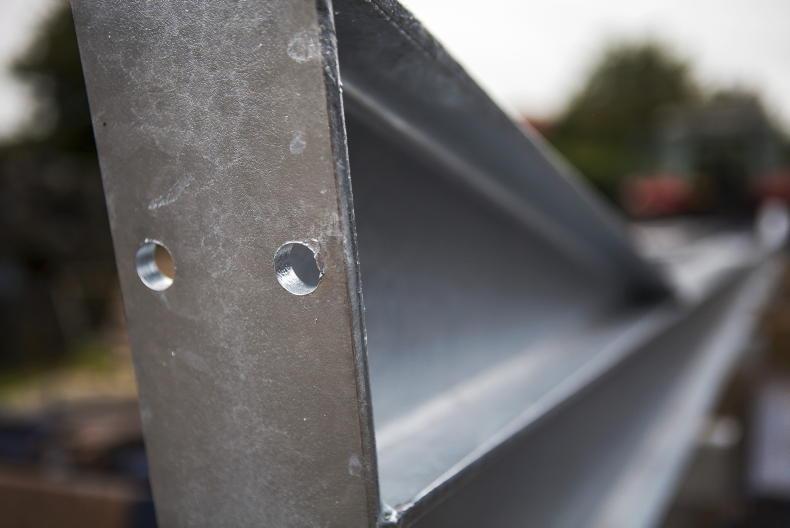
Farm building steel work should all be CE marked to ensure it has met minimum standards for quality of steel and quality of welding of brackets and plates. Sheds with a span of 7.6m or less (25ft) may use H-frame steel of 200mm x 100mm (8in x 4in) known as IPE 200 for the stanchions and rafters, where the eave height is no greater than 4m. Where the height is between 4m and 5m this must be upgraded to 220m x 110mm for stanchions (IPE 220). When talking about spans, we are talking about the distance between two upright stanchions across the width of the shed.
For spans between 7.6m and 9.4m (25ft and 30ft) the minimum specifications rise to 220mm x 110mm (IPE 220) in the stanchions and rafters for 4.8m bays at 4m to the eaves, with wider bays or those at 5m eave height requiring 240mm x 120mm (IPE 240) stanchions and rafters. Sheds up to 12.2m (40ft) require 270mm x 135mm (IPE 270) steel trusses and stanchions for both standard and larger bays at 4m eave height, with those between 4-5m eaves requiring 300mm x 150mm (IPE 300) steel be used. Including additional stanchions can reduce the IPE of steel needed, but where clear spans are required then the strength of steel will have to be stepped up.
Farmers should also note if there is bracing included in kit sheds and if bolts for attaching stanchions to rafters are included. A minimum of two M16 bolts should be used at each joint of a stanchion and rafter.
Sheeting
Some of the smaller sized kit sheds will be specified with non-drip sheeting. If the building is to be used for animals at any stage, even as a temporary overflow at lambing or calving, it is advisable not to use any non-drip sheeting – as it will hold moulds and bacteria in its coating.
Sheeting should be between 0.55mm and 0.7mm or greater for side and roof sheeting. The greater the thickness of the sheeting, the greater the distance between purlins can be (generally between 1500mm and 1800mm).
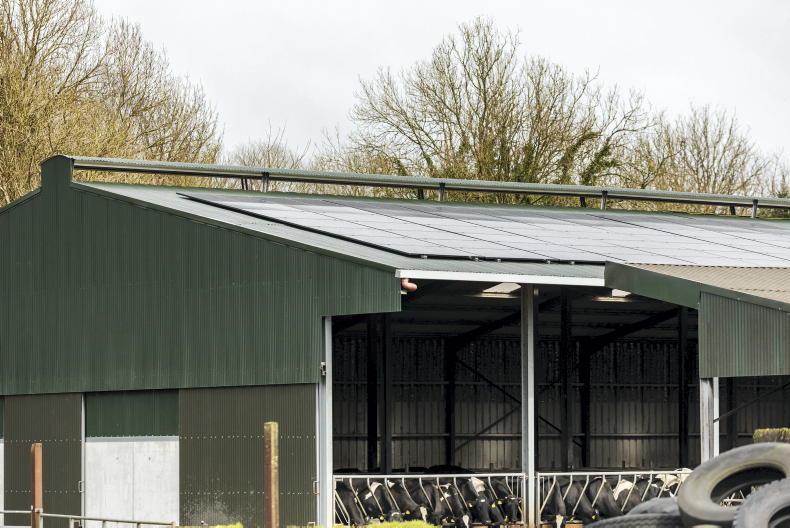
Where a kit shed is being used for livestock, there is often very little ventilation included. Where possible, the option to ask the manufacturer to create a central open ridge should be explored. Sheeting length can remain the same, with an overlap over the eaves protecting an air inlet at the same time.
Sheds can also be ordered without side sheeting and space, or Yorkshire boarding installed instead, with space sheeting used in the roof as an air outlet. It should be noted when pricing kit sheds if stitchers, tec screws, flashings, ridge caps and guttering are included in the price. Different manufacturers will have side sheeting to different wall heights, either 1.8m or 2.4m, which is also worth noting when pricing. Where clear sheeting is installed, it is unlikely that safety cages will be included, though these are advisable in all new builds and retrofits for farm safety.


SHARING OPTIONS