Pre-stressed wall panels are becoming more popular on farm building jobs – they can be cheaper than a shuttered wall and are erected in a few hours.
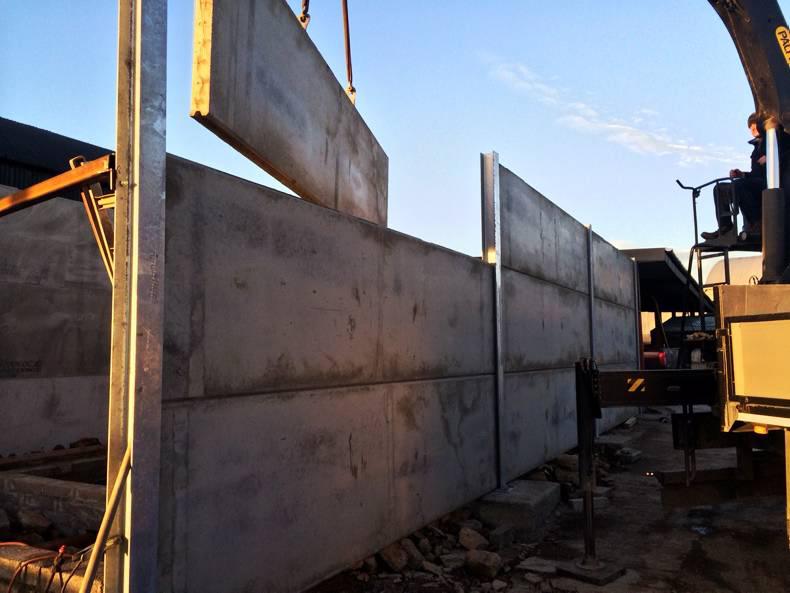
They are pre-cast in a factory, delivered on a flatbed lorry and are lifted into place by a teleporter or excavator. They either stand against the outside of steel RSJ pillars or are lowered into the internal web of pillars. Small steel brackets lock them in place and they can be stacked one on top of another to make a high wall – they are moulded with a tongue on top and a groove on the bottom.
These panels are made in factory conditions (and so should have consistent quality), using high-strength concrete (eg 60N) of a precise mix. The reinforcing steel is placed under tension before the mould is filled with concrete. As a result, a panel of 100mm or 150mm will typically be used to replace shuttered, reinforced wall of double that thickness, ie 200mm and 300mm.
In farmyards, panels are most often used for making boundary walls, shed walls, bay walls, etc. Joints can be easily sealed against rain and damp. They are not used for underground effluent tanks – precast tanks are a better option.
Costs
The cost issues around panels include the following:
No shutters have to be brought on site, favouring panels. However, if an underground tank is part of the job, then shutters will be there anyway.Where the job involves a roof, then the steel RSJs do two jobs – supporting the wall panels as well as the roof.No concrete foundation strip is required under the length of the wall panel. Typically, the weight of the panels is supported at each end by the concrete pad under the RSJ. Alternatively, panels can sit on a floor slab.A wall made with panels can be taken down and re-erected elsewhere or sold on, etc.A number of pre-cast companies here are manufacturing significant volumes of slats, panels and other structures for export to the UK. Prices here reflect this scale.New parlour at low cost
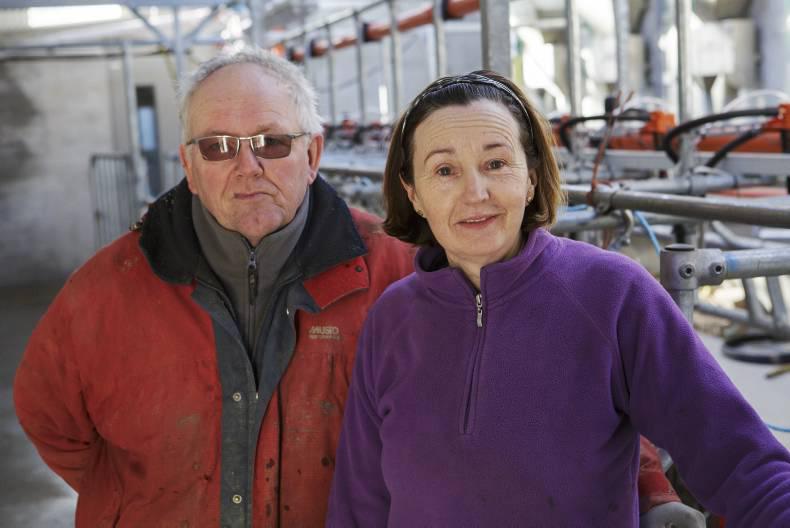
I have previously featured use of pre-stressed panels in bedded cattle sheds and road underpasses. This week I show a new milking parlour made with wall panels. It’s on the farm of John and Ann Keohane at Crosses, Innishannon, Co Cork. This parlour came in at a low cost, mainly because the Keohanes did all the work, assisted by their son Jeremy who is a steel fabricator. John has a 3t excavator and a dumper on the farm.
The wall panels helped reduce costs, John says. “I priced shuttered walls and block walls. Then a friend suggested I get a price for panels.” He did so and bought them from Alfabloc based in Coppeen, Co Cork.
Picture one
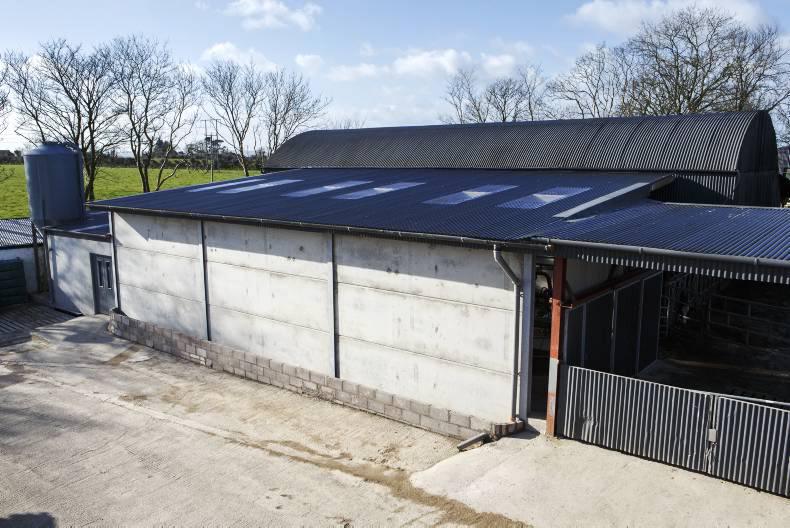
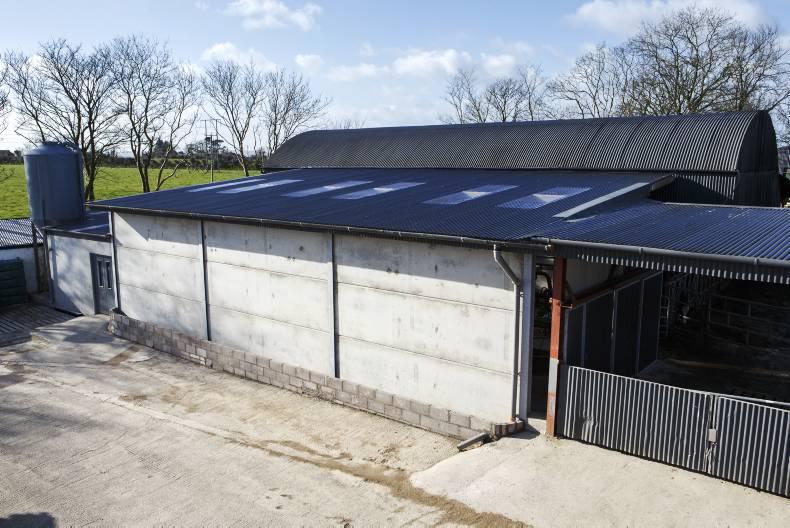
The new parlour is built on the site of the old one. Behind is a cubicle shed, at the far end the dairy. Between the cubicle shed and the parlour is a walkout passage for the cows with a crush, all under the parlour roof. The parlour is three 4.8m bays long, the roof span 9m.
Picture two
The old parlour was knocked last November. The Keohanes put in foundation pads for the 8x5in RSJs using a laser level. The pillars were anchor-bolted on to the pads. The walls are three panels high, each panel 1.2m (4ft) high and 4.8m (15ft 9in) long. We can see here how the end of each panel will sit on the concrete pads.
The Keohanes placed the panels inside the web of the RSJs. For this they need to be lifted to the top of the pillars. It gives a nice flat surface to internal and external faces of the wall.
Picture three
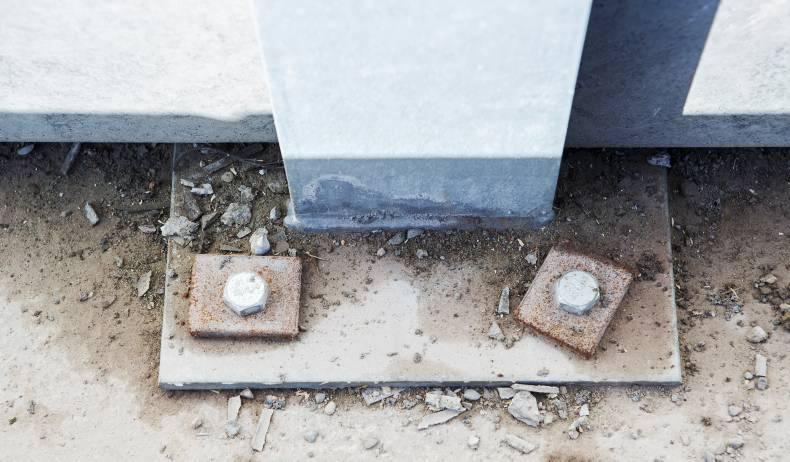
Jeremy Keohane fabricated all the steelwork. The base plate of each RSJ is anchor-bolted to the foundation pads.
Picture four
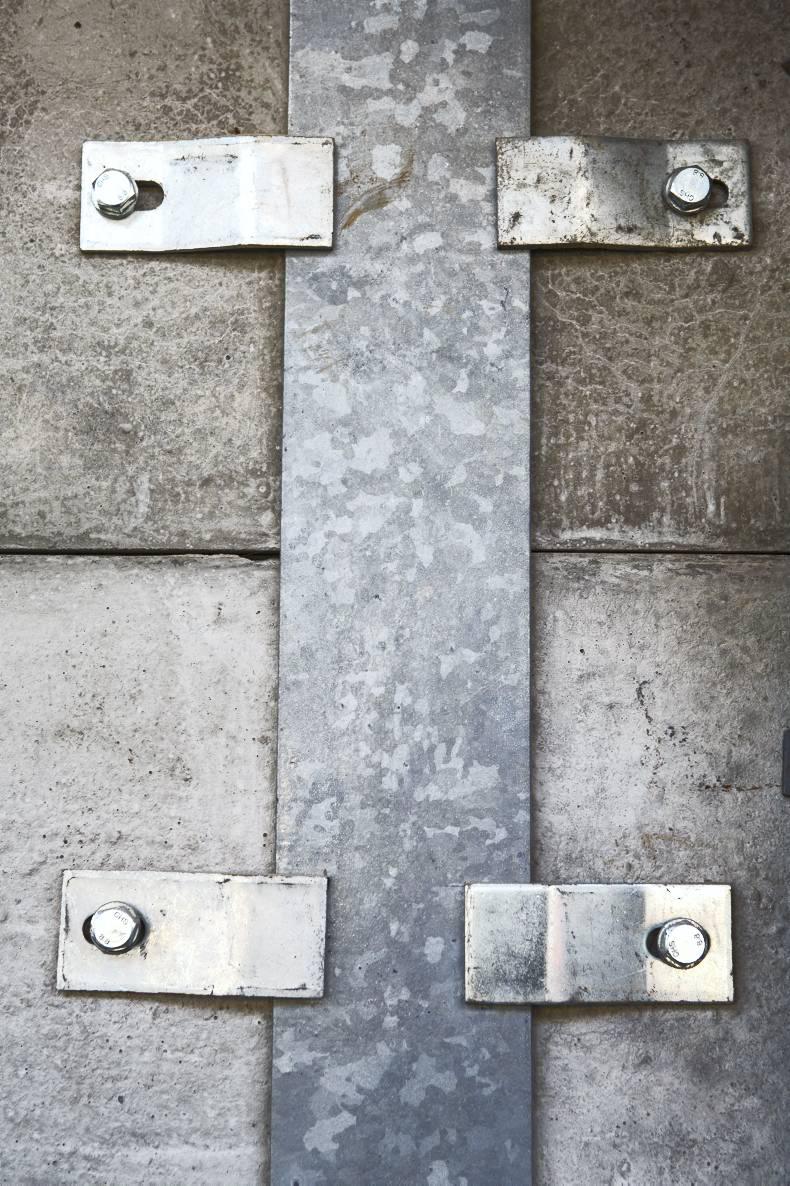
At each corner of the panel there is a precast threaded hole into which a supporting bracket is bolted. The brackets tighten the panel to the RSJ.
Picture five
Getting the floor levels right was the trickiest part of the whole job, John told me. The pit drains into the slatted tank in the collecting yard – no sump or pump is used.
Picture six
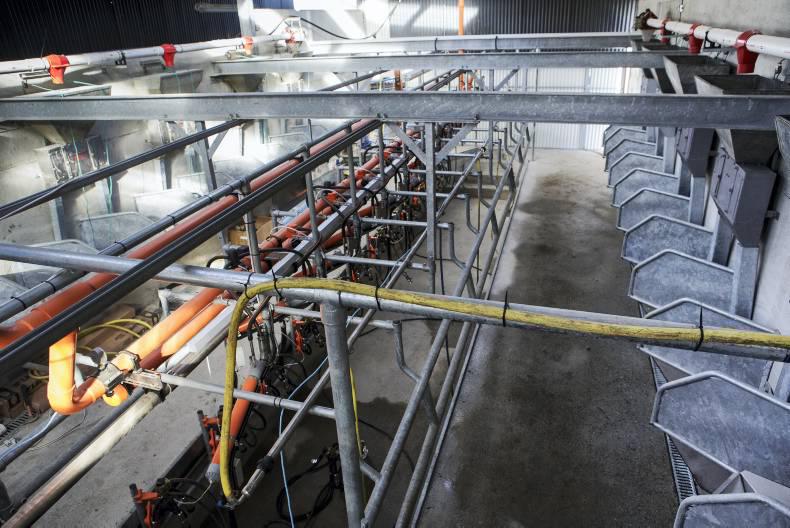
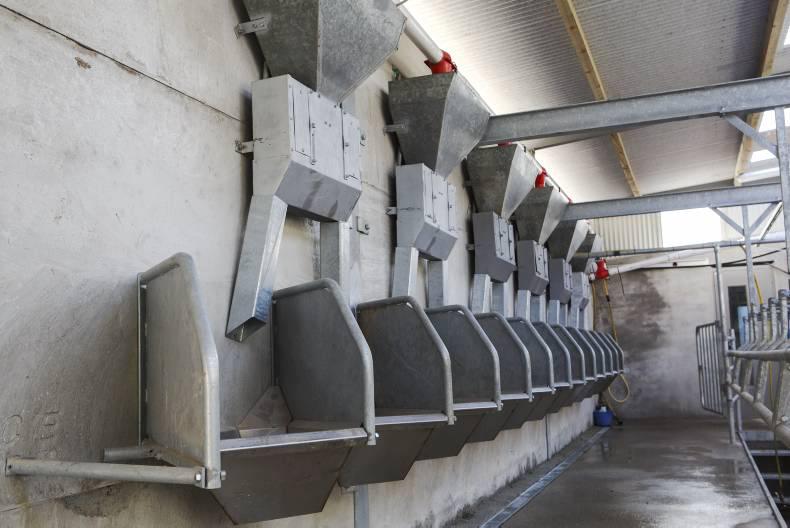
The wall panels provide a good surface for attaching feeder units and other components of the new Gascoigne milking machine.
Picture seven
John and Anne Keohane are very happy with the new setup. The cost of the new parlour and dairy, new 12-unit milking machine and secondhand bulk tank was just over €49,000 including VAT. The Keohanes put in weeks of hard work themselves. The parlour and dairy buildings cost €16,260 incl VAT. That included €3,600 for roof timbers and cladding; €2,600 for steel; €5,000 for ready-mix concrete, blocks for the dairy, sand and gravel; €350 for cement and €1,000 for drains and other incidentals. The balance was for the panels. John is very happy with them. Shuttered walls would have been double the cost, he said.
John Barrett of Alfabloc told me that he makes 100mm and 150mm panels, 1.2m high and up to 6m long. “We can manufacture any size below that. Panels are very adaptable. If you want to take down the wall of a shed and extend it, if it’s made with panels then you can. There are also big cost savings and they are better on health and safety.”
The 150mm panels are €51 per metre of length and the 100mm ones €46/m, all plus VAT.
Pre-stressed wall panels are becoming more popular on farm building jobs – they can be cheaper than a shuttered wall and are erected in a few hours.
They are pre-cast in a factory, delivered on a flatbed lorry and are lifted into place by a teleporter or excavator. They either stand against the outside of steel RSJ pillars or are lowered into the internal web of pillars. Small steel brackets lock them in place and they can be stacked one on top of another to make a high wall – they are moulded with a tongue on top and a groove on the bottom.
These panels are made in factory conditions (and so should have consistent quality), using high-strength concrete (eg 60N) of a precise mix. The reinforcing steel is placed under tension before the mould is filled with concrete. As a result, a panel of 100mm or 150mm will typically be used to replace shuttered, reinforced wall of double that thickness, ie 200mm and 300mm.
In farmyards, panels are most often used for making boundary walls, shed walls, bay walls, etc. Joints can be easily sealed against rain and damp. They are not used for underground effluent tanks – precast tanks are a better option.
Costs
The cost issues around panels include the following:
No shutters have to be brought on site, favouring panels. However, if an underground tank is part of the job, then shutters will be there anyway.Where the job involves a roof, then the steel RSJs do two jobs – supporting the wall panels as well as the roof.No concrete foundation strip is required under the length of the wall panel. Typically, the weight of the panels is supported at each end by the concrete pad under the RSJ. Alternatively, panels can sit on a floor slab.A wall made with panels can be taken down and re-erected elsewhere or sold on, etc.A number of pre-cast companies here are manufacturing significant volumes of slats, panels and other structures for export to the UK. Prices here reflect this scale.New parlour at low cost
I have previously featured use of pre-stressed panels in bedded cattle sheds and road underpasses. This week I show a new milking parlour made with wall panels. It’s on the farm of John and Ann Keohane at Crosses, Innishannon, Co Cork. This parlour came in at a low cost, mainly because the Keohanes did all the work, assisted by their son Jeremy who is a steel fabricator. John has a 3t excavator and a dumper on the farm.
The wall panels helped reduce costs, John says. “I priced shuttered walls and block walls. Then a friend suggested I get a price for panels.” He did so and bought them from Alfabloc based in Coppeen, Co Cork.
Picture one
The new parlour is built on the site of the old one. Behind is a cubicle shed, at the far end the dairy. Between the cubicle shed and the parlour is a walkout passage for the cows with a crush, all under the parlour roof. The parlour is three 4.8m bays long, the roof span 9m.
Picture two
The old parlour was knocked last November. The Keohanes put in foundation pads for the 8x5in RSJs using a laser level. The pillars were anchor-bolted on to the pads. The walls are three panels high, each panel 1.2m (4ft) high and 4.8m (15ft 9in) long. We can see here how the end of each panel will sit on the concrete pads.
The Keohanes placed the panels inside the web of the RSJs. For this they need to be lifted to the top of the pillars. It gives a nice flat surface to internal and external faces of the wall.
Picture three
Jeremy Keohane fabricated all the steelwork. The base plate of each RSJ is anchor-bolted to the foundation pads.
Picture four
At each corner of the panel there is a precast threaded hole into which a supporting bracket is bolted. The brackets tighten the panel to the RSJ.
Picture five
Getting the floor levels right was the trickiest part of the whole job, John told me. The pit drains into the slatted tank in the collecting yard – no sump or pump is used.
Picture six
The wall panels provide a good surface for attaching feeder units and other components of the new Gascoigne milking machine.
Picture seven
John and Anne Keohane are very happy with the new setup. The cost of the new parlour and dairy, new 12-unit milking machine and secondhand bulk tank was just over €49,000 including VAT. The Keohanes put in weeks of hard work themselves. The parlour and dairy buildings cost €16,260 incl VAT. That included €3,600 for roof timbers and cladding; €2,600 for steel; €5,000 for ready-mix concrete, blocks for the dairy, sand and gravel; €350 for cement and €1,000 for drains and other incidentals. The balance was for the panels. John is very happy with them. Shuttered walls would have been double the cost, he said.
John Barrett of Alfabloc told me that he makes 100mm and 150mm panels, 1.2m high and up to 6m long. “We can manufacture any size below that. Panels are very adaptable. If you want to take down the wall of a shed and extend it, if it’s made with panels then you can. There are also big cost savings and they are better on health and safety.”
The 150mm panels are €51 per metre of length and the 100mm ones €46/m, all plus VAT.





SHARING OPTIONS