The exemption for the creation of slurry storage and an increase in both the gross area of new builds which can avail of it and the aggregate area of buildings within certain yards has increased. Commenting on the signing of these new regulations, Minister of State for Planning and Local Government John Cummins said: “These measures are about common sense and good planning. Adequate slurry storage is critical for protecting water quality and improving nutrient management. Likewise, modern and well-designed animal housing supports higher standards of animal welfare.
“These changes do not remove oversight or responsibility. All developments will still be required to meet building regulations, environmental protections and all relevant agriculture standards. What I am doing is streamlining the process so farmers can make timely, responsible investments in their holdings without being tied up in planning procedures.”
These changes relate to these particular agriculture exemptions following a public consultation on the updating of Exempted Developments which have not been updated in almost 25 years.
It is also the first time that slurry storage has received an exemption for planning permission.
The changes are:
Increase the size of animal housing under Class 6 of Part 3 of Schedule 2 of the Planning and Development Regulations 2001, as amended by 50% – 200sqm to 300sqm for a structure to house animals.Increase the aggregated total from 300sqm to 450sqm for animal housing per farm holding.Allow for a stand-alone slurry storage tank of up to 1,000 cubic metres, subject to a total farm storage of 1,500 cubic metres.This allows for a farm building (defined under class six) up to 300m² to be built without planning permission, so long as the total square metres of animal housing within 100m and including the new build does not gross above 450m².
Regarding slurry storage, 1,000m³ of storage can be constructed, so long as the total farm storage (including the new storage) does not exceed 1,500m³.
Rules regarding proximity to roads, other dwellings and watercourses will remain, with the press release, noting “if an environmental impact assessment or an appropriate assessment of the development is required, planning permission will continue to be required”.
Examples of such may be SAC or SPA land. Such exempted structures cannot be situated, and no effluent from such structures can be stored within 10 metres of any public road. A structure within 100m of any public road should also not exceed 8m in height.
No such exempted structure can be situated, or effluent from such structure shall be stored, within 100m of any house (other than the house of the person providing the structure) or other residential building or school, hospital, church or building used for public assembly, save with the consent in writing of the owner and, as may be appropriate, the occupier or person in charge thereof.
Finally, no unpainted metal sheeting shall be used for roofing or on the external finish of the structure
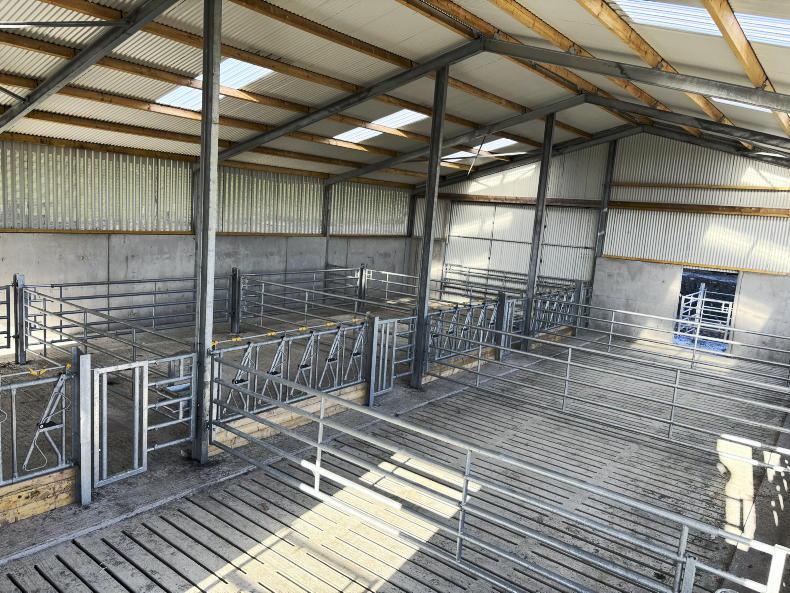
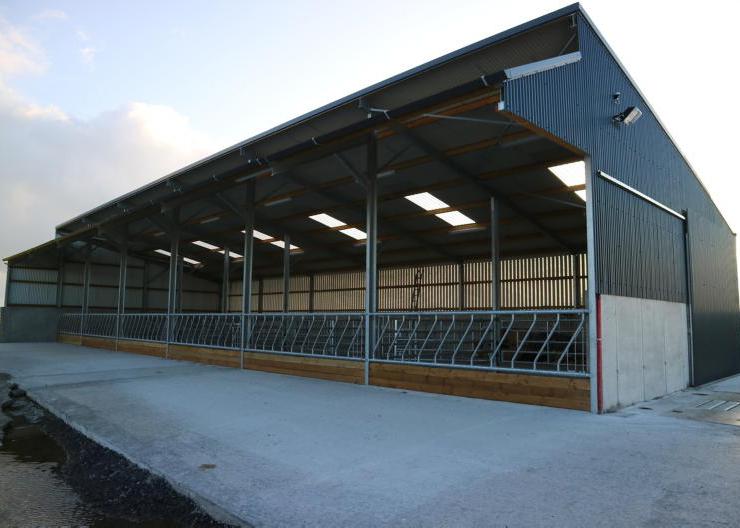
What does the above look like?
Taking the above in to consideration, a suckler/ beef shed measuring five standard bays in length (4.8m), with a 13ft lie back, a 16ft slatted area and an 8ft feed space at the front (open fronted) will come to approximately 300m².
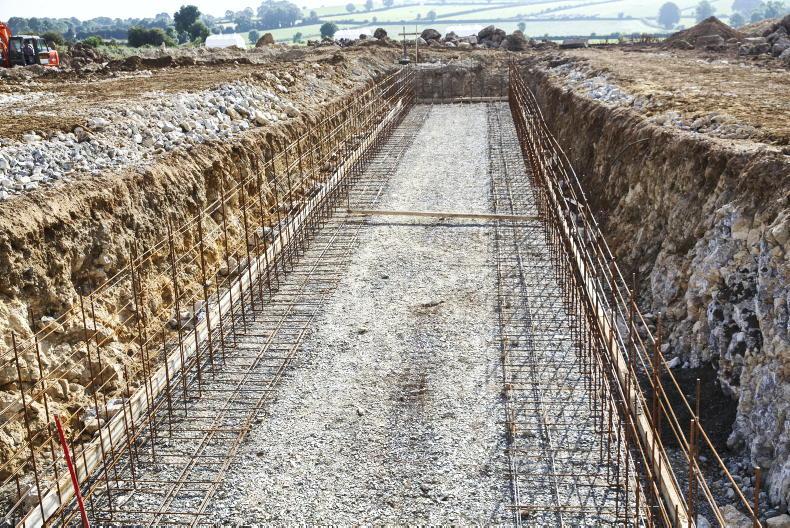
Regarding slurry storage creation, taking a double tank extending the full five bays above (24m), with a suspended rear creep area and agitation points at either end (1.5m each) and a depth of 2.4m, we would only use slightly over half our allowance, with the above tank being 518.4m³.
The above exempted storage of 1,000m³ would provide sufficient storage for 168 dairy cows across an 18-week period at the current figure of 0.33m³/cow/week.
What will catch out some farmers with this is the aggregate area of slurry within the yard. If the farmer above already has 1,000m³ of slurry storage for their 168 cows, then they are limited to an exemption of 500m³.
Major benefits
One of the major benefits of this exemption is that there is no public consultation on it, ie someone can’t object once all eligibility criteria is met. The extent of their objection extends to them objecting to what they believe might not be an exempted development, eg one too close to a road or dwelling house. Cost is also another thing; planning exemptions costs €80 to submit to your local authority, whereas full planning permission is set at a minimum cost of €80 or €1/m², whichever is greater, up to a maximum of €300.
Site location maps and site layout maps should be included in the exemption, with the floor plans and elevations outlaying sizes and types of proposed structures and of any existing structures within the farmyard clearly outlined on the site layout.
The exemption for the creation of slurry storage and an increase in both the gross area of new builds which can avail of it and the aggregate area of buildings within certain yards has increased. Commenting on the signing of these new regulations, Minister of State for Planning and Local Government John Cummins said: “These measures are about common sense and good planning. Adequate slurry storage is critical for protecting water quality and improving nutrient management. Likewise, modern and well-designed animal housing supports higher standards of animal welfare.
“These changes do not remove oversight or responsibility. All developments will still be required to meet building regulations, environmental protections and all relevant agriculture standards. What I am doing is streamlining the process so farmers can make timely, responsible investments in their holdings without being tied up in planning procedures.”
These changes relate to these particular agriculture exemptions following a public consultation on the updating of Exempted Developments which have not been updated in almost 25 years.
It is also the first time that slurry storage has received an exemption for planning permission.
The changes are:
Increase the size of animal housing under Class 6 of Part 3 of Schedule 2 of the Planning and Development Regulations 2001, as amended by 50% – 200sqm to 300sqm for a structure to house animals.Increase the aggregated total from 300sqm to 450sqm for animal housing per farm holding.Allow for a stand-alone slurry storage tank of up to 1,000 cubic metres, subject to a total farm storage of 1,500 cubic metres.This allows for a farm building (defined under class six) up to 300m² to be built without planning permission, so long as the total square metres of animal housing within 100m and including the new build does not gross above 450m².
Regarding slurry storage, 1,000m³ of storage can be constructed, so long as the total farm storage (including the new storage) does not exceed 1,500m³.
Rules regarding proximity to roads, other dwellings and watercourses will remain, with the press release, noting “if an environmental impact assessment or an appropriate assessment of the development is required, planning permission will continue to be required”.
Examples of such may be SAC or SPA land. Such exempted structures cannot be situated, and no effluent from such structures can be stored within 10 metres of any public road. A structure within 100m of any public road should also not exceed 8m in height.
No such exempted structure can be situated, or effluent from such structure shall be stored, within 100m of any house (other than the house of the person providing the structure) or other residential building or school, hospital, church or building used for public assembly, save with the consent in writing of the owner and, as may be appropriate, the occupier or person in charge thereof.
Finally, no unpainted metal sheeting shall be used for roofing or on the external finish of the structure
What does the above look like?
Taking the above in to consideration, a suckler/ beef shed measuring five standard bays in length (4.8m), with a 13ft lie back, a 16ft slatted area and an 8ft feed space at the front (open fronted) will come to approximately 300m².
Regarding slurry storage creation, taking a double tank extending the full five bays above (24m), with a suspended rear creep area and agitation points at either end (1.5m each) and a depth of 2.4m, we would only use slightly over half our allowance, with the above tank being 518.4m³.
The above exempted storage of 1,000m³ would provide sufficient storage for 168 dairy cows across an 18-week period at the current figure of 0.33m³/cow/week.
What will catch out some farmers with this is the aggregate area of slurry within the yard. If the farmer above already has 1,000m³ of slurry storage for their 168 cows, then they are limited to an exemption of 500m³.
Major benefits
One of the major benefits of this exemption is that there is no public consultation on it, ie someone can’t object once all eligibility criteria is met. The extent of their objection extends to them objecting to what they believe might not be an exempted development, eg one too close to a road or dwelling house. Cost is also another thing; planning exemptions costs €80 to submit to your local authority, whereas full planning permission is set at a minimum cost of €80 or €1/m², whichever is greater, up to a maximum of €300.
Site location maps and site layout maps should be included in the exemption, with the floor plans and elevations outlaying sizes and types of proposed structures and of any existing structures within the farmyard clearly outlined on the site layout.






SHARING OPTIONS