Recent wet weather has put farmers under immense pressure with regard slurry storage. Four weeks have passed since the open period of slurry for zones A and B, yet some farms in these regions have still to spread any slurry owing to untrafficable land.
This is putting these farms under serious pressure, moving slurry from one tank to another or to an obliging neighbour’s tank. It highlights a serious issue; we don’t have sufficient slurry storage on farms at current regulatory levels, never mind if these are to be increased.
As it stands, under Ireland’s Nitrates Action Programme, slurry storage for dairy cows is set to increase from its current regulations of 0.33m³/cow/week to 0.4m³/cow/week, a 21% increase.
Let’s look at it in layman’s terms. Taking a farmer in Galway in zone A, this farmer requires 18 weeks of storage. The closed period begins on 1 October, with an 18-week period bringing that farmer up to the last days of January. This means that if the farmer had housed all stock full-time on October 1, they should have been fine with slurry storage up until the end of January. 150 dairy cows currently require 891m³ of storage, or 195,993 gallons (exc freeboard).
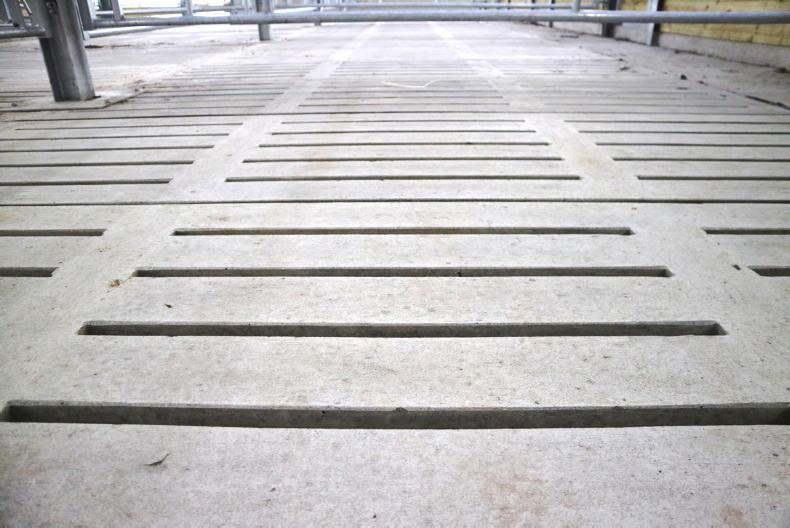
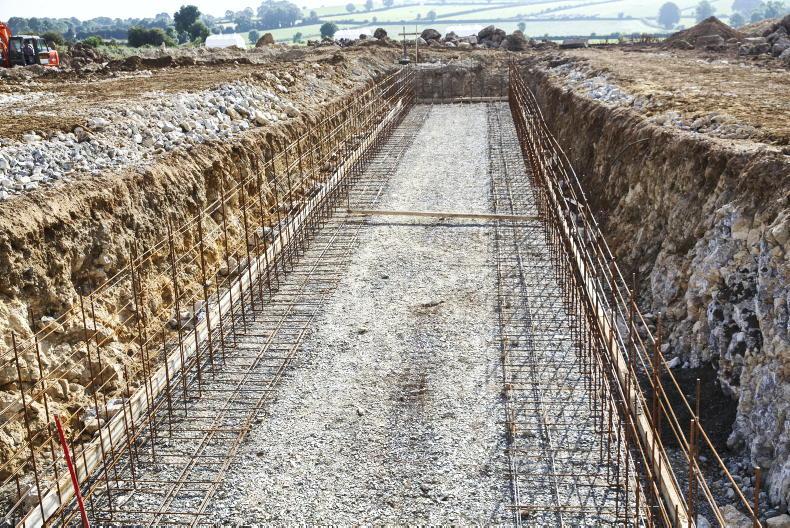
Concrete slatted tanks remain the most popular option due to low labour and their flexibility of use.
There are several issues with this. Firstly, I know of no farmer who has all their stock housed by October 1st (bar an exceptionally bad back end), and it certainly didn’t happen last year. This would lead you to believe the farmer hasn’t sufficient storage. On paper they might (based on the old 0.33m³/cow/week) or might not, but even if they were compliant, it just proves that this figure is not sufficient and that the 0.4m³/cow/week that Teagasc trials have come up with is, in fact, more accurate.
Using the above example but with the 0.4m³ figure shows that the farmer would need 1,080m³ of storage, equivalent to 237,566 gallons. This equates to 60m³ (13,198 gallons) of slurry produced each week, meaning at the higher level per cow, we have just over three-weeks’ additional storage on farm (189 additional m³/60m³ per week).
What this all indicates is a need for additional slurry storage on farm. With dairy commodities having taken a hit in recent months, farmers are looking to hold on to their coffers as much as possible, but with compliance rules staring them in the face in 2028, they have only a short window before the pin must be pulled and investment made. Slurry storage isn’t a one-size-fits-all, and the capacity that you require will affect what is the most cost-effective option without increasing labour dramatically.
Concrete slatted tanks
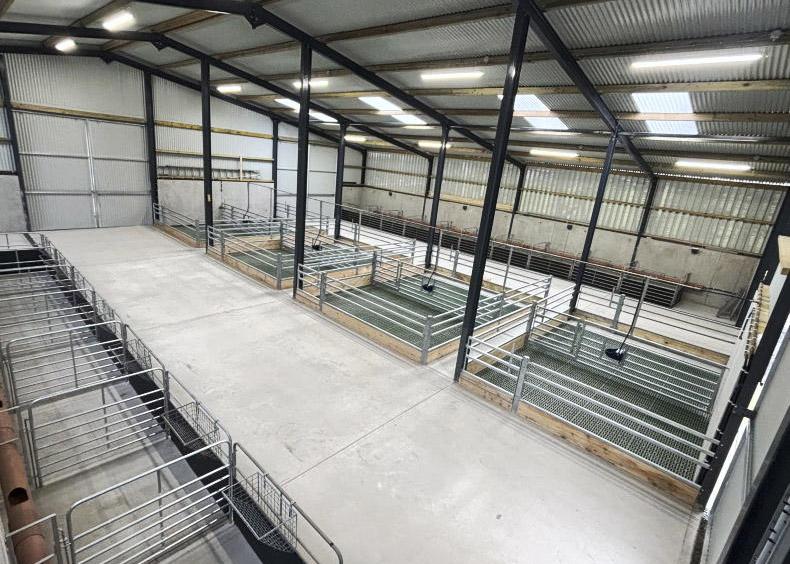
This is by far the most popular option and for good reason. For small to average (or slightly above) sized farms, concrete tanks in the ground overlaid with slats are the wise option for one simple reason: they are self-filling.
Cows stand over them, dung and urine enter them through the slats (or fed by a scraper) and there is no need to intervene unless storage is below the shed stocking capacity and slurry has to be removed.
Table 1 is familiar to some farmers who attended Dairy Day, having been presented by Daire Cregg alongside John Mulcahy and Bertie Troy. As seen in the table, a concrete slatted tank is more cost-effective at a lower volume (80,000 gallons) than an overground tank.
What makes it more costly than an outdoor concrete tank is the presence of slats; however, a slatted tank holds the benefit over each of the other two options in that pumping slurry to the tank is not a necessity when it is used for animal accommodation.
The obvious disadvantage to an uncovered slatted tank is the volume of water collected, which is similar to the underground concrete tank. Rainfall must be accounted for when calculating capacity.
Underground concrete tanks
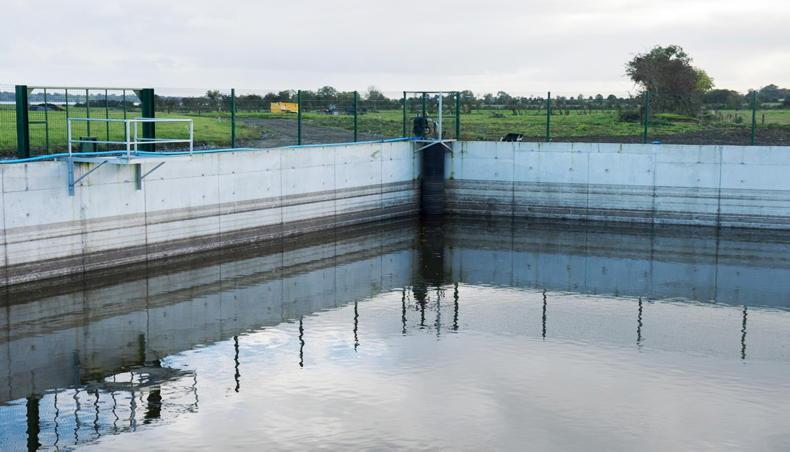
Underground concrete tanks are simply what’s left if you didn’t overlay slats onto your slatted tank. As it won’t need slats or spine walls, etc, it uses less concrete than traditional slatted tanks, though it is generally recommended by building contractors to install spine walls/columns when building this type of tank to allow them to be overlaid with slats in the future.
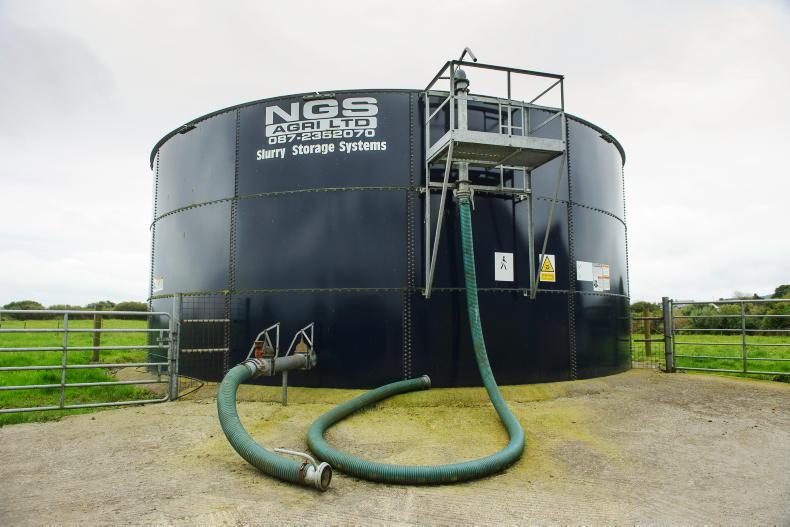
A view of the over-ground slurry storage unit on the Callinan family farm at Oakdale, Skeagh, Inagh, Co. Clare.
As can be seen from the table, uncovered concrete tanks are the cheapest in all scenarios. However, a glaring omission is present here, in that all outdoor slurry stores should be covered. Measures introduced in the Department of Agriculture’s Climate Action Plan back in 2020 meant that from 1 January 2022, all newly constructed external slurry stores are required to be covered.
In addition, all existing external slurry stores should be covered as soon as is practically possible, but no later than 31 December 2027. This measure is an effort to reduce ammonia losses from the stores, keeping more of the valuable nitrogen in the slurry, with the added benefit of a reduction in chemical nitrogen usage.
Agriculture is responsible for 99% of the country’s ammonia emissions. Slats are considered a cover by the Department, primarily because they impede airflow over the tank.
Again, water ingress through rainfall will be an issue and must be accounted for, while fencing will also have to be installed for protection of animals and people around an open tank. Depending on the yard layout, pumping to the tank may be required, though if lucky a simple flow channel may suffice.
Overhead tower
When volume is required and space might be limited, overhead towers can be popular.
They do hold the distinct disadvantage of requiring a reception tank and for slurry to be pumped into them, though with no option to slat or roof them as there is above; they are simply storage and nothing else. Covers are available for overhead towers, with both the tower and cover being TAMS-eligible.
Verdict: concrete is king
Concrete tanks overlaid with slats are the obvious option for many. Looking at the figures above, for 200,000 gallons, a concrete tank is just slightly over 10% more expensive per gallon than a slurry tower.
The flexibility that a slatted tank gives, be it for creating a stand-off pad for buffer feeding, installing outdoor cubicles or eventually roofing it over, is unparalleled.
There are other alternatives we have not discussed that might be a ‘get-out-of-jail card’ in that they can be installed rapidly and at good value, such as net silos and slurry bags.
Recent wet weather has put farmers under immense pressure with regard slurry storage. Four weeks have passed since the open period of slurry for zones A and B, yet some farms in these regions have still to spread any slurry owing to untrafficable land.
This is putting these farms under serious pressure, moving slurry from one tank to another or to an obliging neighbour’s tank. It highlights a serious issue; we don’t have sufficient slurry storage on farms at current regulatory levels, never mind if these are to be increased.
As it stands, under Ireland’s Nitrates Action Programme, slurry storage for dairy cows is set to increase from its current regulations of 0.33m³/cow/week to 0.4m³/cow/week, a 21% increase.
Let’s look at it in layman’s terms. Taking a farmer in Galway in zone A, this farmer requires 18 weeks of storage. The closed period begins on 1 October, with an 18-week period bringing that farmer up to the last days of January. This means that if the farmer had housed all stock full-time on October 1, they should have been fine with slurry storage up until the end of January. 150 dairy cows currently require 891m³ of storage, or 195,993 gallons (exc freeboard).
Concrete slatted tanks remain the most popular option due to low labour and their flexibility of use.
There are several issues with this. Firstly, I know of no farmer who has all their stock housed by October 1st (bar an exceptionally bad back end), and it certainly didn’t happen last year. This would lead you to believe the farmer hasn’t sufficient storage. On paper they might (based on the old 0.33m³/cow/week) or might not, but even if they were compliant, it just proves that this figure is not sufficient and that the 0.4m³/cow/week that Teagasc trials have come up with is, in fact, more accurate.
Using the above example but with the 0.4m³ figure shows that the farmer would need 1,080m³ of storage, equivalent to 237,566 gallons. This equates to 60m³ (13,198 gallons) of slurry produced each week, meaning at the higher level per cow, we have just over three-weeks’ additional storage on farm (189 additional m³/60m³ per week).
What this all indicates is a need for additional slurry storage on farm. With dairy commodities having taken a hit in recent months, farmers are looking to hold on to their coffers as much as possible, but with compliance rules staring them in the face in 2028, they have only a short window before the pin must be pulled and investment made. Slurry storage isn’t a one-size-fits-all, and the capacity that you require will affect what is the most cost-effective option without increasing labour dramatically.
Concrete slatted tanks
This is by far the most popular option and for good reason. For small to average (or slightly above) sized farms, concrete tanks in the ground overlaid with slats are the wise option for one simple reason: they are self-filling.
Cows stand over them, dung and urine enter them through the slats (or fed by a scraper) and there is no need to intervene unless storage is below the shed stocking capacity and slurry has to be removed.
Table 1 is familiar to some farmers who attended Dairy Day, having been presented by Daire Cregg alongside John Mulcahy and Bertie Troy. As seen in the table, a concrete slatted tank is more cost-effective at a lower volume (80,000 gallons) than an overground tank.
What makes it more costly than an outdoor concrete tank is the presence of slats; however, a slatted tank holds the benefit over each of the other two options in that pumping slurry to the tank is not a necessity when it is used for animal accommodation.
The obvious disadvantage to an uncovered slatted tank is the volume of water collected, which is similar to the underground concrete tank. Rainfall must be accounted for when calculating capacity.
Underground concrete tanks
Underground concrete tanks are simply what’s left if you didn’t overlay slats onto your slatted tank. As it won’t need slats or spine walls, etc, it uses less concrete than traditional slatted tanks, though it is generally recommended by building contractors to install spine walls/columns when building this type of tank to allow them to be overlaid with slats in the future.
A view of the over-ground slurry storage unit on the Callinan family farm at Oakdale, Skeagh, Inagh, Co. Clare.
As can be seen from the table, uncovered concrete tanks are the cheapest in all scenarios. However, a glaring omission is present here, in that all outdoor slurry stores should be covered. Measures introduced in the Department of Agriculture’s Climate Action Plan back in 2020 meant that from 1 January 2022, all newly constructed external slurry stores are required to be covered.
In addition, all existing external slurry stores should be covered as soon as is practically possible, but no later than 31 December 2027. This measure is an effort to reduce ammonia losses from the stores, keeping more of the valuable nitrogen in the slurry, with the added benefit of a reduction in chemical nitrogen usage.
Agriculture is responsible for 99% of the country’s ammonia emissions. Slats are considered a cover by the Department, primarily because they impede airflow over the tank.
Again, water ingress through rainfall will be an issue and must be accounted for, while fencing will also have to be installed for protection of animals and people around an open tank. Depending on the yard layout, pumping to the tank may be required, though if lucky a simple flow channel may suffice.
Overhead tower
When volume is required and space might be limited, overhead towers can be popular.
They do hold the distinct disadvantage of requiring a reception tank and for slurry to be pumped into them, though with no option to slat or roof them as there is above; they are simply storage and nothing else. Covers are available for overhead towers, with both the tower and cover being TAMS-eligible.
Verdict: concrete is king
Concrete tanks overlaid with slats are the obvious option for many. Looking at the figures above, for 200,000 gallons, a concrete tank is just slightly over 10% more expensive per gallon than a slurry tower.
The flexibility that a slatted tank gives, be it for creating a stand-off pad for buffer feeding, installing outdoor cubicles or eventually roofing it over, is unparalleled.
There are other alternatives we have not discussed that might be a ‘get-out-of-jail card’ in that they can be installed rapidly and at good value, such as net silos and slurry bags.





SHARING OPTIONS