While the area planted during 2025 was the best performance since 2019, results for the first quarter show a major fall in afforestation. So far only 256ha have been planted, compared with 628ha last year (Table 1). On a more positive note road construction is up by almost 50% while felling licences increased by 20% so there should be sufficient licences in the system to cover the expected harvest which is uncertain due to windblow. These returns are based on Department of Agriculture, Food and the Marine (DAFM) data up to the end of March this year.
Afforestation
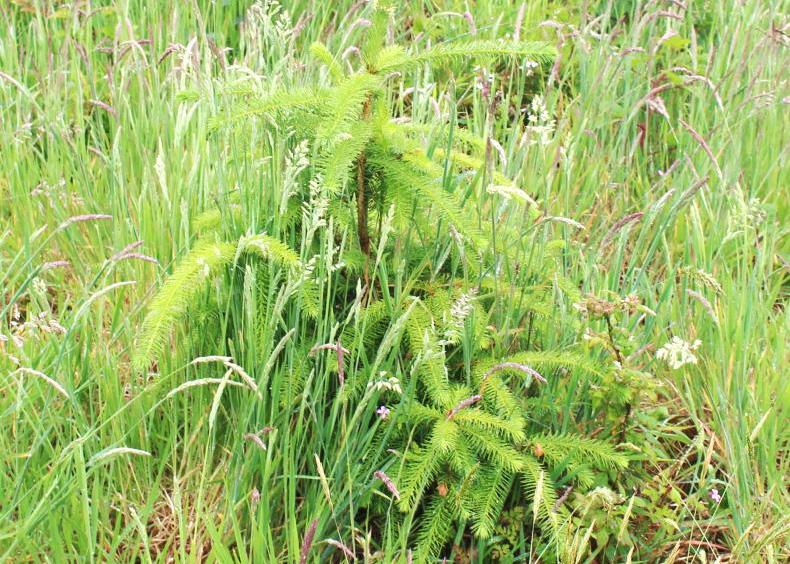
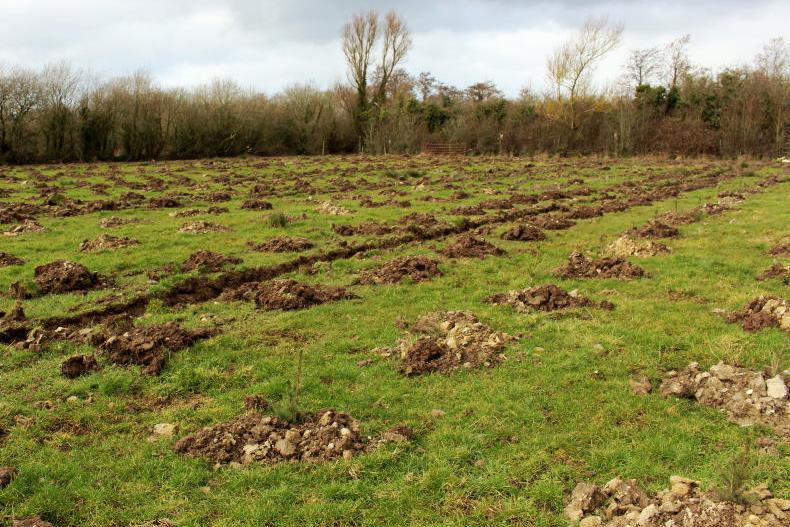
The biggest disappointment in the first quarter returns this year has been the performance of afforestation. Only 256ha have been planted, up to the end of March, compared with 628ha last year and 273 in a very disappointing 2024. If the 2023 data is discounted – the forestry programme was awaiting approval that year – 2026 planting performance is historically low (Table 1). More worrying is the continued fall in licences issued, which has been a trend for some time.
Last year’s increased planting performance of 2,527ha was based on high returns from March to September but this is unlikely this year as planting licences are also down.
All indicators suggest that the annual performance will drop below 2,000ha unless there is a significant increase over the coming months.
Annual planting returns at this level do not augur well for the long term future of the timber processing and energy sectors, especially as only 35% of new forests now feature commercial tree species.
Roading
Forest road construction is a good indicator of forestry activity as owners who build roads, are planning to harvest. Licences were issued for 76km of forest roads in the first quarter, while 23km were constructed.
This compares favourably with 2024 when 52km of roads were licensed and 16km constructed.
Even when licences were higher in 2024 when 84km were approved, this only translated into 14km of actual roading so recent returns suggest that forest owners are building sufficient roads for a sustainable medium-term harvest.
Felling licences
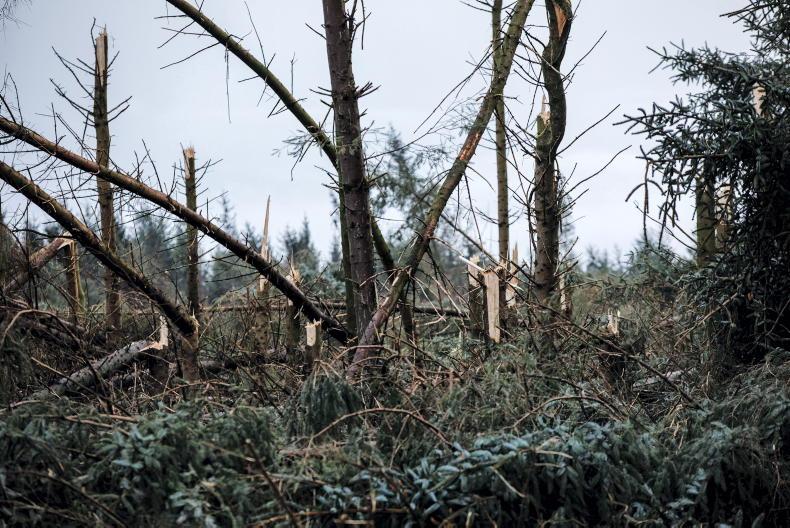
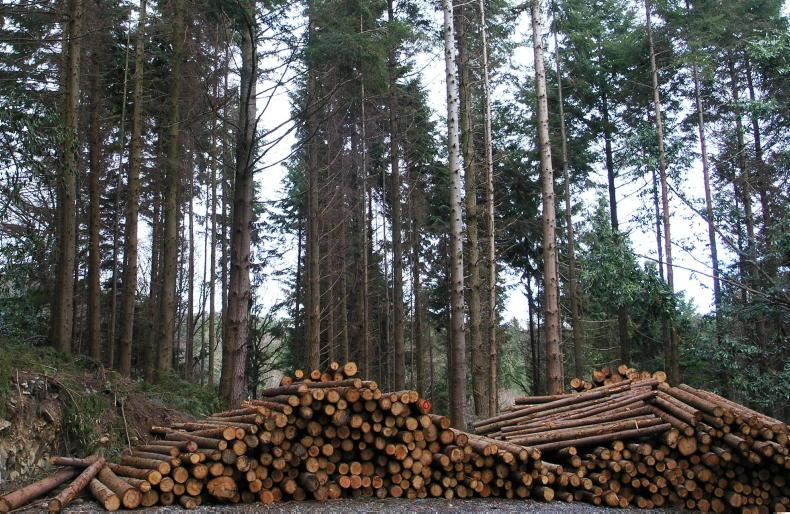
It is difficult to assess performance in felling licences and resultant harvesting which is compounded by the windblow situation. Felling licences have been issued so far in 2026 for 4,257ha which translates to 1.27 million m3 of timber. If this trend is continued there should be close to million m3 available for timber processing (sawmills and board plants) and wood energy.
The 2026 output represents an increase over the first quarter last year when felling licences were issued for 3,564ha which translated to 1.07 million m3 of timber.
Although both years are down on 2024, when felling licences were issued for 5832ha, yielding 1.71 million m3 of logs, there should be sufficient licences in the system to cater for the increased timber processing.
Growers have a 10-year period to activate licences so a yearly analysis of licences is too short a timeframe to make a judgement call on long-term harvest supply. For example, nobody knows for sure how many of the 2.5 million m3 annual average licences issued for both 2022 and 2023 have been activated and how many of these are in the windblow category.
The conclusion when assessing the first quarter of DAFM’s dashboard data is there is plenty activity in forest production but not nearly enough in forest establishment.
Aurivo to invest €12m in wood pellet system
Aurivo Co-operative Society has announced a €12 million investment in a first-of-its-kind wood pellet burner and boiler system at its dairy ingredients facility in Ballaghaderreen. The investment is co-funded by the Shared Island Sustainability Capital Grant scheme delivered by Enterprise Ireland, InterTradeIreland and Invest Northern Ireland.
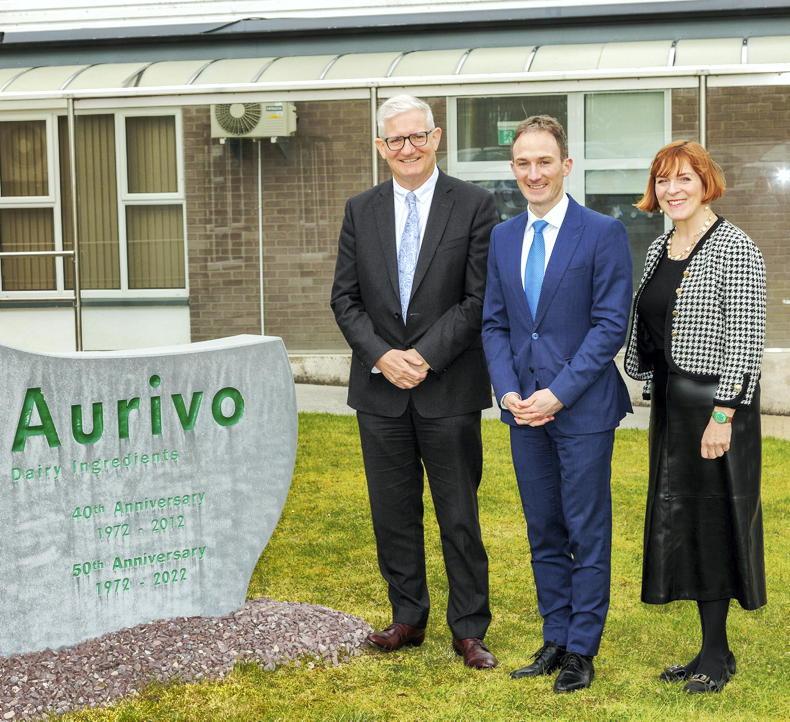
Alan Dillon (centre), Minister of State for Small Business, Retail and Employment with Donal Tierney, CEO, Aurivo Co-operative Society and Méabh Conaghan, Western Regional Director, Enterprise Ireland during Aurivo's announcement of €12 million investment in a new wood pellet burner and boiler system.
“This multimillion investment represents a transformative step in reducing the carbon footprint of our Dairy Ingredients facility while strengthening the long-term resilience of operations,” said Aurivo CEO Donal Tierney.
The initiative has been welcomed by timber processors in the Irish forestry and forest products sector. Wood pellets are manufactured from small wood and wood residue (wood chips and sawdust). “The Aurivo project it is a major boost for the indigenous energy market,” said a sawmill spokesperson.
He welcomed Aurivo’s announcement that the boilers will be “fuelled by locally supplied, sustainably certified wood pellets” and that “the new energy infrastructure will help anchor more economic value within the all-island supply chain while supporting indigenous industry”.
By switching to renewable, locally sourced biomass, Aurivo is “cutting its reliance on fossil fuels,” said Donal Tierney. “Beyond its environmental benefits, the biomass system will provide significantly greater energy cost certainty,” he added. “Moving away from imported fossil fuels towards a stable, renewable certified fuel source will protect the business from the volatility that has characterised global energy markets in recent years, enhancing the long-term competitiveness of Aurivo’s dairy operations.”
Noel Gavigan, technical executive, IrBEA said bioenergy in the form of woodchip and wood pellets “offers the cheapest source of renewable heat available today, especially for industrial use at scale and at high temperatures needed for industrial processes”.
“Aurivo has been a pioneer in adopting bioenergy as a renewable fuel of choice, installing their first woodchip steam boiler over 15 years ago, and now reinvesting in bioenergy,” he said.
“In these times of fossil fuel supply uncertainty this approach also offers a hedge against vulnerable supply chains by using woodfuels grown here in Ireland.”
While the area planted during 2025 was the best performance since 2019, results for the first quarter show a major fall in afforestation. So far only 256ha have been planted, compared with 628ha last year (Table 1). On a more positive note road construction is up by almost 50% while felling licences increased by 20% so there should be sufficient licences in the system to cover the expected harvest which is uncertain due to windblow. These returns are based on Department of Agriculture, Food and the Marine (DAFM) data up to the end of March this year.
Afforestation
The biggest disappointment in the first quarter returns this year has been the performance of afforestation. Only 256ha have been planted, up to the end of March, compared with 628ha last year and 273 in a very disappointing 2024. If the 2023 data is discounted – the forestry programme was awaiting approval that year – 2026 planting performance is historically low (Table 1). More worrying is the continued fall in licences issued, which has been a trend for some time.
Last year’s increased planting performance of 2,527ha was based on high returns from March to September but this is unlikely this year as planting licences are also down.
All indicators suggest that the annual performance will drop below 2,000ha unless there is a significant increase over the coming months.
Annual planting returns at this level do not augur well for the long term future of the timber processing and energy sectors, especially as only 35% of new forests now feature commercial tree species.
Roading
Forest road construction is a good indicator of forestry activity as owners who build roads, are planning to harvest. Licences were issued for 76km of forest roads in the first quarter, while 23km were constructed.
This compares favourably with 2024 when 52km of roads were licensed and 16km constructed.
Even when licences were higher in 2024 when 84km were approved, this only translated into 14km of actual roading so recent returns suggest that forest owners are building sufficient roads for a sustainable medium-term harvest.
Felling licences
It is difficult to assess performance in felling licences and resultant harvesting which is compounded by the windblow situation. Felling licences have been issued so far in 2026 for 4,257ha which translates to 1.27 million m3 of timber. If this trend is continued there should be close to million m3 available for timber processing (sawmills and board plants) and wood energy.
The 2026 output represents an increase over the first quarter last year when felling licences were issued for 3,564ha which translated to 1.07 million m3 of timber.
Although both years are down on 2024, when felling licences were issued for 5832ha, yielding 1.71 million m3 of logs, there should be sufficient licences in the system to cater for the increased timber processing.
Growers have a 10-year period to activate licences so a yearly analysis of licences is too short a timeframe to make a judgement call on long-term harvest supply. For example, nobody knows for sure how many of the 2.5 million m3 annual average licences issued for both 2022 and 2023 have been activated and how many of these are in the windblow category.
The conclusion when assessing the first quarter of DAFM’s dashboard data is there is plenty activity in forest production but not nearly enough in forest establishment.
Aurivo to invest €12m in wood pellet system
Aurivo Co-operative Society has announced a €12 million investment in a first-of-its-kind wood pellet burner and boiler system at its dairy ingredients facility in Ballaghaderreen. The investment is co-funded by the Shared Island Sustainability Capital Grant scheme delivered by Enterprise Ireland, InterTradeIreland and Invest Northern Ireland.
Alan Dillon (centre), Minister of State for Small Business, Retail and Employment with Donal Tierney, CEO, Aurivo Co-operative Society and Méabh Conaghan, Western Regional Director, Enterprise Ireland during Aurivo's announcement of €12 million investment in a new wood pellet burner and boiler system.
“This multimillion investment represents a transformative step in reducing the carbon footprint of our Dairy Ingredients facility while strengthening the long-term resilience of operations,” said Aurivo CEO Donal Tierney.
The initiative has been welcomed by timber processors in the Irish forestry and forest products sector. Wood pellets are manufactured from small wood and wood residue (wood chips and sawdust). “The Aurivo project it is a major boost for the indigenous energy market,” said a sawmill spokesperson.
He welcomed Aurivo’s announcement that the boilers will be “fuelled by locally supplied, sustainably certified wood pellets” and that “the new energy infrastructure will help anchor more economic value within the all-island supply chain while supporting indigenous industry”.
By switching to renewable, locally sourced biomass, Aurivo is “cutting its reliance on fossil fuels,” said Donal Tierney. “Beyond its environmental benefits, the biomass system will provide significantly greater energy cost certainty,” he added. “Moving away from imported fossil fuels towards a stable, renewable certified fuel source will protect the business from the volatility that has characterised global energy markets in recent years, enhancing the long-term competitiveness of Aurivo’s dairy operations.”
Noel Gavigan, technical executive, IrBEA said bioenergy in the form of woodchip and wood pellets “offers the cheapest source of renewable heat available today, especially for industrial use at scale and at high temperatures needed for industrial processes”.
“Aurivo has been a pioneer in adopting bioenergy as a renewable fuel of choice, installing their first woodchip steam boiler over 15 years ago, and now reinvesting in bioenergy,” he said.
“In these times of fossil fuel supply uncertainty this approach also offers a hedge against vulnerable supply chains by using woodfuels grown here in Ireland.”






SHARING OPTIONS