Minister of State Michael Healy-Rae is “confident about the future of Irish forestry” despite a year dominated by a devastating storm, but an increased, albeit still challenging, afforestation programme.
“Forestry is very positive, but we have to think about the future,” he said in his interview to mark just over a year in his current role.
“We need to have our own timber, rather than relying on imports.”
Mid-term review
He has completed work on the mid-term review of the current Forestry Programme. “I’m changing the eligibility of what a farmer is to ensure that more people will be able to avail of the 20-year premium period rather than 15 years for [non-farmers],” Healy-Rae said.
To achieve this he is changing the rules on the Basic Income Support for Sustainability (BISS) scheme.
“To be a farmer now you have to be able to prove you have claimed BISS for the last four years,” he explained. “That will now change to one year,” which he said will allow more farm families to qualify for 20-year premium payments.
“For example a son or daughter who returns from abroad might wish to farm but they have been precluded because you can’t turn back the clock whereas it’s very easy to have BISS for one year and qualify for the 20-year premium,” he said.
The five-year addition provides a major increase in revenue for those who qualify. For example, in a 10ha plantation, the total tax-free income would go from between €111,900 and €171,300 – depending on species mix – for 15 years, to between €149,200 and €228,400 for 20 years.
“I will also introduce practical things such as increasing the grant for making roads and fencing because of rising costs,” he said.
“The grant per linear metre of fencing and road construction will increase by 20%.”
Afforestation
“I don’t like planting what I’d call good ground but every farmer has some room for trees, even if it’s not in a commercial way,” he said.
“We have our obligation to plant native trees and we want to do that,” he said
“There’s nothing that would be nicer for a farmers than adding hardwoods. It might only be a shelterbelt but something you’d be able to say to your grandchildren that you have these trees to be remembered by.”
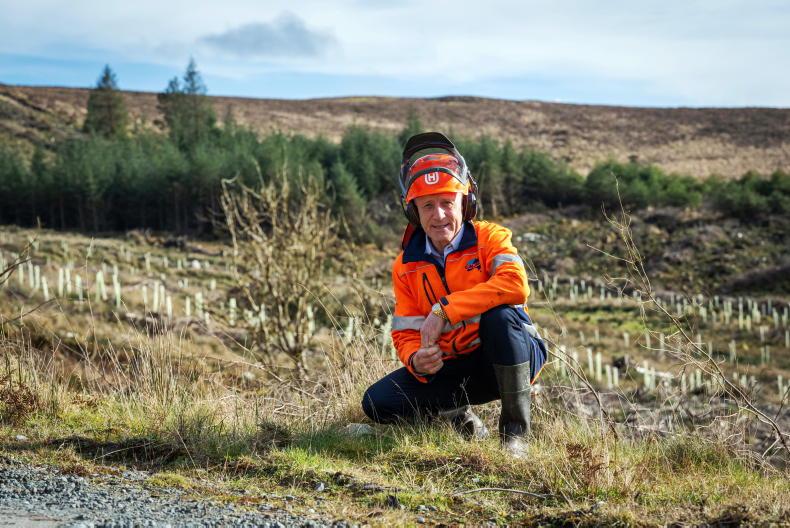
One of the minister’s major achievements in 2025 was to increase afforestation to 2,527ha, the highest programme since 2019.
He wouldn’t be drawn on a prediction for 2026 except to say “we will do well”.
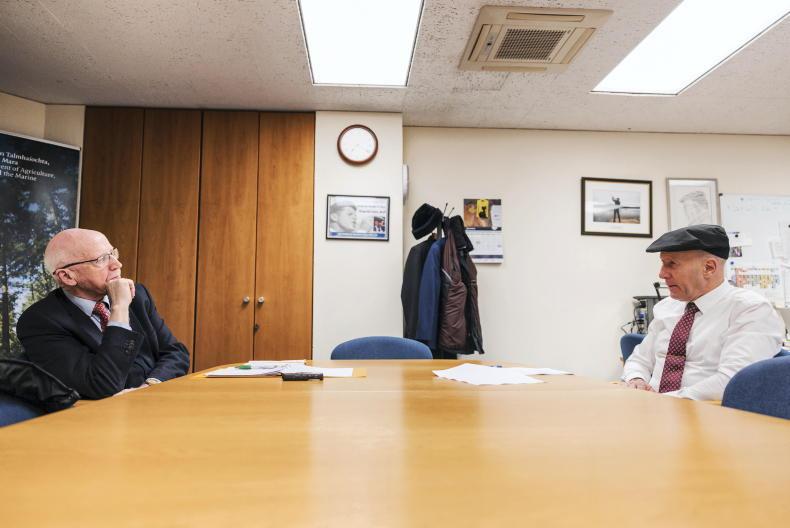
Michael Healy-Rae in conversation with the Irish Farmers Journal. \ Claire Nash
While his main aim is encourage farmers to plant, he has been exploring a wide range of options including afforestation on public lands.
“Nobody ever has had the initiative to plant on public lands,” he said. “We took this on board by contacting every person that is in charge of public land and this is going to be a big programme for the future.”
Next forestry programme
Land availability for forestry will feature strongly in the 2028 Forestry Programme including planting peatlands.
“When I told the Seanad that I wanted to plant peaty soils, critics claimed I was in favour of planting bogs – I’m not now, nor did I ever say we should be planting deep peats,” he said.
“Do they even know what mineral soil mixed with peat is?” he asked.
“That is the peaty type soils we should be planting and it’s the land we will plant.”
Minister Healy-Rae said he will base his argument on science and will invite EU officials to see some typical peaty soils suitable for planting in Ireland.
Windblow
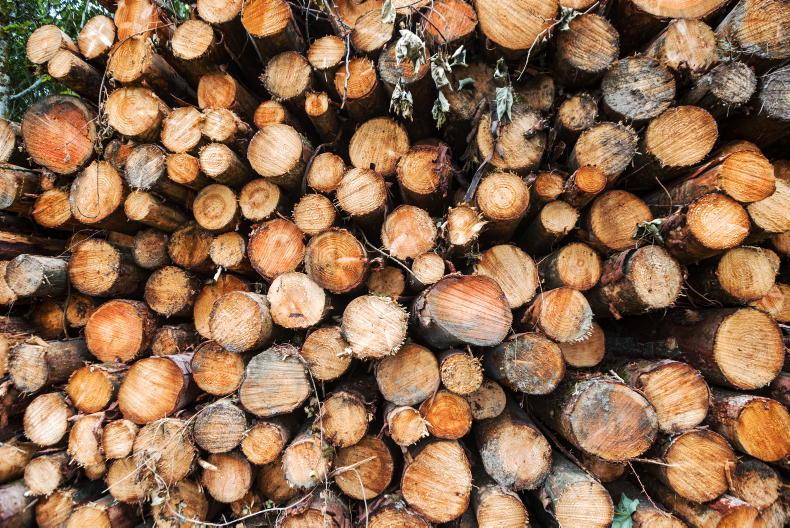
“Storm Éowyn was an unprecedented event, felling two and a half years’ harvest in one night,” he said when asked about the response of the taskforce, which he established immediately after the storm.
“I’m extremely happy the way we are all pulling together, to get the timber out safely and make sure it’s done properly” he said. “I wanted people to go by the [ITGA] harvesting and sales template and make sure they were dealing with proper respectable foresters and sawmills, not fly-by-night men.”
When it was put to him that Ireland could have learned from the Swedes who removed most of their 75 million m3 within a year, compared with an estimated three years for Ireland he said comparisons with a huge sector like Sweden didn’t apply.
Ash dieback
The minister outlined his views on the Reconstitution Ash Dieback Scheme (RADS), which is open until December 2027, although he was at pains to stress that this doesn’t mean that work has to be completed by then.
He urged owners of infected ash plantations “to get their RADS applications in so they can get approval by the end of next year,” even though the owner may not be in a position to carry out the work until later.
He says there is flexibility in replanting options from commercial to non-commercial crops including agro-forestry for a scheme that amounts to €10,000/ha.
Addressing risk
When asked about addressing the future risk to forests from natural causes he said: “I’d look at a State-private insurance scheme,” but he added, “we also need to look at how we manage our forests including thinning on time to develop
good root systems and minimise windblow.”
Views on perceived barriers to forestry
Minister Healy-Rae discussed a number of barriers to afforestation raised by the IFA and other stakeholders, including the mandatory cap of 65% commercial forestry, the replanting obligation; and forestry appeals.
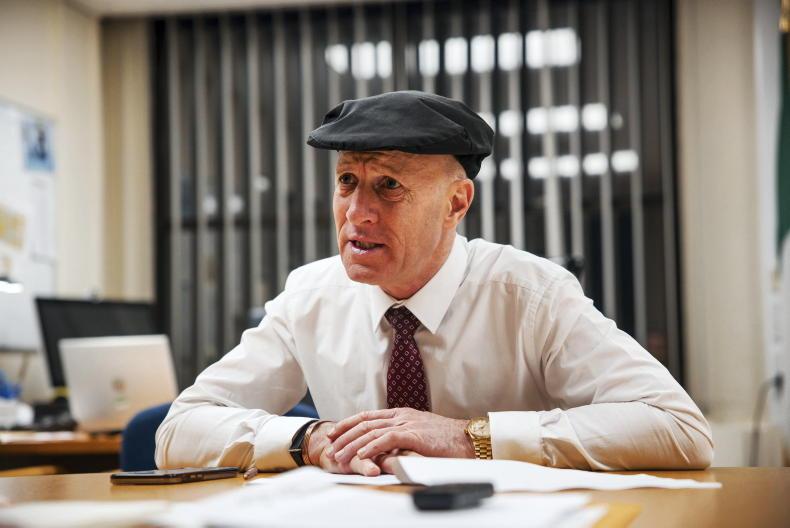
Michael Healy-Rae in conversation with the Irish Farmers Journal. \ Claire Nash
“I agree 100% with those who say 65% maximum conifers is too much,” he said.
His message to farmers who plant, public bodies and Coillte is the same: “Yes, we have work to do for the State such as protecting our natural woodlands but growing timber to sell it, to make money and to replant again, that’s what I’m about.”
“I’m writing a book – Too Far East is West – and the 65%-35% mix is a little too far east. In other words we need balance but there is no point in having balance against commercial forestry.
“We have to hold it,” he added when asked about the replanting obligation. “All of us who signed up for afforestation, also signed up for reforestation,” he maintained. “You can’t move the goalposts in the middle of the game.”
He shares the frustrations of other stakeholders with the Forestry Appeals System.
“In future, when a case goes to appeal, it will have a statutory time limit – I will make sure this will happen,” he said.
Views on a Forestry Development Agency
When it was put to the minister that forestry was the only natural resource without the support of an independent State development agency, he was adamant that there was no need for a Forestry Development Agency (FDA).
“When the proposal for a FDA was made a number of years ago, it was right at the time,” he said. “Nobody supports it now,” he added.
“Forestry has never been as positive. There is no such thing as opposition to forestry.
“When farmers have a problem now, they don’t go to their local politicians to put down parliamentary questions, they come straight to the department. We have an absolute hands-on approach and to even suggest that we need another layer of bureaucracy is totally unnecessary.”
The Irish Farmers Journal contacted supporters of a FDA to seek their current position including Forest Industries Ireland (FII); the Social, Economic, Environmental Forestry Association (SEEFA); and the Irish Timber Growers Association (ITGA).
“Notwithstanding the positive work done by the minister and his department, FII believes forestry would benefit from having an FDA structure supporting the sector in the long-term,” said Mark McAuley, FII director.
“While SEEFA acknowledges the crucial role the minister is playing in progressing the industry currently, the association believes the establishment of a FDA will be vital for the development of the industry beyond his tenure,” said Teige Ryan of the SEEFA.
“Our association recognises the minister’s key role in reinvigorating the sector, and recent significant supportive initiatives. However, ITGA believe that a well-resourced independent FDA should be a longer-term goal to build on current momentum,” said Brendan Lacey, ITGA chair.
Minister of State Michael Healy-Rae is “confident about the future of Irish forestry” despite a year dominated by a devastating storm, but an increased, albeit still challenging, afforestation programme.
“Forestry is very positive, but we have to think about the future,” he said in his interview to mark just over a year in his current role.
“We need to have our own timber, rather than relying on imports.”
Mid-term review
He has completed work on the mid-term review of the current Forestry Programme. “I’m changing the eligibility of what a farmer is to ensure that more people will be able to avail of the 20-year premium period rather than 15 years for [non-farmers],” Healy-Rae said.
To achieve this he is changing the rules on the Basic Income Support for Sustainability (BISS) scheme.
“To be a farmer now you have to be able to prove you have claimed BISS for the last four years,” he explained. “That will now change to one year,” which he said will allow more farm families to qualify for 20-year premium payments.
“For example a son or daughter who returns from abroad might wish to farm but they have been precluded because you can’t turn back the clock whereas it’s very easy to have BISS for one year and qualify for the 20-year premium,” he said.
The five-year addition provides a major increase in revenue for those who qualify. For example, in a 10ha plantation, the total tax-free income would go from between €111,900 and €171,300 – depending on species mix – for 15 years, to between €149,200 and €228,400 for 20 years.
“I will also introduce practical things such as increasing the grant for making roads and fencing because of rising costs,” he said.
“The grant per linear metre of fencing and road construction will increase by 20%.”
Afforestation
“I don’t like planting what I’d call good ground but every farmer has some room for trees, even if it’s not in a commercial way,” he said.
“We have our obligation to plant native trees and we want to do that,” he said
“There’s nothing that would be nicer for a farmers than adding hardwoods. It might only be a shelterbelt but something you’d be able to say to your grandchildren that you have these trees to be remembered by.”
One of the minister’s major achievements in 2025 was to increase afforestation to 2,527ha, the highest programme since 2019.
He wouldn’t be drawn on a prediction for 2026 except to say “we will do well”.
Michael Healy-Rae in conversation with the Irish Farmers Journal. \ Claire Nash
While his main aim is encourage farmers to plant, he has been exploring a wide range of options including afforestation on public lands.
“Nobody ever has had the initiative to plant on public lands,” he said. “We took this on board by contacting every person that is in charge of public land and this is going to be a big programme for the future.”
Next forestry programme
Land availability for forestry will feature strongly in the 2028 Forestry Programme including planting peatlands.
“When I told the Seanad that I wanted to plant peaty soils, critics claimed I was in favour of planting bogs – I’m not now, nor did I ever say we should be planting deep peats,” he said.
“Do they even know what mineral soil mixed with peat is?” he asked.
“That is the peaty type soils we should be planting and it’s the land we will plant.”
Minister Healy-Rae said he will base his argument on science and will invite EU officials to see some typical peaty soils suitable for planting in Ireland.
Windblow
“Storm Éowyn was an unprecedented event, felling two and a half years’ harvest in one night,” he said when asked about the response of the taskforce, which he established immediately after the storm.
“I’m extremely happy the way we are all pulling together, to get the timber out safely and make sure it’s done properly” he said. “I wanted people to go by the [ITGA] harvesting and sales template and make sure they were dealing with proper respectable foresters and sawmills, not fly-by-night men.”
When it was put to him that Ireland could have learned from the Swedes who removed most of their 75 million m3 within a year, compared with an estimated three years for Ireland he said comparisons with a huge sector like Sweden didn’t apply.
Ash dieback
The minister outlined his views on the Reconstitution Ash Dieback Scheme (RADS), which is open until December 2027, although he was at pains to stress that this doesn’t mean that work has to be completed by then.
He urged owners of infected ash plantations “to get their RADS applications in so they can get approval by the end of next year,” even though the owner may not be in a position to carry out the work until later.
He says there is flexibility in replanting options from commercial to non-commercial crops including agro-forestry for a scheme that amounts to €10,000/ha.
Addressing risk
When asked about addressing the future risk to forests from natural causes he said: “I’d look at a State-private insurance scheme,” but he added, “we also need to look at how we manage our forests including thinning on time to develop
good root systems and minimise windblow.”
Views on perceived barriers to forestry
Minister Healy-Rae discussed a number of barriers to afforestation raised by the IFA and other stakeholders, including the mandatory cap of 65% commercial forestry, the replanting obligation; and forestry appeals.
Michael Healy-Rae in conversation with the Irish Farmers Journal. \ Claire Nash
“I agree 100% with those who say 65% maximum conifers is too much,” he said.
His message to farmers who plant, public bodies and Coillte is the same: “Yes, we have work to do for the State such as protecting our natural woodlands but growing timber to sell it, to make money and to replant again, that’s what I’m about.”
“I’m writing a book – Too Far East is West – and the 65%-35% mix is a little too far east. In other words we need balance but there is no point in having balance against commercial forestry.
“We have to hold it,” he added when asked about the replanting obligation. “All of us who signed up for afforestation, also signed up for reforestation,” he maintained. “You can’t move the goalposts in the middle of the game.”
He shares the frustrations of other stakeholders with the Forestry Appeals System.
“In future, when a case goes to appeal, it will have a statutory time limit – I will make sure this will happen,” he said.
Views on a Forestry Development Agency
When it was put to the minister that forestry was the only natural resource without the support of an independent State development agency, he was adamant that there was no need for a Forestry Development Agency (FDA).
“When the proposal for a FDA was made a number of years ago, it was right at the time,” he said. “Nobody supports it now,” he added.
“Forestry has never been as positive. There is no such thing as opposition to forestry.
“When farmers have a problem now, they don’t go to their local politicians to put down parliamentary questions, they come straight to the department. We have an absolute hands-on approach and to even suggest that we need another layer of bureaucracy is totally unnecessary.”
The Irish Farmers Journal contacted supporters of a FDA to seek their current position including Forest Industries Ireland (FII); the Social, Economic, Environmental Forestry Association (SEEFA); and the Irish Timber Growers Association (ITGA).
“Notwithstanding the positive work done by the minister and his department, FII believes forestry would benefit from having an FDA structure supporting the sector in the long-term,” said Mark McAuley, FII director.
“While SEEFA acknowledges the crucial role the minister is playing in progressing the industry currently, the association believes the establishment of a FDA will be vital for the development of the industry beyond his tenure,” said Teige Ryan of the SEEFA.
“Our association recognises the minister’s key role in reinvigorating the sector, and recent significant supportive initiatives. However, ITGA believe that a well-resourced independent FDA should be a longer-term goal to build on current momentum,” said Brendan Lacey, ITGA chair.





SHARING OPTIONS