


An article in last week’s Irish Farmers Journal, bore the headline was “Beware cutting N rates”.
I find it most disappointing that researchers, academics and relevant authorities are not taking on board well publicised studies which show that nitrogen on grassland can be cut substantially.
Nitrogen is the one nutrient of which use can (and should) be cut with confidence, and there is a well-established protocol for doing so.
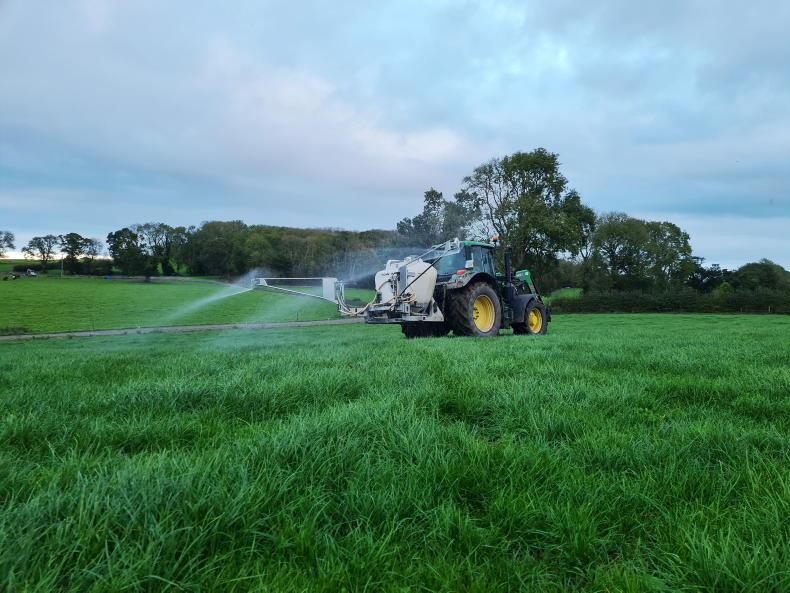
Research was completed on foliar feeding grassland in New Zealand as long ago as 2013 (Using humic compounds to improve efficiency of fertiliser nitrogen: Schofield et al), and this work was replicated on farm trials in Wales in 2021 (EIP Wales Foliar Feed for Grassland). This study was by Nigel Howells, an experienced dairy consultant, who became aware of this alternative approach to fertilising grassland while working in New Zealand.
Many farmers around the UK and Ireland (and now Europe) are using this method to reduce N use by anywhere between 30% on grazing, and 50% on silage ground.
Yields are comparable and forage is of a higher quality. Foliar feeding in this manner (a mixture of urea and potassium humate) has long term benefits in terms of soil health, land productivity and livestock health. The economic benefits are more pronounced at times like these, when fertiliser prices are under pressure.
If farmers are buying bulk containers they are likely buying a foliar feed, and no research has ever suggested that using urea in this way is likely to increase grass yields multiple times over granular. However, soil applied nitrogen will always require higher rates and will take longer to become crop available, hence the value in foliar feeding.
The Grassland Farmer of the Year (2023) employs the foliar feeding system of nitrogen application, and it is becoming more and more popular as farmers are required to meet onerous environmental targets. Farmers rarely return to the conventional method of fertilising once they have converted to foliar feeding.





SHARING OPTIONS