


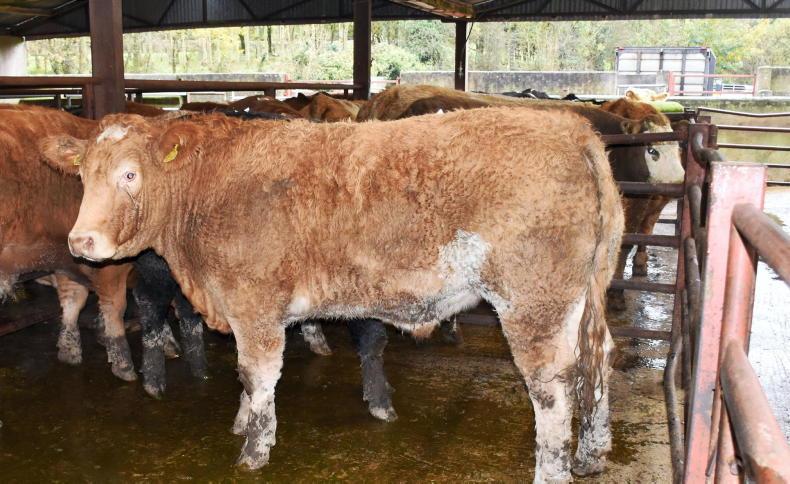
This time last year we were in the middle of an unprecedented rise in the price of beef, with base quotes up another 20p/kg and 630p/kg freely available for U-3 grading finished cattle.
It was a fairly rare moment when beef finishers were making significant profits – a 730kg top-quality steer killing into 420kg deadweight was grossing £2,646.
Mart reports published by the Livestock and Meat Commission (LMC) showed that in mid-October of the previous year, a first quality 550kg steer cost an average of 303p/kg, which equates to an initial buying price of £1,667.
One year later, it is a completely different story
Over a 150-day finishing period, there was a margin of £979 per head to cover costs and before we include the £75 per head payment from the Beef Carbon Reduction (BCR) scheme.
One year later, it is a completely different story. Data from the LMC suggests that same first quality 550kg steer cost an average of 450p/kg to buy last October, which works out at £2,475 per head. Assuming the animal kills into 420kg at 640p/kg, it is a selling price of £2,688, so there is just £213 per head to cover costs. Even when we include the £75 beef payment, the margins involved barely cover feed expenses, never mind overheads, any losses or labour.
It is a reminder that when things are good in farming, you should always set some of that profit aside for a rainy day
Given the current situation, logic would suggest there will soon have to be a realignment in the price of store cattle, although in practice, that probably won’t happen until the money that was made in the first half of 2025 becomes a distant memory.
It is a reminder that when things are good in farming, you should always set some of that profit aside for a rainy day.
It is also a reminder that if you have a son or daughter at home who is keen to farm, you really need to be looking at a dairy or a poultry enterprise as something that can give a fairly consistent and sustainable return.


SHARING OPTIONS