


Dairy processors will encourage their suppliers to actively participate in the Bovine Genetics Project run by Sustainable Ruminant Genetics (SRG), a leading representative from Dale Farm has said.
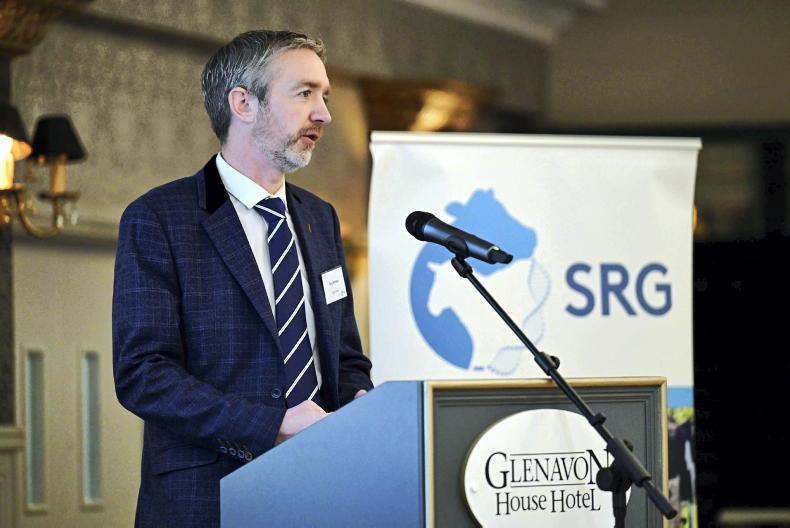
Addressing the recent launch event of SRG in Cookstown, Gary Watson from Dale Farm said processors believe there are “massive opportunities” for farmers who take part.
During his presentation he highlighted the gains made in the last five years by breeding for improved butterfat and protein. In 2025, butterfat averaged 4.28%, with protein at 3.38%, which is up 0.18 and 0.08 percentage points respectively since 2021. At current prices, that increase in solids is worth over 1p/l.
“It has been done really just through the genetic progress we have made on the male side of the population. Whenever we genotype individual cows, the potential really jumps up,” he said.
From 1 September 2026 to the end of 2027 all cattle farmers in NI will be offered the option to get their breeding herds DNA sampled (genotyped), with the costs covered by DAERA. That process will help identify those animals most suitable for breeding replacements.
However, as well as milk production traits, that process opens up the potential to breed for the likes of TB resistance.
“It isn’t something we will get a massive hit on in the first generation, but like SCC, there is a heritability there of around 9%. Given the rapid progress we can make with sexed semen, all of a sudden, we can have a good level of resistance for TB,” said Watson.
He also pointed to the opportunity to breed for polled genetics, which ultimately will save labour and improve animal welfare on farms, and for the likes of Kappa Casein genotypes which are associated with improved cheese yields in processing.
Benchmark
As well as genotyping, farmers taking part in the project will be provided with performance data. Alongside improved profitability, the aim is to identify those key indicators which will help make local farms more environmentally sustainable.
Ultimately, Watson said the industry must grasp the wider sustainability agenda, including the need to drive down greenhouse gas emissions.
“Gone are the days when sustainability demands were an optional extra – they are now a licence to do business. As we move further up the value chain (and we want to do that to drive returns back to our farmers), those requirements become more and more restrictive,” he said.


SHARING OPTIONS