


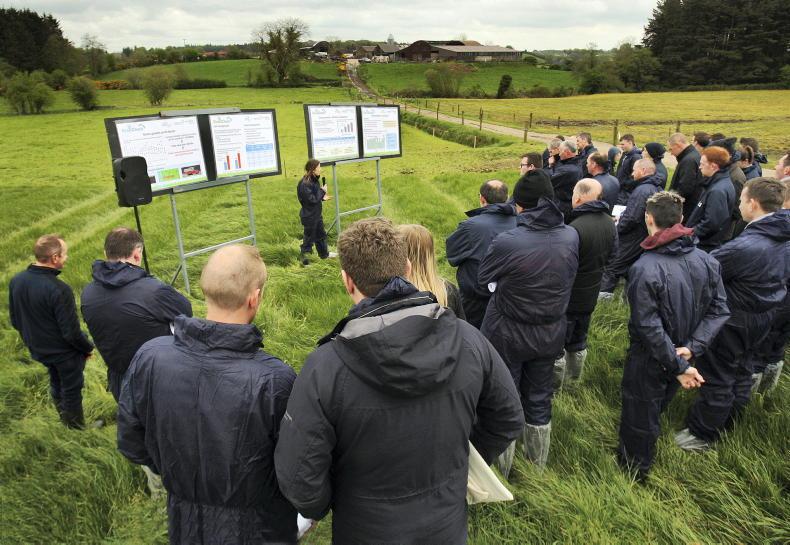
A new cohort of farmers have been selected to take part in the AgriSearch, AFBI and CAFRE GrassCheck initiative over the three-year period from 2026 to 2028.
The 53 participants, which include 22 new recruits, will monitor grass growth and quality on dairy, beef and sheep farms across NI. In total, AgriSearch is investing over £400,000 in GrassCheck across the next three years.
As well as data on current growth, a redesigned GrassCheck bulletin will contain a prediction for seven-day grass growth by county, developed by AFBI.
Researchers have also been working on a new tool which will help farmers assess whether fertiliser application is likely to be worthwhile at critical points in the growing season.
Speaking at the first of three AFBI-led ‘Grassland Insights’ webinars, Dr David Patterson said the aim was to ensure maximum uptake of fertiliser nutrients by the plant and minimum losses to the environment.
He gave the example of a cold spell in June or a dry period in August when response might be much lower than normally expected. In these situations, it is likely that some form of traffic light type system will be used as a simple indicator within GrassCheck bulletins.
“Farmers will be able to see whether it’s worthwhile spending the money and the time spreading the fertiliser,” he said.
Variability
During his presentation, Patterson highlighted the large variation in grass growth and utilisation across NI farms. However, there are also major fluctuations between different years, with poor spring growth in 2023 and 2024.
Looking ahead, AFBI projections out to 2100 suggest a changing climate will mean we are able to grow around 2t more grass dry matter per hectare than now, but most of this is going to come at the fringes of the season, so it might be difficult to utilise. During core grazing months, the projections also suggest increasingly variable growth. To help manage through that variability, Patterson suggested farmers should look at what they are growing in individual fields.
On grazing ground, clovers and potentially herbs should be used, as these plants will perform during dry weather and later in the season when ryegrass normally slows. There is also the option of using hybrid grasses or Italian Ryegrass on drier land as these grasses will deliver excellent growth early in the season.
On silage fields, he said there is an opportunity to incorporate red clover into swards.
“There’s going to be more growth in NI grassland in the future. We just need to be smart about how we manage it and try and flatten out that supply curve,” said Patterson.
Grazing farms are 10-20 days behind
The AFBI grassland webinar also heard from CAFRE dairy adviser, Conail Keown, who highlighted the difficult start to the 2026 grazing season, with many farms in eastern parts of NI, 10 to 20 days behind on grazing compared to a normal year.
He said those farms who have managed to get cows out have been on-off grazing for two to three hours and working on a rule of thumb that when it starts to rain, the cows are brought back inside.
The key to grazing at this time of year is to have good farm infrastructure, with multiple access points to paddocks and back fences to protect re-growth, he said.
Ends
MSS dropped at Foyle Farm
Having worked with multi-species swards (MSS) since 2019, the decision has now been taken to concentrate on growing grass clover mixes, confirmed Andrew Clarke, the agriculture manager at Foyle Food Group.
The Foyle 200-acre lowland demonstration farm outside Cookstown grazes around 500 cattle per year in different mobs each running across eight, 3-day paddocks. But as well as poor persistency, weed control in the MSS has proved to be a challenge.
“At one stage we were using monoculture grasses. Then we went to MSS. Now, we are changing to a variety of grass species and clover alongside that,” said Clarke.
Ends




SHARING OPTIONS