


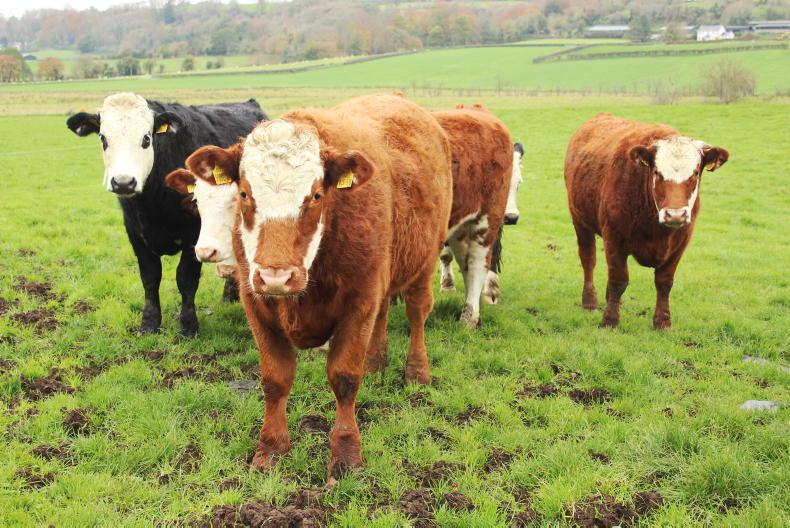
We are now over halfway through April and on a lot of cattle farms in NI, most or all livestock are still housed and there isn’t much fertiliser spread. Outside of drier land in the southeast, land is still very tender and only really suited to carrying some lighter stock.
Despite the poor conditions, some farmers have their silage ground fertilised in the hope of getting a first cut by mid-May. That is fine if urea has been used, but other products such as CAN or compound fertilisers are easily lost in cold and wet weather. If a quad is required to apply CAN, it is questionable whether it is a wise approach.
Given current fertiliser costs, perhaps the better alternative is to wait for conditions to improve and go in with 30 to 50kg of nitrogen (N) per hectare (one to 1.5 bags of CAN per acre) and then cut three to four weeks later.
Grassland can utilise 2.5kg N/ha in good growing conditions and in any event, getting grass to around 30% dry matter when ensiling, with negate any impact of nitrates still in the crop.
Priority
When it comes to grazing, the priority on suckler farms, should always be to get heifers destined for breeding out first, especially when calving at 24 months.
However, for anyone with early spring calving dairy or suckler cows, there is an obvious pressure to get these cows out and settled at grass ahead of breeding.
Taking everything together, it is not hard to see why more large dairy herds are now operating confined systems in NI and keeping cows on a consistent diet year-round.
Yet, even just from a marketing perspective, it is important that we retain grazing herds – our dairy processors offer various incentives for volume and winter milk, however, their marketing literature and annual reports are full of cows standing in fields. Perhaps those farmers who go to the bother of grazing cows, also need some sort of financial reward.



SHARING OPTIONS