


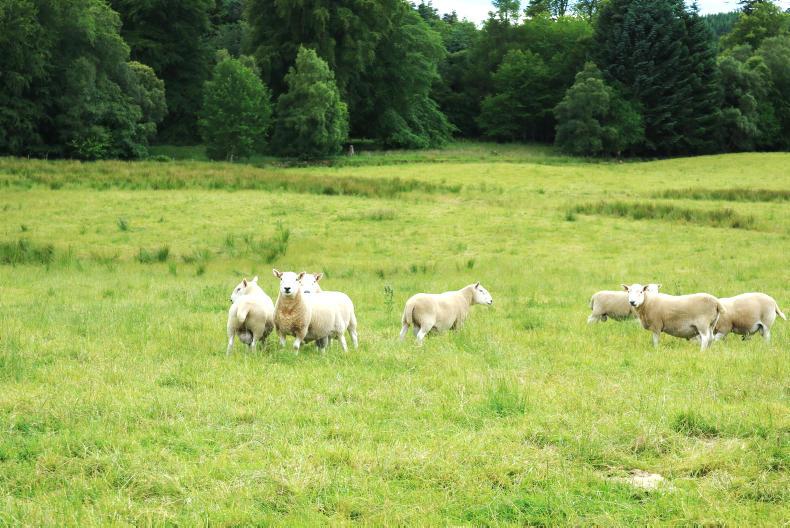
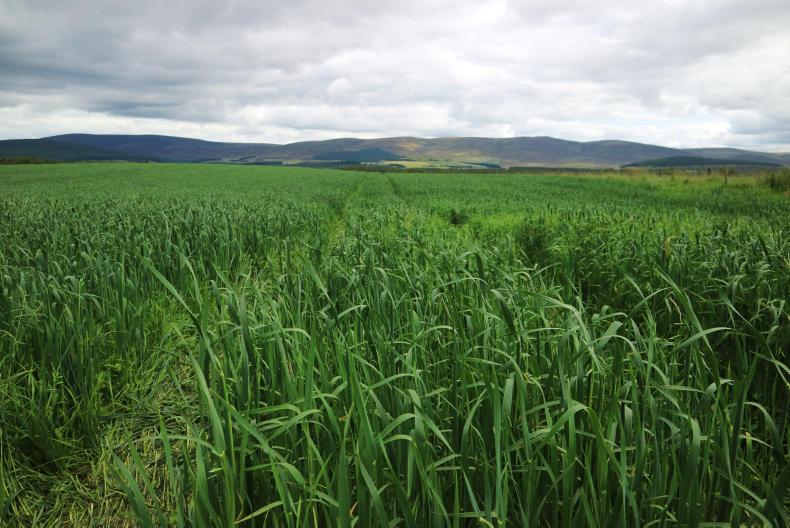
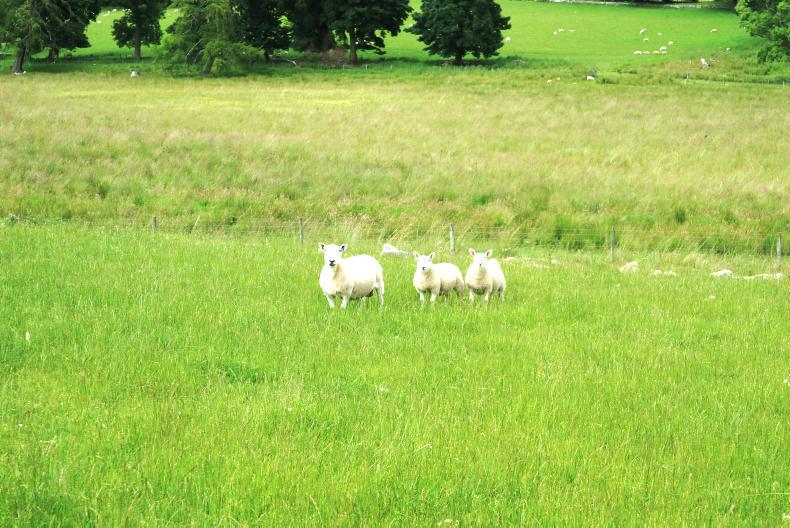
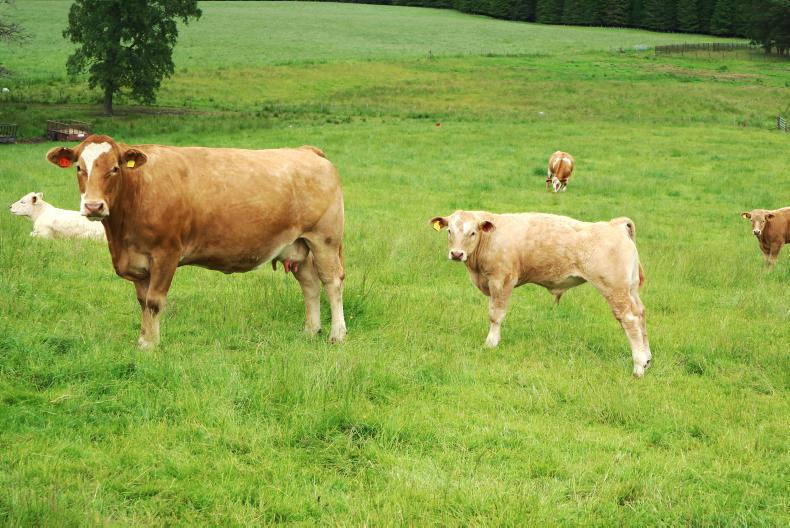
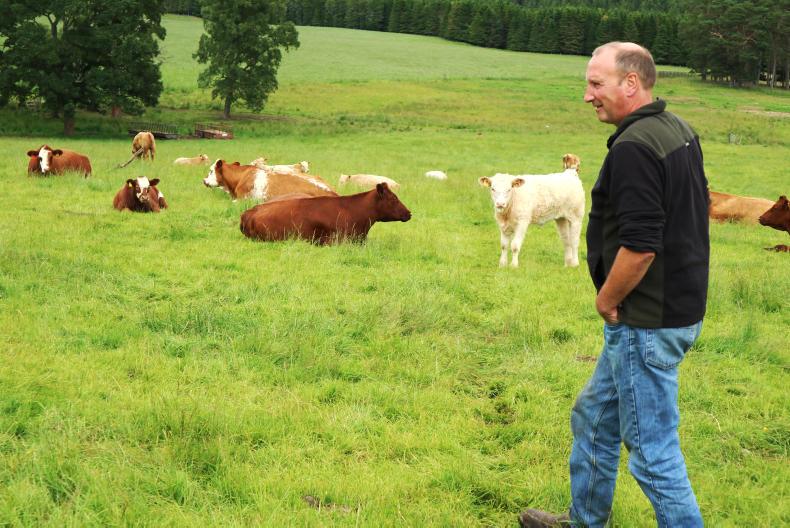
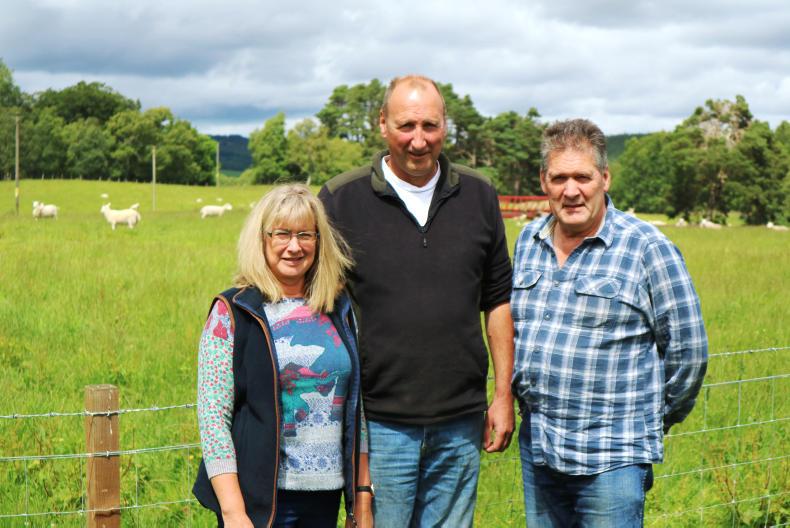
Thirty years ago Robert moved 150 miles west from Dunvegan on Skye, to Grantown-on-Spey with 52 ewes and a few cattle. Along with his wife, Mags, he now runs 126 cows, 500 ewes and holds the record for sale of a Cheviot tup. On the Castle Grant home farm, all 900 acres of Robert’s rented farm range from 800 to 1,200 feet above sea level, making winters long and summers short.
“I farmed with my father and uncle on a 4,500-acre farm on Skye, which had 150 acres of in-bye. Moving to 550 acres at Grantown was a big move. I knew I always wanted to be a farmer and wanted to keep cows and sheep. When we arrived, we came with 52 ewes and some cows from Skye. Since moving, we have grown the business, with 350 acres of seasonal lets being taken over the last 13 years.”
The 900 acres are all on the Seafield estate and would have originally been the home farm for Castle Grant, which recently was the home of former Ranger FC owner Craig Whyte, Robert said.
“There have been a number of different owners in the castle since we moved in. Any new owners often come to ask if we will graze the 30 acres of gardens around the building. But invariably there is an issue when they discover what comes out the other end of the cattle and sheep onto their lawn.”
CHEVIOTS
Robert has been breeding Cheviots for more than 30 years since farming on Skye. His high-profile sheep flock has achieved the Cheviot tup record of £17,000. Robert sells two shear tups, which are fed before the sale, but get just silage and protein tubs for the first two winters. As Cheviot is a slower-maturing breed, it needs the two seasons to be ready for the ring.
“Buyers need to know what they are buying. You need the mouth to have fully developed so buyers can see it is correct,” believes Robert.
Selecting ewes to breed is the most important skill when developing a sheep flock. Cheviots have not gone down the EBV route, with all breeding stock selected traditionally.
“EBVs are just writing down what stockmen do by eye. When selecting ewes, what I look for firstly is good skin, then conformation and breed type. After that, I look for a good top line, a broad forehead, good nose and cocky alertness,” says Robert.
“Fine bones are not so important in the Cheviot. We breed sheep with a decent amount of bone, they need to be robust, as many are kept on hill farms. They can’t be too soft, the Cheviot is not a soft sheep. You can scan over 180%, which can give you a weaning of over 150%. Any higher lambing percentage – you’re getting into a lot of triplets, which is an issue.”
He is positive about the future of the breed: “Over the last 30 years, the breed has moved forward and improved quality. We have bigger tups, with tighter skins and better conformation. Many hill farmers are getting more interested in Cheviots because of a high value for the draft ewe, plus the popularity of the Cheviot lamb in the store ring.”
The 500-ewe flock is split – with half going back to the Cheviot tup and the rest split evenly between Bluefaced Leicester and Suffolk.
GRASS AT 1,000 FEET
At Grantown the summers are short and the winters can be long, making managing grass growth a real challenge.
“We really don’t get any grass growth until May. In June, we can handle almost twice the stock, but it tails off quickly after August. We essentially have a 3.5-month growing season. We struggle with differed grazing as the snow will damage the grass, meaning very little is available come spring.”
KEEPING CATTLE
The farm has not always just been for food production, but was also set out to keep birds for shooting. This means that there are lots of blocks of trees, which creates ideal shelter for keeping cattle outside.
“We outwinter our cows on pot ale and straw until January, before taking them in. One of the woods was even set up to allow the shoot on Capercaillie back in the day. Locals ask me about the midges with all the trees, but they are nothing compared with Skye midges,” laughs Robert.
The breeding stock largely comes out from the west through sales at Dingwall, Lochmaddy and Portree.
“I know many of the farms in the west. They provide great outdoor, hardy cattle. I look for a Shorthorn crossed with a Simmental, Limousin or Saler. All good things come out from the west.”
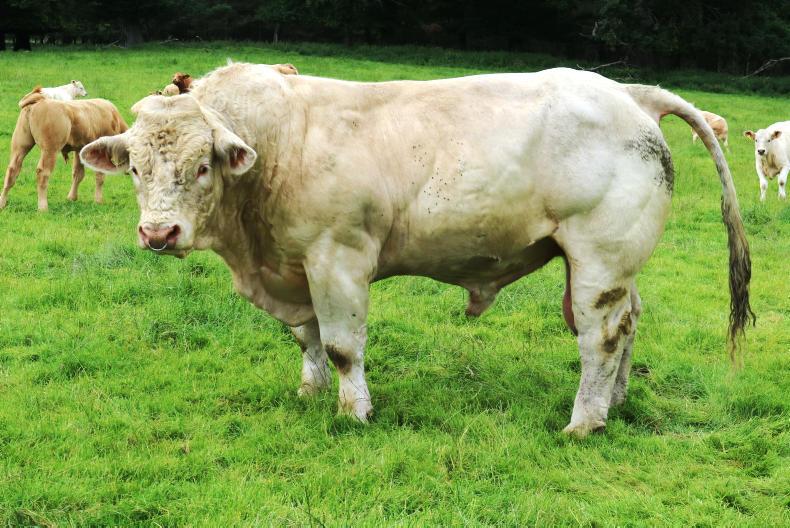
The cows are then crossed with a Charolais or a Limousin bull to provide store calves to be sold in the backend. To get calves ready for sale, Robert creep-feeds them and thinks it is one of the most efficient things he does.
“Store buyers like to buy cattle which can go straight onto feed. During the summer, we can get conversion rates of between 4-5kg of feed to 1kg liveweight. We use ECU stage-two calf nuts. Starting them off on 1kg a day until October, when they are ad-lib. My main buyers say they never worry about the calves and that they are good to finish. One bit of advice I was given is to always sell what people want; you always get a good crowd round the ringside with Cheviot lambs and Charolais calves,” Robert explains.
FENCING
Over the last 30 years Robert has put up 14,000m of fencing. He believes “if you don’t keep up your fences, you will pay for it in the long run. I am disappointed with some of the strainers we have, as some are not lasting as long nowadays and need to be replaced after 10 years. I spend around £5,000 a year on fencing to keep on top of the job”.
DOG AND STICK FARMER
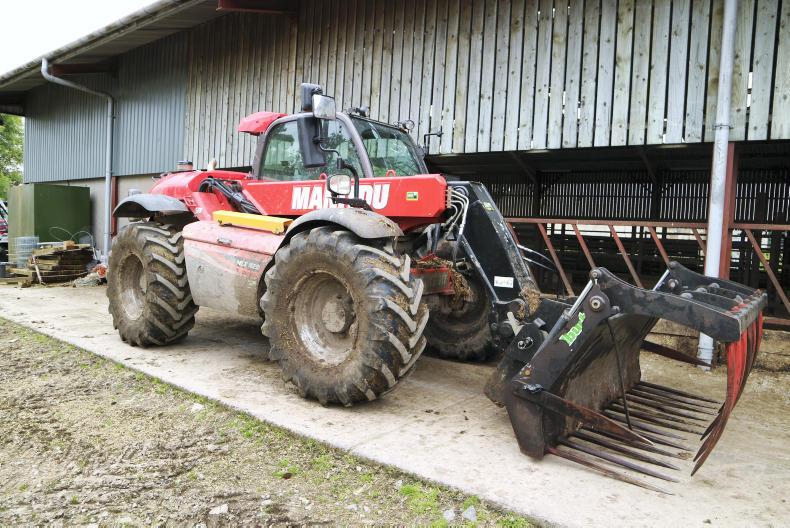
Roberts’s background on farms on Skye has influenced his decision to keep few bits of machinery on the farm.
“Calving and lambing is what I know. I leave the tractor field work to the experts. We used to take a week to silage, now it barely takes up a day. I have worked with the same contractor for years. It makes all the difference having a good working relationship. We make 30 acres of wholecrop, along with 100 acres of silage, split between bales and the pit.”
FARM ADVICE
Robert has these words of advice for the next generation of farmers:
“There is no one-size-fits-all in farming, you just need to get the most from your farm. Some of the best advice you get is from listening to other farmers. You are born with two ears and one mouth, use them in that proportion.”


SHARING OPTIONS