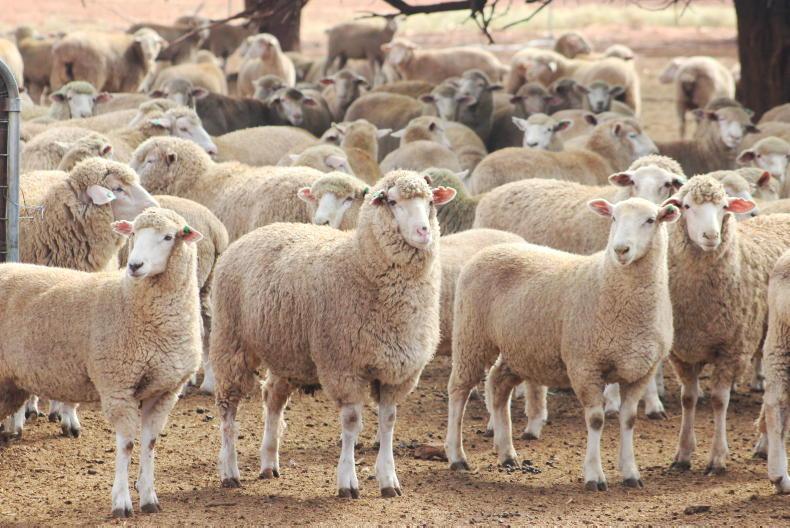
The full effects of reduced ewe numbers and an associated drop in sheepmeat production in the Australian sheep flock is being offset by an increase in the average carcase weight of lambs and a continued switch away from farming sheep for wool production.
Recent data published by Meat and Livestock Australia (MLS), the sheep industry body, shows that the average carcase weight in 2025 is expected to be 25kg. As demonstrated in Figure 1, the average carcase weight of lambs in Australia has increased from approximately 20kg in the early 2000s with sheep producers encouraged to bring lambs to heavier weights to satisfy US market demand.

Figure 1. Carcase weights are predicted to continue to increase on the back of keen demand from the US market.
The dip in carcase weight experienced in 2024 was as a result of poor feed quality and supply issues in parts of the south of Australia which pushed more unfinished lambs on to the market. MLA project that as seasonal conditions stabilise continued growth in the average carcase weight is expected through 2026 and 2027.
Driving factors
There are several factors attributed as contributing to the steady growth in carcase weight. Improved pasture growth and higher energy diets is allowing producers to hold lambs for longer and finish to tighter specifications. A significant factor is the adoption of supplementary and grain feeding.
This has materialised both in on-farm feeding systems or the development of specialist feedlot-type finishing systems. These systems developed out of necessity when dealing with drought conditions in recent years and after positive performance and healthy margins continue to expand.
MLA states that this “gives producers more options to manage seasonal variability while meeting processor grids. Weight-based pricing provides a strong commercial incentive to target heavier turn-off when feed allows”. Finally a steady switch from farming sheep for wool production to meat production and the adoption of superior genetics with higher growth rate potential and killout is also adding to carcase weights.
Production parameters
Australian lamb production reached a record high of approximately 630,000t in 2024. This was driven by the factors outlined above and was also boosted by higher numbers of lambs being slaughtered as producers struggled to deal with drought. The national flock was estimated at a massive 74.2m head in June 2025.
Given the improvement in seasonal conditions MLA is predicting that ewe retention, including ewe lamb retention, is anticipated to rise through 2026. They state that this will lay the foundations for a considered, but cautious rebuild in flock numbers. Lamb production is forecast to dip by approximately 4% in 2026 (compared to 2024 record levels) but reach new heights in 2027 on the back of higher throughput and heavier carcases.
Global impact
The value of Australian lamb exports exceeded $4bn for the first time over a 12-month period. Exports were slightly lower, reducing 1%, but still the second highest level on record at 363,103t shipped weight. Figure 2 details the top lamb export destinations. As can be seen the export destinations are consistent with recent years but there has been some notable volume shifts.

Figure 2: Lamb exports have been consistent over the last two years but there has been some volume shifts over the last 12 months.
The US remains the dominant market for Australian lamb with export volumes increasing by 5% while its neighbours Canada recorded year-on-year (YOY) growth of 11%. MLA reports that the US increased import volumes of lamb carcases, shank and boneless loin while Canada saw carcase manufacturing, breast and flap, plus leg growth.
Lamb exports to China decreased by 9% YOY but mutton exports increased 18% YOY driven by heightened demand for lower-priced products. This is due to ongoing economic challenges and consumers remaining cautious in the level of discretionary spending.
MLA highlights Saudi Arabia (+25%) and Qatar (+30%) recording impressive growth, underpinned by higher consumption driven by tourism industry growth and more expatriate workers having a preference for Australian lamb. The product mix has diversified greatly over the last decade changing from three quarters of exports in carcase form in 2014/25 to 58% in 2024/25.
There is no special mention for a 44% increase in UK sheepmeat exports in recent MLA market review reports but a forecast reports notes that Australia sees significant potential in the UK market and will continue to carve out increased market share in line with its higher tariff-free quota which increases to 41,667t in 2026 and rises to 75,000t by 2032.
Increased exports to the UK market could be limited by the recent upward trend in Australian farmgate sheep prices with Bord Bia reporting prices currently averaging €6.15/kg, almost 70c/kg higher than the corresponding week in 2024.
The full effects of reduced ewe numbers and an associated drop in sheepmeat production in the Australian sheep flock is being offset by an increase in the average carcase weight of lambs and a continued switch away from farming sheep for wool production.
Recent data published by Meat and Livestock Australia (MLS), the sheep industry body, shows that the average carcase weight in 2025 is expected to be 25kg. As demonstrated in Figure 1, the average carcase weight of lambs in Australia has increased from approximately 20kg in the early 2000s with sheep producers encouraged to bring lambs to heavier weights to satisfy US market demand.
Figure 1. Carcase weights are predicted to continue to increase on the back of keen demand from the US market.
The dip in carcase weight experienced in 2024 was as a result of poor feed quality and supply issues in parts of the south of Australia which pushed more unfinished lambs on to the market. MLA project that as seasonal conditions stabilise continued growth in the average carcase weight is expected through 2026 and 2027.
Driving factors
There are several factors attributed as contributing to the steady growth in carcase weight. Improved pasture growth and higher energy diets is allowing producers to hold lambs for longer and finish to tighter specifications. A significant factor is the adoption of supplementary and grain feeding.
This has materialised both in on-farm feeding systems or the development of specialist feedlot-type finishing systems. These systems developed out of necessity when dealing with drought conditions in recent years and after positive performance and healthy margins continue to expand.
MLA states that this “gives producers more options to manage seasonal variability while meeting processor grids. Weight-based pricing provides a strong commercial incentive to target heavier turn-off when feed allows”. Finally a steady switch from farming sheep for wool production to meat production and the adoption of superior genetics with higher growth rate potential and killout is also adding to carcase weights.
Production parameters
Australian lamb production reached a record high of approximately 630,000t in 2024. This was driven by the factors outlined above and was also boosted by higher numbers of lambs being slaughtered as producers struggled to deal with drought. The national flock was estimated at a massive 74.2m head in June 2025.
Given the improvement in seasonal conditions MLA is predicting that ewe retention, including ewe lamb retention, is anticipated to rise through 2026. They state that this will lay the foundations for a considered, but cautious rebuild in flock numbers. Lamb production is forecast to dip by approximately 4% in 2026 (compared to 2024 record levels) but reach new heights in 2027 on the back of higher throughput and heavier carcases.
Global impact
The value of Australian lamb exports exceeded $4bn for the first time over a 12-month period. Exports were slightly lower, reducing 1%, but still the second highest level on record at 363,103t shipped weight. Figure 2 details the top lamb export destinations. As can be seen the export destinations are consistent with recent years but there has been some notable volume shifts.
Figure 2: Lamb exports have been consistent over the last two years but there has been some volume shifts over the last 12 months.
The US remains the dominant market for Australian lamb with export volumes increasing by 5% while its neighbours Canada recorded year-on-year (YOY) growth of 11%. MLA reports that the US increased import volumes of lamb carcases, shank and boneless loin while Canada saw carcase manufacturing, breast and flap, plus leg growth.
Lamb exports to China decreased by 9% YOY but mutton exports increased 18% YOY driven by heightened demand for lower-priced products. This is due to ongoing economic challenges and consumers remaining cautious in the level of discretionary spending.
MLA highlights Saudi Arabia (+25%) and Qatar (+30%) recording impressive growth, underpinned by higher consumption driven by tourism industry growth and more expatriate workers having a preference for Australian lamb. The product mix has diversified greatly over the last decade changing from three quarters of exports in carcase form in 2014/25 to 58% in 2024/25.
There is no special mention for a 44% increase in UK sheepmeat exports in recent MLA market review reports but a forecast reports notes that Australia sees significant potential in the UK market and will continue to carve out increased market share in line with its higher tariff-free quota which increases to 41,667t in 2026 and rises to 75,000t by 2032.
Increased exports to the UK market could be limited by the recent upward trend in Australian farmgate sheep prices with Bord Bia reporting prices currently averaging €6.15/kg, almost 70c/kg higher than the corresponding week in 2024.







SHARING OPTIONS