


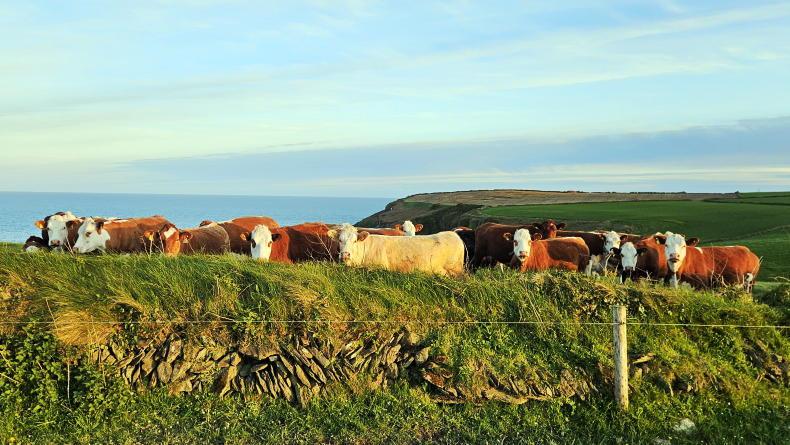
The sun has pretty much gone down on the 2025 grazing season here, and within a week all that will be out is the stock bulls and a group of cows on the last tidy up of ground.
It’s been one of the best years at grass I can recall, with weather in the grazing farmer’s favour, pretty much from March through to October.
Opportunities to clean off paddocks came in the last month too. Most cattle were housed here by the start of November in 2024 so, on this side of it at least, the winter is shortened a little.
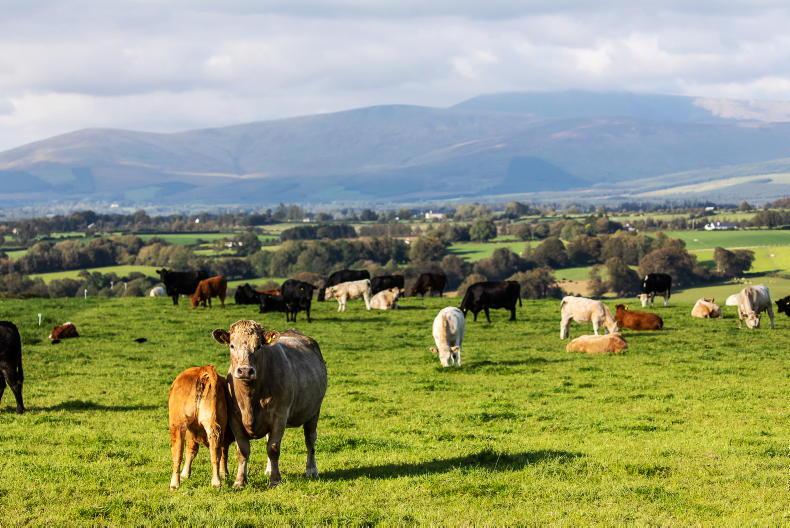
That long grass growing season, when weather allows, is down to our mild climate and is one of two gifts of geography that gives Ireland a competitive advantage from a beef production perspective.
This was picked up on by our near neighbours on the island of Britain. Over the centuries, they capitalised on our long-held connection with cattle and ability to grow grass to satisfy their fondness for beef.
It has remained one of the world’s premium beef markets, and is right on our doorstep with another in the form of western Europe’s industrial heartland a little further away.
For as long as I can remember, these two have consistently been the outlet for at least 90% of Irish beef exports. However, they’re a demanding customer base when it comes to standards and that’s reflected in all the compliance hoops we have to jump through in order to access these markets.
Compliance, or red tape, is often seen as an inconvenience, but as one farmer said to me while he would love to farm without it, he’s changed his mind since he read the Irish Farmers Journal/IFA report on Brazil.
Reducing red tape has been a useful election promise of government and opposition politicians alike, but those same farm assurance schemes are seen as a foundation point for access to high value beef markets.
That trip may be viewed favourably in 140 Pembroke Rd, as Bord Bia looks to revamp its quality assurance scheme.
The last time we had to compete with meat from the Antipodes and South America the Irish meat trade was in its infancy, and most beef was going to Britain by hoof.
It’s a different beast now, but thanks to Brexit we find ourselves competing against a product that can go in at a lower cost base than us.
An overview
As a sector we punch way above our weight when it comes to beef exports, but in the grander scheme of things we’re small fry.
News from the USA shows the scale of the competition. Tyson Foods announced it is closing one plant in Lexington, Nebraska that processed 5,000 head of cattle a day. What that single plant was capable of processing in a week is similar to the current entire Irish weekly kill.
The succession issues are the same across the beef producing world, and lack of long-term profitability within the beef sector has been a major contributor to that.
Policy has had a part to play too, especially in Europe, but as education levels and opportunities rise with each generation the lure of agriculture erodes.
This year’s beef prices may act as a handbrake for producer numbers, and I’d love to see them continue at these levels.
I have been around for long enough to have seen the ups and downs that pig and milk prices have experienced, so it’s best to keep budgeting for the worst and that will go a long way in benefitting from the good times too.


SHARING OPTIONS