


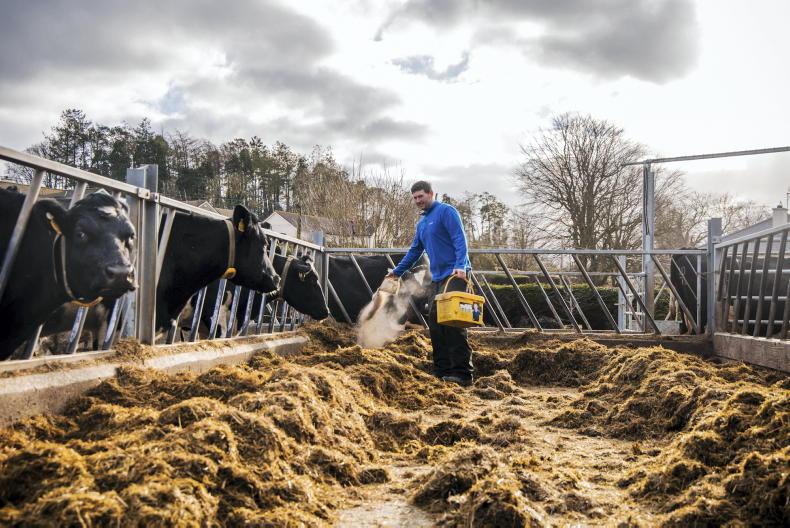
The day before Christmas Eve is not a day you want bad news landing on you, but that’s exactly when we got the blood test results back for TB. Out of the 125 cows tested, 32 came back positive.
To say it was disappointing would be an understatement. It was a far bigger shock than the initial three reactors from the skin test. I knew we would have more when we did the blood test, but in my own head I thought if we had another 10 it would be bad. Thirty-two was something else entirely.
What made it all the harder to take was the make-up of the cows involved. The majority of the positives were early-calving cows, due in the first few weeks of February. Meanwhile, the three cows we have left to calve in April all tested negative.
Ironically, they would have been the easier ones to lose, as it would have shortened the tail end of calving and reduced the workload. Instead, we’re now facing into calving knowing that a significant number of cows we had planned around won’t be there.
There’s no easy way to process news like that, but once the initial shock passed, I made a conscious decision to put it to the back of my mind over Christmas. There’s no point getting bogged down in something that’s completely out of your control.
We enjoyed a good Christmas, kept the workload to a minimum and took the chance to recharge, knowing full well January would come around soon enough.
And sure enough, once Christmas was over, it was straight back into the swing of things. Preparations for calving have started in earnest. There’s silage plastic and fertiliser bags to be sorted for recycling, along with general waste plastic and cardboard to be cleared out of the sheds. It’s amazing how quickly clutter builds up, and getting sheds cleaned out now makes a huge difference when calves start arriving.
Gavin has been busy with the collars, taking them off the cull cows and fitting them onto the heifers. On top of that, all the collars had to be removed from the TB cows as well. Anyone who has done it knows it’s a tedious job at the best of times, but doing it under these circumstances made it all the more frustrating.
The calf and calving sheds were power washed and disinfected after last calving, but they’ll get another quick power wash in the coming weeks. Since then, they’ve been used for parking machinery, and it’s important to start calving with everything as clean and fresh as possible.
Gavin also gave the milking parlour a thorough power wash this week. The liners will be changed before calving starts, and once that’s done the parlour will be fully set up and ready to go.
January plans
On the animal health side, we’ll be vaccinating the first 40 cows due to calve for rotavirus this week, with the rest of the herd to follow in the last week of January. The IBR vaccine will also be given in the next few weeks, well in advance of calving, which is one of the most stressful times in a cow’s year.
I deliberately don’t do the BVD or lepto vaccines in January, even though some farmers like to get them done when things are quieter. They’re recommended to be given around a month before breeding, and that has always worked well for us.
One positive note as we head into the busy period is that our student, Eoin, is starting next week.
TB is a hard blow for any farm, and there’s no denying the disappointment that comes with results like these. But farming has a way of forcing you to park the setbacks and keep moving forward.
Calving is coming, ready or not, and all we can do now is focus on preparation, animal health and doing the best job possible with the cows we have.



SHARING OPTIONS