


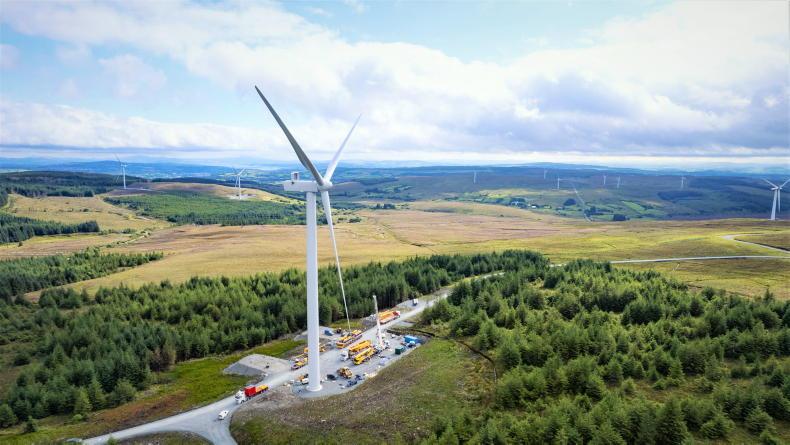
Provisional figures from EirGrid indicate that renewable energy accounted for approximately 41% of electricity generation in the Republic of Ireland in November.
This represents an increase from the official metered figure for November 2024, when renewables provided 34% of total electricity.
Wind power remained the dominant source of renewable electricity, supplying 35% of national demand and producing 1,067 gigawatt hours (GWh) during the month.
When grid-scale solar and hydropower are included, total renewable generation reached the provisional 41% share.
Gas
Gas-fired generation continued to play a major role, providing 42% of electricity in November, while 17% of demand was met through electricity imported via interconnection.
Overall system demand rose to 3,088GWh, up from 2,969GWh in October. The month also set a new record for peak Sunday demand, reaching 5,144 megawatts on 30 November.
Northern Ireland slips
Across the border, the latest data from the Department for the Economy show a continuing decline in renewable electricity generation in Northern Ireland.
In the 12 months to September 2025, renewable sources supplied 44.2% of total metered consumption, 0.3 percentage points lower than the previous year and well below the 51% peak recorded in 2022.
This marks the third consecutive annual decrease, placing the region significantly off track from its target of 80% renewable electricity by 2030.
Industry body RenewableNI warned that delays in policy development and infrastructure upgrades are contributing to the decline, saying renewable generation is “sliding backwards”.
Despite the overall reduction, wind energy strengthened its dominance within Northern Ireland’s renewable mix, supplying 82.2% of renewable electricity, slightly higher than the 81.9% recorded the previous year.
The remainder came from biogas (6.5%), biomass (5%), solar (4%), landfill gas (1.4%) and other minor sources (0.9%).






SHARING OPTIONS