Glenwherry Hill Farm is the largest demonstration farm owned by CAFRE. It is used to show best practice in suckler and sheep production in the hill environment, as well as integrating livestock systems with agri-environment schemes.
As with most hill farms, sheep play an integral role to both farm output and maintenance of the harsh hill landscape. The 1,100 breeding ewes are managed as a hill and an upland flock and graze separate areas of the farm.
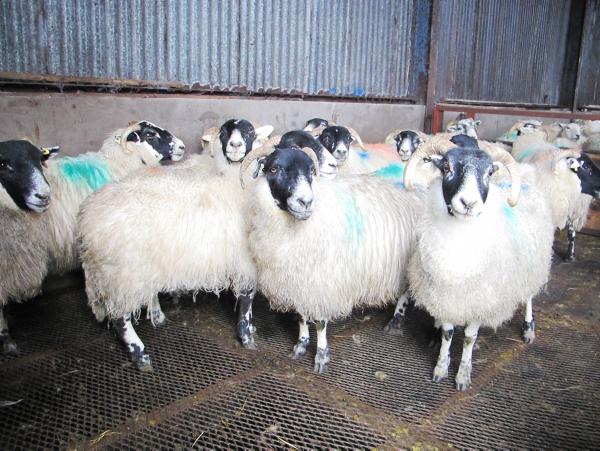
The hill flock is made up of 250 purebred Scottish blackface ewes, which are self-replacing and form the nucleus of all the flocks, and 100 Scottish blackface ewes crossed with Swaledale rams, to produce replacements for the upland flock.
The upland flock contains 750 ewes. The Scottish Blackface cross Swaledale ewes are mated with Texel rams selected for maternal ability to produce a cross-bred ewe, of which a proportion are mated with Lleyn rams to produce replacements for CAFRE’s lowland sheep flock. The remainder of the ewes are mated with Texel and Primera (a composite breed from New Zealand) rams to produce lambs that are marketed for slaughter through the local lamb group. Figure 1 outlines the breeding system on the farm.
Breeding
The breeding objective for the flock is to produce sheep that best utilise hill grazing.
To achieve this, the Blackface ewes are performance-recorded through Signet to select breeding replacements produced from ewes with high estimated breeding values (EBVs) for maternal traits such as litter size and lambing ease.
Replacements are bred as hoggets and are selected from dams with above average traits. Rams are also selected on performance figures, but as the Glenwherry flock is only one of two recorded Blackface flocks in Northern Ireland, it limits the selection pool of suitable rams.
To widen the choice of potential flock sires, rams have been purchased in Scotland.
Texel and Lleyn rams were put to 550 crossbred ewes on 22 October and removed on 18 December. The Blackface X Swaledale ewes went to the ram on 29 October and were removed at Christmas.
Swaledale rams went to Blackface ewes on 13 November and were removed in early January. Mating for the pure Blackface ewes started on 5 November.
Weather problems
Early lambing is not an option for the Glenwherry flock due to the climatic conditions. Lambing starts in mid-March for crossbred ewes with the pure bred Blackface ewes starting to lamb two weeks later.
There is limited grazing in March and late flurries of snow are common given the altitude of the farm, which prevents turnout after lambing.
In late March 2013, the farm was engulfed in snow blizzards and losses were severe. A total of 110 in-lamb ewes and 40 in-lamb hoggets were lost as a direct result of some of the most extreme weather ever experienced in the region.
As a result, the flock is now short of replacements lambing in 2014 and 2015. Ewes that would potentially have been sold as cast in 2013 were retained to maintain breeding numbers.
Pre-lambing management
Blackface ewes crossed to the Swaledale remain outdoors during lambing.
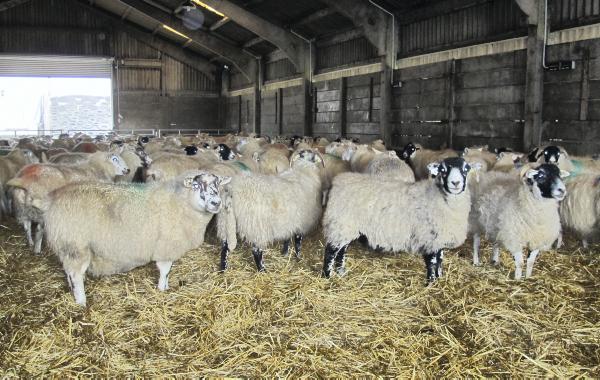
The remainder of the ewes were housed on 16 January, after being weighed, condition scored and scanned. Blackface ewes averaged 56kg liveweight, while the Texel cross ewes weighed 70kg.
As electronic tagging is compulsory in NI, all sheep are weighed through a Shearwell handling unit every time they are herded for routine management practices. Ewes are grouped together based on ewe type, condition score and the number of lambs they are carrying.
Scanning results for the flock averaged 155% in January 2014. This reflects the difficulty the ewes had in overcoming the very hard spring of 2013.
However, it is an improvement on the 2013 flock average of 150%, affected by the difficult weather in 2012, which led to ewes being in poor condition when going to the ram and lower scanning result.
They eventually weaned 110% in summer 2013. The hill flock averaged 0.72 lambs/ewe with the upland flock averaging 1.27 lambs/ewe. Within the upland flock, the SBFxSWxT ewes mated to the Primera ram weaned 1.48 lambs/ewe.
Ewes receive a fluke and worm dose before Christmas and are treated again after lambing just before turnout to pasture. A clostridial vaccine is given six weeks pre-lambing.
All hoggets coming into the flock receive vaccinations for Toxoplasmosis and Enzootic abortion given four weeks pre-lambing. Ewes are foot bathed and those housed are on wire mesh slats or straw until lambing.
Pre-lambing nutrition
Silage was made in ideal conditions on 9 July and analysed in autumn. Feed value is:
Dry matter = 50.6%Energy = 11.4 Mj ME/kg DMProtein = 12.4%D-Value = 71Silage is fed to ewes from housing until turnout. Concentrates are introduced around six weeks pre-lambing. Any ewes that are in a thin body condition are penned separately and concentrates are introduced from eight weeks pre-lambing.
An 18% concentrate ration consisting of barley, soybean, maize, soya hulls and minerals is fed to supplement silage. Megalac is added to the concentrate in the last two weeks pre-lambing.
Table 2 outlines the concentrate feeding programme for the flock this year – lower concentrate inputs reflects silage quality.
Financial performance
The flock is benchmarked through CAFRE and the analysis is used to compare annual progress and to allow comparison to other hill farms in NI.
The following figures are for 2012/2013: output per ewe averaged £71 with lamb sales averaging £89; grassland costs were £8 per ewe; concentrates costs totalled £12 per ewe with a total of 55kg fed per ewe; gross margin was £37 per ewe, compared with the average hill ewe at £18.
Lamb performance 2013
Lambs were weaned at an average weight of 30.9kg liveweight last summer with lambs being weaned from 127 days to 154 days of age.
Ewe efficiency is being measured in the flock, so weaning weight is adjusted to a standard weaning age of 112 days of age (16 weeks) to allow for a fair comparison across ewe type and to compare the oldest and youngest lambs born.
It also provides comparative flock information on an annual basis that can be used to cull ewes, or make breeding decisions.
Once corrected to the standard age, the average weaning weight at 112 days is 25.7kg liveweight for all lambs produced in the flock. Taking an average 58.3kg liveweight, the ewes in the flock have a weaning percentage of 44% of ewe liveweight at the standardised weight.
At the actual weaning weight of 30.9kg liveweight, ewes are weaning approximately 53% of their liveweight. Daily liveweight gain of lambs averaged 0.21kg/day from birth to weaning. 1,181 lambs were weaned and 79% of lambs were sold off farm in 2013.
Glenwherry Hill Farm is the largest demonstration farm owned by CAFRE. It is used to show best practice in suckler and sheep production in the hill environment, as well as integrating livestock systems with agri-environment schemes.
As with most hill farms, sheep play an integral role to both farm output and maintenance of the harsh hill landscape. The 1,100 breeding ewes are managed as a hill and an upland flock and graze separate areas of the farm.
The hill flock is made up of 250 purebred Scottish blackface ewes, which are self-replacing and form the nucleus of all the flocks, and 100 Scottish blackface ewes crossed with Swaledale rams, to produce replacements for the upland flock.
The upland flock contains 750 ewes. The Scottish Blackface cross Swaledale ewes are mated with Texel rams selected for maternal ability to produce a cross-bred ewe, of which a proportion are mated with Lleyn rams to produce replacements for CAFRE’s lowland sheep flock. The remainder of the ewes are mated with Texel and Primera (a composite breed from New Zealand) rams to produce lambs that are marketed for slaughter through the local lamb group. Figure 1 outlines the breeding system on the farm.
Breeding
The breeding objective for the flock is to produce sheep that best utilise hill grazing.
To achieve this, the Blackface ewes are performance-recorded through Signet to select breeding replacements produced from ewes with high estimated breeding values (EBVs) for maternal traits such as litter size and lambing ease.
Replacements are bred as hoggets and are selected from dams with above average traits. Rams are also selected on performance figures, but as the Glenwherry flock is only one of two recorded Blackface flocks in Northern Ireland, it limits the selection pool of suitable rams.
To widen the choice of potential flock sires, rams have been purchased in Scotland.
Texel and Lleyn rams were put to 550 crossbred ewes on 22 October and removed on 18 December. The Blackface X Swaledale ewes went to the ram on 29 October and were removed at Christmas.
Swaledale rams went to Blackface ewes on 13 November and were removed in early January. Mating for the pure Blackface ewes started on 5 November.
Weather problems
Early lambing is not an option for the Glenwherry flock due to the climatic conditions. Lambing starts in mid-March for crossbred ewes with the pure bred Blackface ewes starting to lamb two weeks later.
There is limited grazing in March and late flurries of snow are common given the altitude of the farm, which prevents turnout after lambing.
In late March 2013, the farm was engulfed in snow blizzards and losses were severe. A total of 110 in-lamb ewes and 40 in-lamb hoggets were lost as a direct result of some of the most extreme weather ever experienced in the region.
As a result, the flock is now short of replacements lambing in 2014 and 2015. Ewes that would potentially have been sold as cast in 2013 were retained to maintain breeding numbers.
Pre-lambing management
Blackface ewes crossed to the Swaledale remain outdoors during lambing.
The remainder of the ewes were housed on 16 January, after being weighed, condition scored and scanned. Blackface ewes averaged 56kg liveweight, while the Texel cross ewes weighed 70kg.
As electronic tagging is compulsory in NI, all sheep are weighed through a Shearwell handling unit every time they are herded for routine management practices. Ewes are grouped together based on ewe type, condition score and the number of lambs they are carrying.
Scanning results for the flock averaged 155% in January 2014. This reflects the difficulty the ewes had in overcoming the very hard spring of 2013.
However, it is an improvement on the 2013 flock average of 150%, affected by the difficult weather in 2012, which led to ewes being in poor condition when going to the ram and lower scanning result.
They eventually weaned 110% in summer 2013. The hill flock averaged 0.72 lambs/ewe with the upland flock averaging 1.27 lambs/ewe. Within the upland flock, the SBFxSWxT ewes mated to the Primera ram weaned 1.48 lambs/ewe.
Ewes receive a fluke and worm dose before Christmas and are treated again after lambing just before turnout to pasture. A clostridial vaccine is given six weeks pre-lambing.
All hoggets coming into the flock receive vaccinations for Toxoplasmosis and Enzootic abortion given four weeks pre-lambing. Ewes are foot bathed and those housed are on wire mesh slats or straw until lambing.
Pre-lambing nutrition
Silage was made in ideal conditions on 9 July and analysed in autumn. Feed value is:
Dry matter = 50.6%Energy = 11.4 Mj ME/kg DMProtein = 12.4%D-Value = 71Silage is fed to ewes from housing until turnout. Concentrates are introduced around six weeks pre-lambing. Any ewes that are in a thin body condition are penned separately and concentrates are introduced from eight weeks pre-lambing.
An 18% concentrate ration consisting of barley, soybean, maize, soya hulls and minerals is fed to supplement silage. Megalac is added to the concentrate in the last two weeks pre-lambing.
Table 2 outlines the concentrate feeding programme for the flock this year – lower concentrate inputs reflects silage quality.
Financial performance
The flock is benchmarked through CAFRE and the analysis is used to compare annual progress and to allow comparison to other hill farms in NI.
The following figures are for 2012/2013: output per ewe averaged £71 with lamb sales averaging £89; grassland costs were £8 per ewe; concentrates costs totalled £12 per ewe with a total of 55kg fed per ewe; gross margin was £37 per ewe, compared with the average hill ewe at £18.
Lamb performance 2013
Lambs were weaned at an average weight of 30.9kg liveweight last summer with lambs being weaned from 127 days to 154 days of age.
Ewe efficiency is being measured in the flock, so weaning weight is adjusted to a standard weaning age of 112 days of age (16 weeks) to allow for a fair comparison across ewe type and to compare the oldest and youngest lambs born.
It also provides comparative flock information on an annual basis that can be used to cull ewes, or make breeding decisions.
Once corrected to the standard age, the average weaning weight at 112 days is 25.7kg liveweight for all lambs produced in the flock. Taking an average 58.3kg liveweight, the ewes in the flock have a weaning percentage of 44% of ewe liveweight at the standardised weight.
At the actual weaning weight of 30.9kg liveweight, ewes are weaning approximately 53% of their liveweight. Daily liveweight gain of lambs averaged 0.21kg/day from birth to weaning. 1,181 lambs were weaned and 79% of lambs were sold off farm in 2013.





SHARING OPTIONS