Love it or loathe it, January is the month for planning ahead. It’s a time for bringing out blank notebooks and sharpened pencils, a season of clean slates and fresh starts. In some farming sectors, it can be a quieter time, giving you the space to pause and take a helicopter view of how the business is running.
As you and the family sit down to make your 2026 business plan, there is an important question to consider: what is the plan to care for the people holding it all together?
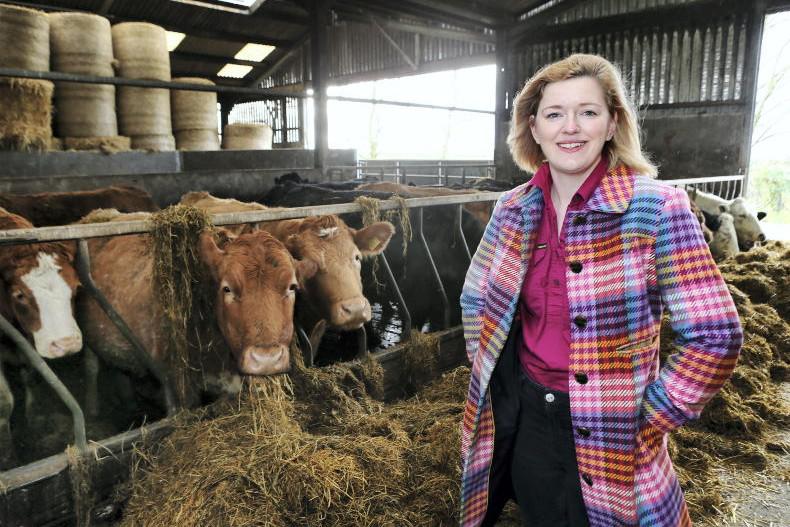
This is something that should be discussed, according to rural GP, Dr Rebecca Orr. As an academic clinical GP, she balances her rural practice in Ballymoney, Co Antrim alongside her academic research at Queens’ University, Belfast.
As well as that, she is a part-time farmer, growing winter crops and farming beef and sheep, and chair of the Northern Ireland Agri-Rural Health Forum, a collective that brings together voluntary, commercial and public organisations in the agri health sector.
“We know what our cows are doing and we know what our grass growth is, but does anybody know what their blood pressure is?” Dr Orr asks.
“We’re thinking about environmental sustainability, the sustainability of our animals, but we’re not prioritising the human sustainability.”
Dr Orr adds that, fortunately, she has seen an increase in farming health research over the past few years, especially from a mental health perspective.
“We’re much more aware that it’s not just about your cholesterol, it’s about the whole picture and how we’re living our lives,” she explains.
That being said, there is still some way to go in understanding our health in the context of what’s going on around us, including political and commercial determinants, she says.
“There’s been a lot of disruption to routines on farm, with family members having to go off farm to earn income,” Dr Orr adds.
“Whilst there are strengths in terms of diversity of income, it does disrupt lifestyles, daily routines, even eating habits.”
Strength of planning
If looking after your health is one of your goals for 2026, Dr Orr’s advice is to break it down into baseline areas, such as nutrition, sleep and exercise, and consider what elements are specific or relevant to you.
With regards to women, it could be issues related to menopause, fertility or reproductive health, she points out.
“Do you want to think about your respiratory health in the incoming year? Have you had a hearing test? Are you using things that might damage your eyes?” she says.
“Think about the scenario on your farm and pick one or two things where you can make a change.
“Blood pressure is a very simple two-minute check that you could do in January. By monitoring this, you are absolutely reducing your risk of heart attacks and strokes in the future.
“If you identify aspects of your lifestyle that might be cause for concern, have a chat with your GP and ask whether any tests are needed. Building a better rapport with your GP is one change that you could easily make in January. You need to start somewhere.”
Physical health is just one part of the picture, of course. Feeling secure in your mind, and tending to it, is another aspect of wellbeing. Padraig O’Morain is a mindfulness trainer who grew up on a mixed farm in Ladystown, Co Kildare but now lives in Dublin.

Padraig O'Morain. \ Mike Andrews
Mindfulness and acceptance
“We all have thoughts and it is important to be aware of them,” he says.
“We could be reminiscing on the past, thinking about what we have to do on any given day or catastrophising about things going wrong in the future, which doesn’t really help very much,” Padraig remarks.
“It kind of scares you. And when things are going wrong, you need to be able to make plans and to figure out what can I do?”
Acceptance of how things are is a major part of mindfulness, he explains. “If there’s bad weather, at least I’m accepting that there’s bad weather. But catastrophising is saying, this is going to be awful. I’m ruined. It doesn’t do anything valuable.”
The other kind of negative thinking is beating yourself up. “The harsh critic in your head gets going and it is criticising you for everything that you’ve done wrong. The chances you’ve missed, things that didn’t work out.
“And the thing about that is that we all live in a world of uncertainty. For farmers, uncertainty is really baked into the whole job because you’ve got markets, government policy, regulations, weather, disease.
You could almost say that every time you make what turns out to be the right decision is almost a minor miracle, because there’s so many odds there. So beating yourself up is generally not a good idea, yet lots of people do that.”
That inner critic tends to become particularly loud in the early days and weeks of the new year. There’s the sting of the failed intentions that didn’t materialise from the previous year as well as the weight of expectation that a new year can bring.
“But there’s also a sense of hope,” Padraig points out.
“Some resolutions do get carried out and implemented, so never give up on that.
If your New Year is consistently ruined with the remnants of the one gone by, you need to practise something called self-compassion.
“Self-compassion means that you pledge to be a friend to yourself, no matter what happens. You’re not just a friend to yourself when you succeed but also when you lose the race. Compassion is not something that comes and goes. It’s a thing that you can cultivate.
Another aspect is recognising that you’re not alone.
“We’re not as unique as we think we are. There are millions and millions of people in this world who will also be thinking: I said I’d do that last year and I didn’t do it, or I made a bloody fool of myself at this thing last year.”
Recognising that there are shared universal experiences can help bring perspective, according to Padraig.
It all ties in with a broader idea: the thoughts that you’re thinking are not the only thoughts that you could be thinking.
Padraig uses the analogy of herding sheep to illustrate the point. “When I was growing up, if you were moving sheep along a road in the country, you literally walked them along the road. When those sheep came to the gap in the hedge or a gate, they were going to go through it.
“They’re not going to walk in a straight line for you. That’s why you need a sheepdog to get them back. I think that sort of awareness of what’s going on in your mind is your sheepdog.”
Padraig’s tips
Padraig has practised mindfulness since the 1980s, and he incorporates some of his practice in daily walks.
The following questions that he has shared with Irish Country Living are useful for farmers to ask themselves as they are roaming the farm, morning and night. It might just help you to see the same field in a different way, and be present, Padraig says.
1. What five things am I aware of right now? It could be the sound of traffic on the road, the gentle rustling of trees overhead, the feeling of your wellies sinking slowly into mud, or even your own breath.
2. What five things do I accept right now? It could be the ever-changing weather or a situation that is happening in your world or someone else’s.
3. Am I aware of my breath? This concentrates the mind, allowing you to focus on observing the number of in-breaths and out-breaths.
4. What is my affirmation for today? Affirmations can help to turn your thoughts in a more useful direction. It could be: I am kind, I am strong, happiness does not depend on ‘X’, I am healthy, I know no fear.
5. What’s positive in your life? List three things that are positive and that you are grateful for.
“You don’t have to go through all of these stages on a walk,” says Padraig.
“You can always choose one or two that work for you. The key is that you are creating a positive mental space for your walk.”
The Farmer Health Check programme, run by the IFA and Croí, and funded by the Department of Agriculture, Food and the Marine is a mobile health service offering free health assessments and tailored advice specifically for farmers and their families across Ireland. ifa.ie/healthcheck
The Farm Families Health Checks Programme offers farmers and their families access to health checks from a portable clinic and from local community settings across Northern Ireland.publichealth.hscni.net
Since 2012, Padraig O’Morain has been sending daily mental health tips to thousands of people around the world. The Daily Bell is free and takes less than a minute to read – what counts is how you use the tips that appeal to you.
You can sign up at padraigomorain.com/dailybell
Love it or loathe it, January is the month for planning ahead. It’s a time for bringing out blank notebooks and sharpened pencils, a season of clean slates and fresh starts. In some farming sectors, it can be a quieter time, giving you the space to pause and take a helicopter view of how the business is running.
As you and the family sit down to make your 2026 business plan, there is an important question to consider: what is the plan to care for the people holding it all together?
This is something that should be discussed, according to rural GP, Dr Rebecca Orr. As an academic clinical GP, she balances her rural practice in Ballymoney, Co Antrim alongside her academic research at Queens’ University, Belfast.
As well as that, she is a part-time farmer, growing winter crops and farming beef and sheep, and chair of the Northern Ireland Agri-Rural Health Forum, a collective that brings together voluntary, commercial and public organisations in the agri health sector.
“We know what our cows are doing and we know what our grass growth is, but does anybody know what their blood pressure is?” Dr Orr asks.
“We’re thinking about environmental sustainability, the sustainability of our animals, but we’re not prioritising the human sustainability.”
Dr Orr adds that, fortunately, she has seen an increase in farming health research over the past few years, especially from a mental health perspective.
“We’re much more aware that it’s not just about your cholesterol, it’s about the whole picture and how we’re living our lives,” she explains.
That being said, there is still some way to go in understanding our health in the context of what’s going on around us, including political and commercial determinants, she says.
“There’s been a lot of disruption to routines on farm, with family members having to go off farm to earn income,” Dr Orr adds.
“Whilst there are strengths in terms of diversity of income, it does disrupt lifestyles, daily routines, even eating habits.”
Strength of planning
If looking after your health is one of your goals for 2026, Dr Orr’s advice is to break it down into baseline areas, such as nutrition, sleep and exercise, and consider what elements are specific or relevant to you.
With regards to women, it could be issues related to menopause, fertility or reproductive health, she points out.
“Do you want to think about your respiratory health in the incoming year? Have you had a hearing test? Are you using things that might damage your eyes?” she says.
“Think about the scenario on your farm and pick one or two things where you can make a change.
“Blood pressure is a very simple two-minute check that you could do in January. By monitoring this, you are absolutely reducing your risk of heart attacks and strokes in the future.
“If you identify aspects of your lifestyle that might be cause for concern, have a chat with your GP and ask whether any tests are needed. Building a better rapport with your GP is one change that you could easily make in January. You need to start somewhere.”
Physical health is just one part of the picture, of course. Feeling secure in your mind, and tending to it, is another aspect of wellbeing. Padraig O’Morain is a mindfulness trainer who grew up on a mixed farm in Ladystown, Co Kildare but now lives in Dublin.
Padraig O'Morain. \ Mike Andrews
Mindfulness and acceptance
“We all have thoughts and it is important to be aware of them,” he says.
“We could be reminiscing on the past, thinking about what we have to do on any given day or catastrophising about things going wrong in the future, which doesn’t really help very much,” Padraig remarks.
“It kind of scares you. And when things are going wrong, you need to be able to make plans and to figure out what can I do?”
Acceptance of how things are is a major part of mindfulness, he explains. “If there’s bad weather, at least I’m accepting that there’s bad weather. But catastrophising is saying, this is going to be awful. I’m ruined. It doesn’t do anything valuable.”
The other kind of negative thinking is beating yourself up. “The harsh critic in your head gets going and it is criticising you for everything that you’ve done wrong. The chances you’ve missed, things that didn’t work out.
“And the thing about that is that we all live in a world of uncertainty. For farmers, uncertainty is really baked into the whole job because you’ve got markets, government policy, regulations, weather, disease.
You could almost say that every time you make what turns out to be the right decision is almost a minor miracle, because there’s so many odds there. So beating yourself up is generally not a good idea, yet lots of people do that.”
That inner critic tends to become particularly loud in the early days and weeks of the new year. There’s the sting of the failed intentions that didn’t materialise from the previous year as well as the weight of expectation that a new year can bring.
“But there’s also a sense of hope,” Padraig points out.
“Some resolutions do get carried out and implemented, so never give up on that.
If your New Year is consistently ruined with the remnants of the one gone by, you need to practise something called self-compassion.
“Self-compassion means that you pledge to be a friend to yourself, no matter what happens. You’re not just a friend to yourself when you succeed but also when you lose the race. Compassion is not something that comes and goes. It’s a thing that you can cultivate.
Another aspect is recognising that you’re not alone.
“We’re not as unique as we think we are. There are millions and millions of people in this world who will also be thinking: I said I’d do that last year and I didn’t do it, or I made a bloody fool of myself at this thing last year.”
Recognising that there are shared universal experiences can help bring perspective, according to Padraig.
It all ties in with a broader idea: the thoughts that you’re thinking are not the only thoughts that you could be thinking.
Padraig uses the analogy of herding sheep to illustrate the point. “When I was growing up, if you were moving sheep along a road in the country, you literally walked them along the road. When those sheep came to the gap in the hedge or a gate, they were going to go through it.
“They’re not going to walk in a straight line for you. That’s why you need a sheepdog to get them back. I think that sort of awareness of what’s going on in your mind is your sheepdog.”
Padraig’s tips
Padraig has practised mindfulness since the 1980s, and he incorporates some of his practice in daily walks.
The following questions that he has shared with Irish Country Living are useful for farmers to ask themselves as they are roaming the farm, morning and night. It might just help you to see the same field in a different way, and be present, Padraig says.
1. What five things am I aware of right now? It could be the sound of traffic on the road, the gentle rustling of trees overhead, the feeling of your wellies sinking slowly into mud, or even your own breath.
2. What five things do I accept right now? It could be the ever-changing weather or a situation that is happening in your world or someone else’s.
3. Am I aware of my breath? This concentrates the mind, allowing you to focus on observing the number of in-breaths and out-breaths.
4. What is my affirmation for today? Affirmations can help to turn your thoughts in a more useful direction. It could be: I am kind, I am strong, happiness does not depend on ‘X’, I am healthy, I know no fear.
5. What’s positive in your life? List three things that are positive and that you are grateful for.
“You don’t have to go through all of these stages on a walk,” says Padraig.
“You can always choose one or two that work for you. The key is that you are creating a positive mental space for your walk.”
The Farmer Health Check programme, run by the IFA and Croí, and funded by the Department of Agriculture, Food and the Marine is a mobile health service offering free health assessments and tailored advice specifically for farmers and their families across Ireland. ifa.ie/healthcheck
The Farm Families Health Checks Programme offers farmers and their families access to health checks from a portable clinic and from local community settings across Northern Ireland.publichealth.hscni.net
Since 2012, Padraig O’Morain has been sending daily mental health tips to thousands of people around the world. The Daily Bell is free and takes less than a minute to read – what counts is how you use the tips that appeal to you.
You can sign up at padraigomorain.com/dailybell






SHARING OPTIONS