


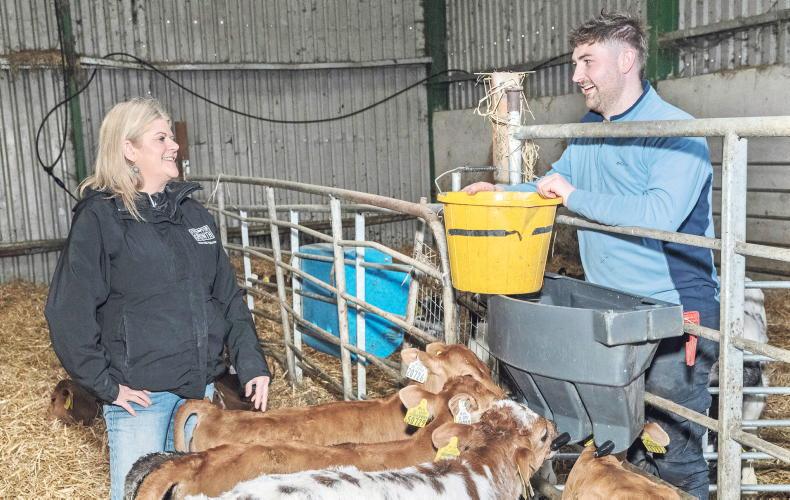
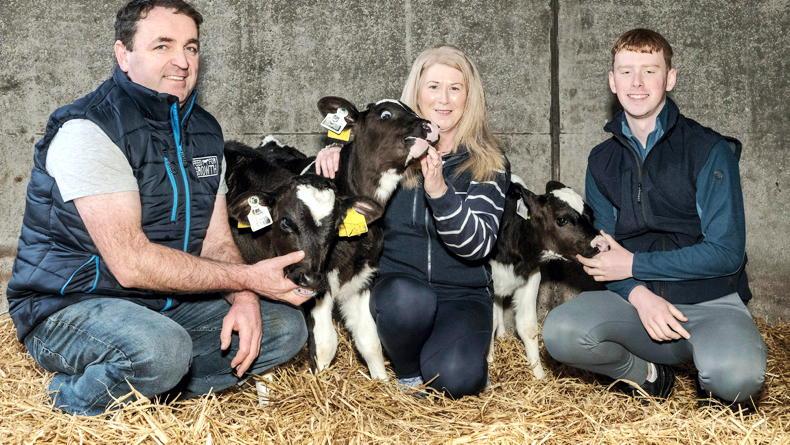
On their farm in Milford, Co Cork, father-and-son team Ger and Jonathan Sheehan have built a dairy system that reflects both tradition and forward thinking.
Running a 65-cow Jersey-based herd, their approach centres on efficiency, animal health and making smart decisions that reduce labour without compromising performance.
At the heart of this is a clear focus on calf rearing – an area they see as critical to the long-term success of the herd.
“We’ve always said the calves are the future of the farm. If you get that part right, everything else follows,” explains Jonathan.
Setting calves up for success
The Sheehans operate a compact calving system, starting each year on 1 February. With the majority of calves retained as replacements, consistency in early nutrition and management is essential. From the moment a calf hits the ground, the process is carefully structured.
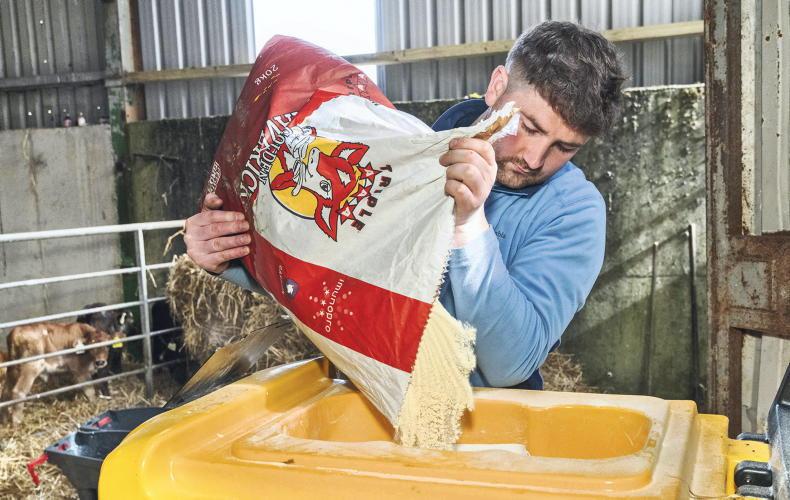
Calves receive colostrum immediately after birth, followed by Triple AAA Golden Maverick milk replacer during their first week. They are fed 2.5l twice daily through a milk bar teat feeder, a step Jonathan values not just for nutrition, but for training.
“It teaches them how to drink properly and prepares them for the automatic feeder. That early routine makes a big difference later on,” Jonathan says.
Breeding decisions are also central to the farm’s success.
“Our breeding strategy is carefully planned. We use sexed semen extensively to maximise the number of replacement heifers, bring in Belgian Blue sires where it makes sense, and finish with a Simmental stock bull at the end of the season to cover the rest. It’s all about getting the genetics and the herd structure right from the start,” the duo explained.
Labour saving without compromise
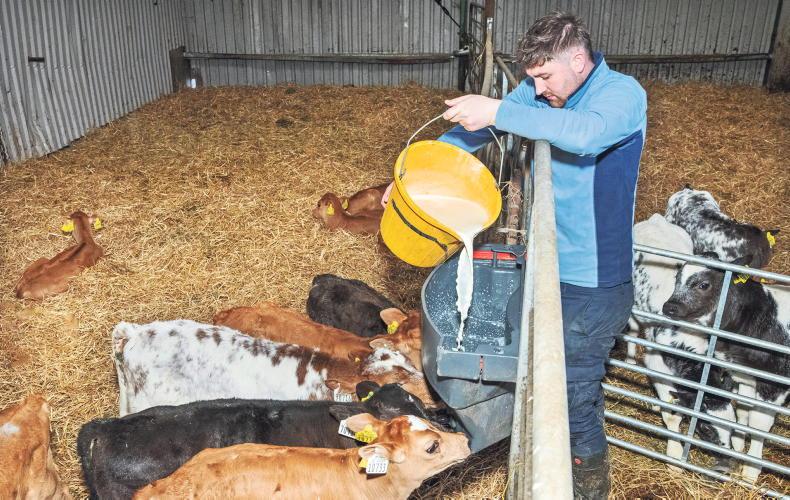
This season marked a significant step forward, with the introduction of a JFC automatic calf feeder, a move that has transformed the day-to-day workload on the farm.
“It’s a serious job for labour saving. Once the calves are trained in, the system takes over the feeding routine and you can focus on monitoring rather than mixing and carrying,” says Jonathan.
The feeder delivers a consistent and accurate feed of milk replacer, mixed fresh for every feed. This consistency has been a game changer, not just for labour efficiency, but for calf performance.
Nutrition that delivers
A key part of making the automated system work effectively has been the choice of milk replacer. This year, the Sheehans used Feed For Growth’s (Volac Milk Replacers Ireland) Triple AAA Golden Maverick Milk Replacer and the results have been clear to see.
“The mixability is excellent. It blends easily through the feeder, no lumps, no blockages. That’s important when you’re relying on a machine,” Jonathan notes.
Ease of use is a major factor in any busy calf-rearing setup and Triple AAA Golden Maverick has delivered on that front. But beyond convenience, it’s the impact on calf health and performance that stands out most.
“The calves are thriving on it. You’re seeing strong, even growth right across the group, and they’re content, which is always a good sign,” commented Jonathan.
Supporting calf health from the inside out
Calf health is a top priority on the farm and the Sheehans have taken a proactive approach to digestive stability. Alongside Triple AAA Golden Maverick, new Gut Rest from Feed For Growth is added, helping to maintain gut health during what can be a vulnerable stage of life.
“With young calves, it’s all about keeping everything right internally. If their digestion is right, they perform better and you avoid setbacks,” Jonathan explains.
The results speak for themselves. Incidences of digestive upset have been minimal and calves have maintained strong intakes throughout the feeding period.
“You’re not dealing with the same level of issues. They stay healthier and that makes the whole system run smoother.”
Growth programme
Calves are managed on a 70-day growth curve, starting at 5l/day and increasing to 6l, before a gradual weaning process over three weeks. The automatic feeder allows this to be done smoothly and consistently, with minimal stress on the animals.
Post-weaning, calves remain housed for a period and are introduced to concentrates, hay and straw. This careful transition supports rumen development and helps avoid issues such as summer scour once calves are turned out.
“It’s about finishing the job properly. You don’t want to undo all the good work you’ve done early on,” Jonathan says.
Building confidence
For Ger and Jonathan, the combination of a structured calf-rearing system, modern technology and the right nutritional support has created a setup they can rely on.
“Maverick fits into the system very well. It’s easy to use, it performs consistently and, most importantly, the calves are doing well on it,” the duo reflects. In a farming environment where time is limited and margins matter, that reliability builds confidence. “You want products that do what they say they’ll do – and this does.”
A practical choice for progressive farms
The Sheehans’ experience highlights what many dairy and beef farmers are striving for: a calf-rearing system that delivers strong, healthy animals while reducing the physical demands of the job.
By combining good management with dependable nutrition, they’ve created a system that works, not just on paper, but in the reality of a busy farm.
“It’s about making life easier, while still getting top performance,” Jonathan concluded.



SHARING OPTIONS