Challenges such as stress, dietary and environmental changes at weaning time can affect appetite, damage the gut lining and disrupt the microbiome, making it a high-risk period for digestive disease.
Promoting gut health during this window is therefore crucial to ensure nutrient uptake, build immune resilience and prevent long-term production losses. If gut health is compromised at any stage, feed efficiency suffers – meaning the pig won’t achieve expected growth rates and days to finish will be increased.
Post-weaning ileitis
Ileitis means inflammation of the ileum – the lower portion of the small intestine responsible for nutrient absorption. It is one of the most common digestive diseases in growing pigs and is caused by the Lawsonia intracellularis bacteria.
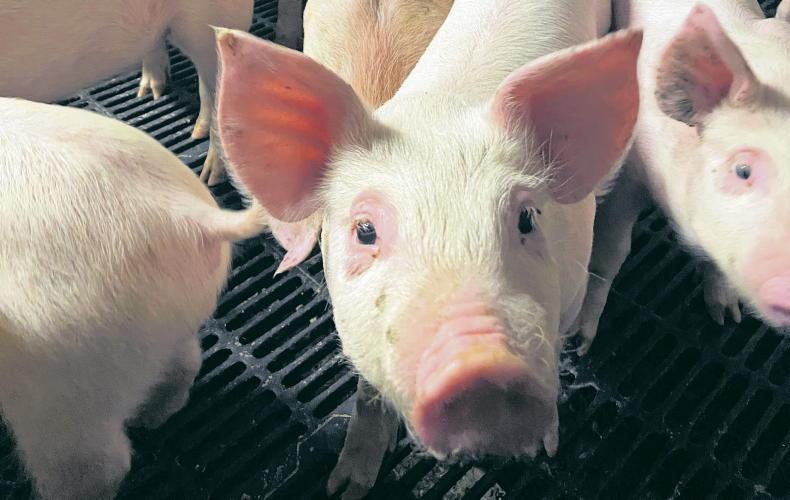
Clinical signs commonly occur in weaned pigs from six to 20 weeks of age, appearing as diarrhoea or faecal looseness, often grey or pasty in appearance. Some pigs may have subclinical infection, meaning they display few external signs but are affected internally.
Most pigs will recover from the visible signs of infection; however, they continue to eat and absorb less from their diet, affecting development and contributing to lower than expected growth rates.
Given that feed accounts for over 70% of the cost of pig production, the economic cost of ileitis to farmers is significant. The reduced nutrient absorption caused by ileitis can compromise performance and lead to the wastage of expensive additives like lysine.
US research has estimated losses roughly equivalent to €5-15/pig, depending on the age of pigs when infected and the severity of the disease.
Digestive problems
Although ileitis is commonly associated with scour in weaned piglets, the long-term damage to gut integrity persists for the rest of the pig’s life, impacting ADWG and FCR right up until slaughter. These lasting effects can be seen on post-mortem examination, where thickening of gut folds and ridges can easily be seen and felt in diseased ileums.
Within groups of finished pigs, it’s common to see a wide range of severity, and this may explain why batch unevenness is a common feature of subclinical ileitis.
Affected pigs are also more susceptible to secondary infections, such as Brachyspira and Salmonella, due to immune suppression and disruption of the gut microbiome.
Control measures and vaccination
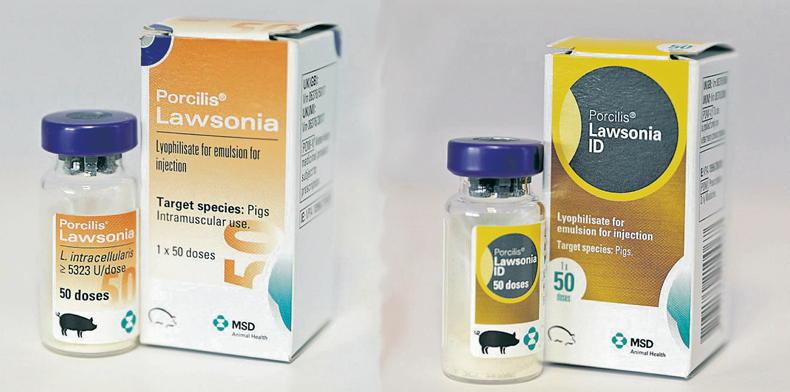
The Porcilis Lawsonia vaccine can be given by intramuscular injection or intradermally using the IDAL vaccination device.
A single dose can be given from three weeks of age and gives 21 weeks of immunity to protect growing pigs through the fattening stage. Vaccination with Porcilis Lawsonia has been proven to reduce diarrhoea, reduce intestinal lesions and reduce loss of daily weight gain.
It is possible to administer Porcilis Lawsonia at the same time as other MSD Animal Health vaccines against porcine circovirus, Mycoplasma hyopneumoniae and PRRS to provide convenient four-way protection against the most significant diseases affecting young pigs.

Cian Maguire, key account manager, MSD Animal Health
“As we increase our knowledge of gut health in pigs, we’re realising it’s not just what goes in, but what we keep out. A lot of effort goes into ensuring feed is balanced and tailored to the needs of growing pigs. Expensive ingredients, like amino acids and minerals, are added to feed to promote performance and support development.
But no matter how good the feed is, if the pig is sick, or not eating, or unable to absorb essential nutrition, growth will be affected.
Farmers can improve general gut health across the herd in conjunction with both their vet and their nutritionist. Particular attention should be paid to weaning management and water quality. Hygiene across the unit is essential, as most digestive diseases are transmitted via infected faecal matter.
Digestive disturbances can open the door to secondary infections. Your vet can test for specific pathogens and recommend treatment or vaccination as necessary.”
By Cian Maguire, key account manager, MSD Animal Health.
Farmers should discuss vaccinations with their vet, who can also advise on infection control and on-farm biosecurity. Further information is available from your vet or MSD Animal Health, Red Oak North, South County Business Park, Leopardstown, Dublin 18, Ireland. MSD Animal Health can be contacted at: 01-297-0220 or emailed at: vet-support.ie@msd.com
Challenges such as stress, dietary and environmental changes at weaning time can affect appetite, damage the gut lining and disrupt the microbiome, making it a high-risk period for digestive disease.
Promoting gut health during this window is therefore crucial to ensure nutrient uptake, build immune resilience and prevent long-term production losses. If gut health is compromised at any stage, feed efficiency suffers – meaning the pig won’t achieve expected growth rates and days to finish will be increased.
Post-weaning ileitis
Ileitis means inflammation of the ileum – the lower portion of the small intestine responsible for nutrient absorption. It is one of the most common digestive diseases in growing pigs and is caused by the Lawsonia intracellularis bacteria.
Clinical signs commonly occur in weaned pigs from six to 20 weeks of age, appearing as diarrhoea or faecal looseness, often grey or pasty in appearance. Some pigs may have subclinical infection, meaning they display few external signs but are affected internally.
Most pigs will recover from the visible signs of infection; however, they continue to eat and absorb less from their diet, affecting development and contributing to lower than expected growth rates.
Given that feed accounts for over 70% of the cost of pig production, the economic cost of ileitis to farmers is significant. The reduced nutrient absorption caused by ileitis can compromise performance and lead to the wastage of expensive additives like lysine.
US research has estimated losses roughly equivalent to €5-15/pig, depending on the age of pigs when infected and the severity of the disease.
Digestive problems
Although ileitis is commonly associated with scour in weaned piglets, the long-term damage to gut integrity persists for the rest of the pig’s life, impacting ADWG and FCR right up until slaughter. These lasting effects can be seen on post-mortem examination, where thickening of gut folds and ridges can easily be seen and felt in diseased ileums.
Within groups of finished pigs, it’s common to see a wide range of severity, and this may explain why batch unevenness is a common feature of subclinical ileitis.
Affected pigs are also more susceptible to secondary infections, such as Brachyspira and Salmonella, due to immune suppression and disruption of the gut microbiome.
Control measures and vaccination
The Porcilis Lawsonia vaccine can be given by intramuscular injection or intradermally using the IDAL vaccination device.
A single dose can be given from three weeks of age and gives 21 weeks of immunity to protect growing pigs through the fattening stage. Vaccination with Porcilis Lawsonia has been proven to reduce diarrhoea, reduce intestinal lesions and reduce loss of daily weight gain.
It is possible to administer Porcilis Lawsonia at the same time as other MSD Animal Health vaccines against porcine circovirus, Mycoplasma hyopneumoniae and PRRS to provide convenient four-way protection against the most significant diseases affecting young pigs.
Cian Maguire, key account manager, MSD Animal Health
“As we increase our knowledge of gut health in pigs, we’re realising it’s not just what goes in, but what we keep out. A lot of effort goes into ensuring feed is balanced and tailored to the needs of growing pigs. Expensive ingredients, like amino acids and minerals, are added to feed to promote performance and support development.
But no matter how good the feed is, if the pig is sick, or not eating, or unable to absorb essential nutrition, growth will be affected.
Farmers can improve general gut health across the herd in conjunction with both their vet and their nutritionist. Particular attention should be paid to weaning management and water quality. Hygiene across the unit is essential, as most digestive diseases are transmitted via infected faecal matter.
Digestive disturbances can open the door to secondary infections. Your vet can test for specific pathogens and recommend treatment or vaccination as necessary.”
By Cian Maguire, key account manager, MSD Animal Health.
Farmers should discuss vaccinations with their vet, who can also advise on infection control and on-farm biosecurity. Further information is available from your vet or MSD Animal Health, Red Oak North, South County Business Park, Leopardstown, Dublin 18, Ireland. MSD Animal Health can be contacted at: 01-297-0220 or emailed at: vet-support.ie@msd.com





SHARING OPTIONS