Walter Furlong Grain's tillage farm in Co Wexford is sequestering 636kg CO2/ac. The farm is sequestering more carbon than it is producing, with no reward.
In the meantime, agriculture is coming under increasing pressure to reduce emissions, despite not being able to take account of sequestration, and the tillage area has declined by 40,000ha in four years (2015-2018) with little notice by officials.
At the Irish Tillage and Land Use Society’s (ITLUS) summer webinar, Wally Furlong explained that his father Walter has been farming since 1980 and moved to minimum tillage in 2001. He describes this in the short video below.
ADVERTISEMENT
Five years later, cover crops were added to the mix and this was the game changer.
Mustard cover
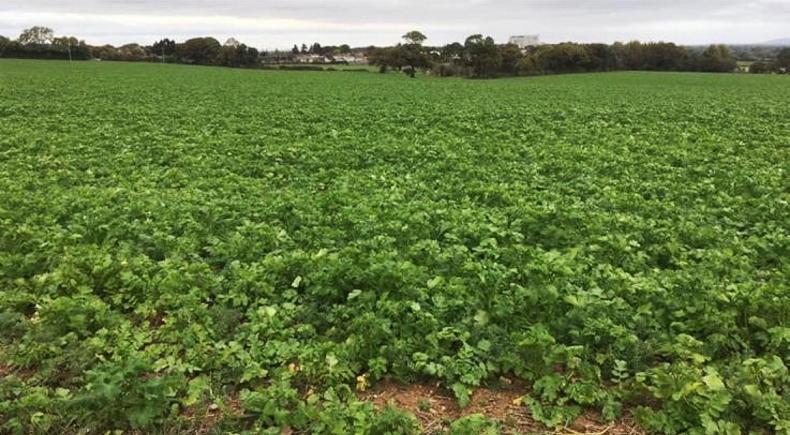
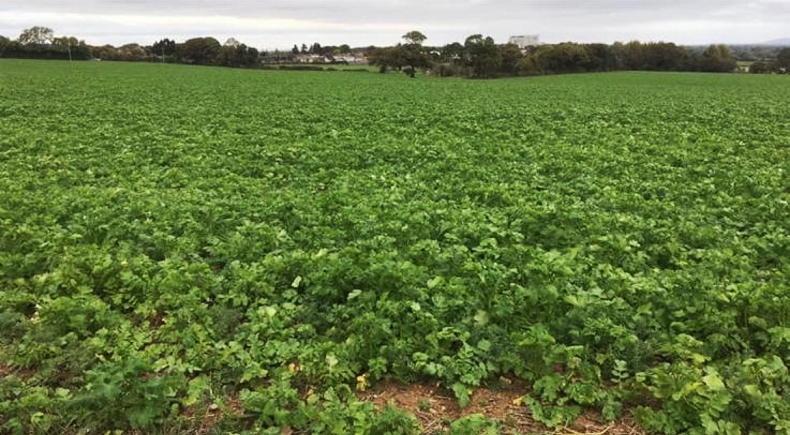
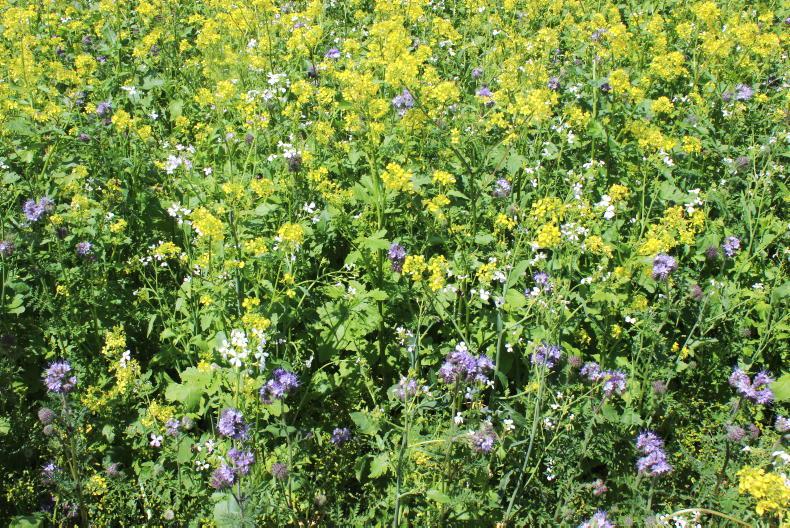
Starting with a simple mustard cover, over the years these catch crops developed into seven- and eight-way mixes.
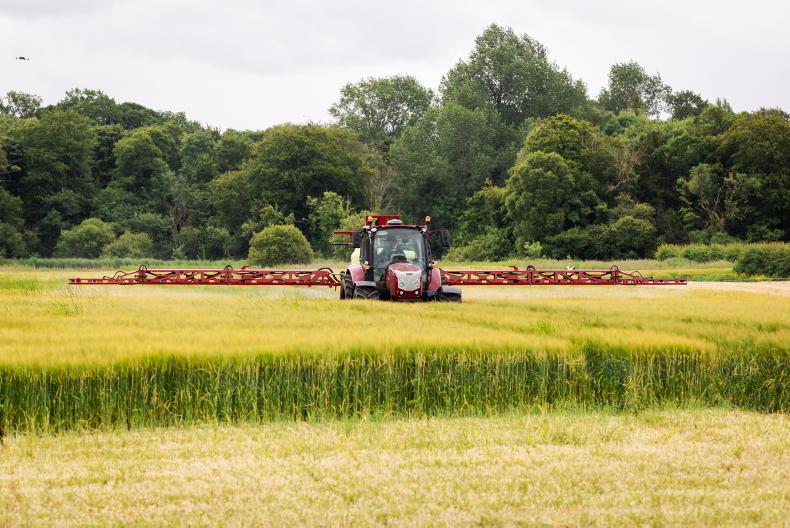
Spring barley is the main crop on the farm, while winter wheat, beans, oilseed rape and oats make up the remainder of the rotation, but cover crops are treated like a second crop.
Wally explained that his late colleague Philip Reck was the one to push for cover crops and carry out the research needed.
Pioneer
“Our late colleague Philip Reck did a lot of research into cover crops. He was the pioneer of it here in terms of mixes and different crops. He did a lot of work in the last few years on that.
“With Philip's research and the help of Germinal, he identified which species were best for our rotation,” Wally noted.
There is a lot of continuous spring barley on the farm and the land needed help
He explained that there is a lot of continuous spring barley on the farm and the land needed help.
The cover crops offered that help and have resulted in a reduction in inputs and diesel consumption.
Increase in biology
“We’ve seen a massive increase in terms of soil biology, soil health, yields, nutrient retention, water infiltration and we’re up to a stage where we’re doing seven- and eight-way mixes in terms of cover crops to increase biodiversity.
“The idea of cover crops is that you constantly have something living and breathing in the soil.”
Mix of species
Wally explained why he uses different species. The large tap root on tillage radish helps with compaction issues.
Tillage radish is good to help with compaction issues.
Other plants such as vetch help to build fungi populations such as mycorrhizal fungi. Vetch will also fix nitrogen.
Phacelia conditions the soil with a large root mass. Buckwheat can unlock phosphorus.
Linseed will slowly break down the carbon once it returns to the soil. Every species has a job to do.
Reduction in inputs
Inputs have dramatically reduced as a result.
Nitrogen use is down by 10 to 20 units/ac and potash is down by 20 to 30 units/ac in the past three or four years.
Most long-term land is now at index 3 and 4 for P and K.
“We notice a massive difference when we go from land that we’ve had for 10 to 15 years into land that we’ve only had for two years. The land is more friable.
"We’ve definitely seen reductions across the board in terms of diesel consumption and fertiliser usage.”
Carbon model
By using a carbon model, the Furlongs estimate that they are sequestering 636kg CO2/ac and cover crops and minimum tillage play a huge part in increasing carbon storage and sequestration, with organic matter levels also increasing on the farm.
“We looked at all the crops. Beans and spring barley were the most environmentally friendly.”
Wally would like to see farmers rewarded for storing and sequestering carbon.
“In other countries, farmers are selling their carbon credits to big corporations to balance their carbon emissions, so if there is a scheme that comes into place or a company that can buy these carbon credits, there is definitely scope for tillage farmers in this country to get an extra few pound for their carbon."
Register for free to read this story and our free stories.
This content is available to digital subscribers and loyalty code users only. Sign in to your account, use the code or subscribe to get unlimited access.
The reader loyalty code gives you full access to the site from when you enter it until the following Wednesday at 9pm. Find your unique code on the back page of Irish Country Living every week.
CODE ACCEPTED
You have full access to the site until next Wednesday at 9pm.
CODE NOT VALID
Please try again or contact support.
Walter Furlong Grain's tillage farm in Co Wexford is sequestering 636kg CO2/ac. The farm is sequestering more carbon than it is producing, with no reward.
In the meantime, agriculture is coming under increasing pressure to reduce emissions, despite not being able to take account of sequestration, and the tillage area has declined by 40,000ha in four years (2015-2018) with little notice by officials.
At the Irish Tillage and Land Use Society’s (ITLUS) summer webinar, Wally Furlong explained that his father Walter has been farming since 1980 and moved to minimum tillage in 2001. He describes this in the short video below.
Five years later, cover crops were added to the mix and this was the game changer.
Mustard cover
Starting with a simple mustard cover, over the years these catch crops developed into seven- and eight-way mixes.
Spring barley is the main crop on the farm, while winter wheat, beans, oilseed rape and oats make up the remainder of the rotation, but cover crops are treated like a second crop.
Wally explained that his late colleague Philip Reck was the one to push for cover crops and carry out the research needed.
Pioneer
“Our late colleague Philip Reck did a lot of research into cover crops. He was the pioneer of it here in terms of mixes and different crops. He did a lot of work in the last few years on that.
“With Philip's research and the help of Germinal, he identified which species were best for our rotation,” Wally noted.
There is a lot of continuous spring barley on the farm and the land needed help
He explained that there is a lot of continuous spring barley on the farm and the land needed help.
The cover crops offered that help and have resulted in a reduction in inputs and diesel consumption.
Increase in biology
“We’ve seen a massive increase in terms of soil biology, soil health, yields, nutrient retention, water infiltration and we’re up to a stage where we’re doing seven- and eight-way mixes in terms of cover crops to increase biodiversity.
“The idea of cover crops is that you constantly have something living and breathing in the soil.”
Mix of species
Wally explained why he uses different species. The large tap root on tillage radish helps with compaction issues.
Tillage radish is good to help with compaction issues.
Other plants such as vetch help to build fungi populations such as mycorrhizal fungi. Vetch will also fix nitrogen.
Phacelia conditions the soil with a large root mass. Buckwheat can unlock phosphorus.
Linseed will slowly break down the carbon once it returns to the soil. Every species has a job to do.
Reduction in inputs
Inputs have dramatically reduced as a result.
Nitrogen use is down by 10 to 20 units/ac and potash is down by 20 to 30 units/ac in the past three or four years.
Most long-term land is now at index 3 and 4 for P and K.
“We notice a massive difference when we go from land that we’ve had for 10 to 15 years into land that we’ve only had for two years. The land is more friable.
"We’ve definitely seen reductions across the board in terms of diesel consumption and fertiliser usage.”
Carbon model
By using a carbon model, the Furlongs estimate that they are sequestering 636kg CO2/ac and cover crops and minimum tillage play a huge part in increasing carbon storage and sequestration, with organic matter levels also increasing on the farm.
“We looked at all the crops. Beans and spring barley were the most environmentally friendly.”
Wally would like to see farmers rewarded for storing and sequestering carbon.
“In other countries, farmers are selling their carbon credits to big corporations to balance their carbon emissions, so if there is a scheme that comes into place or a company that can buy these carbon credits, there is definitely scope for tillage farmers in this country to get an extra few pound for their carbon."
If you would like to speak to a member of our team, please call us on 01-4199525.
Link sent to your email address
We have sent an email to your address. Please click on the link in this email to reset your password. If you can't find it in your inbox, please check your spam folder. If you can't find the email, please call us on 01-4199525.
ENTER YOUR LOYALTY CODE:
The reader loyalty code gives you full access to the site from when you enter it until the following Wednesday at 9pm. Find your unique code on the back page of Irish Country Living every week.








SHARING OPTIONS