


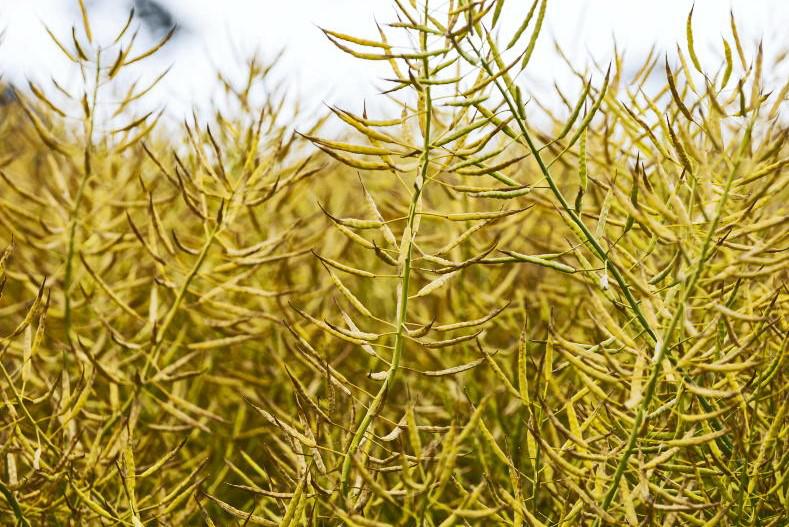
Oilseed rape has increased massively in area over the past few years. There are a lot of benefits to growing the crop on farm. There are many different varieties available, but only some are on the recommended list.
The Department of Agriculture has three varieties on its oilseed rape recommended list (see Table 1) for autumn 2023.
However, it should be noted due to the small gap between the harvest and sowing of winter oilseed rape, these lists tend to be somewhat behind on new varieties coming to the market, so there will be a number of varieties available that are not on this list.
Three varieties to note
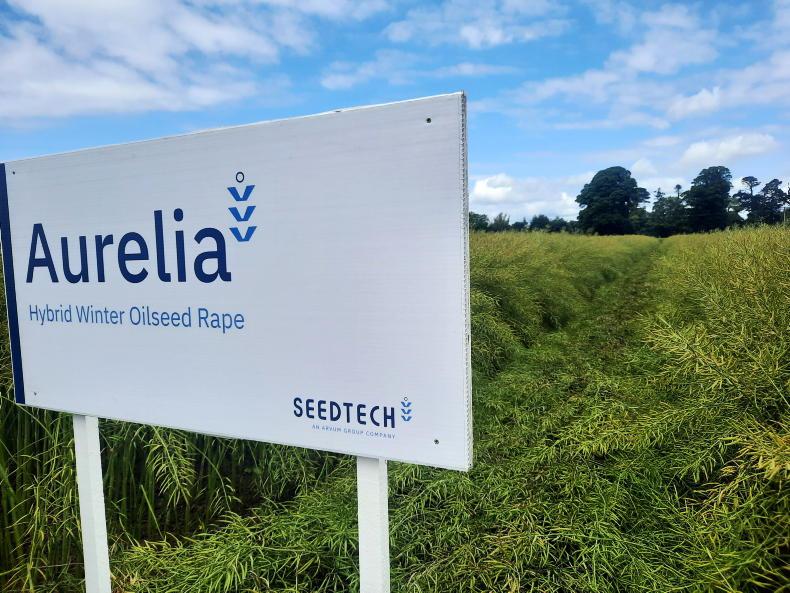
The three varieties on the list are fully recommended and include DK Expansion, Ambassador and Aurelia.
DK Expansion and Aurelia are matching on relative seed yield at a score of 104 each, while Ambassador comes in at 102.

DK Expansion and Aurelia have an oil content score of 101, while Ambassador is at 100. All six rate the same for early vigour, lodging resistance, stem stiffness, earliness of flowering and earliness of maturity.
Other varieties that have been on display at recent open days include: DK Expose, LG Aviron, Pioneer varieties and many more.
Check with your supplier to see what varieties are available.
Oilseed rape improvements
Oilseed rape genetics have improved massively in recent years. Farmers are now expecting to achieve over 2.2t/ac in some cases from oilseed rape. Reported yields to the Irish Farmers Journal so far this harvest have hit 2.3t/ac.
Yields have improved, pod shatter resistance has taken some of the risk out and resistance to Turnip yellow virus (TuYV)and phoma are all helping to make it a little bit easier to achieve higher yields.
Club root
Club root is a disease of oilseed rape, which stunts plant growth.
Incidences of club root are becoming more common in Ireland. This is thought to be due in some way to the growing of brassica cover crops, like forage rape, in fields where oilseed rape is grown.
It is best to grow non-brassica cover crops if you have oilseed rape in your rotation. It is also important to keep oilseed rape volunteers under control.
To avoid disease, oilseed rape should only be grown once every five years in a field. This rotation should ideally be longer if possible.
A great break crop
Oilseed rape is a great break crop. It has a large tap root and so helps to break up any compaction in the soil and improve soil structure.
Its straw is often chopped, and this adds nutrients back to the soil, helping to feed soil microorganisms.
Oilseed rape also helps to stop diseases, like Take-all in cereals, and offers different weed-control options, which can help to bring grass weeds under control on farms.
Catch crop
Oilseed rape is often described as a super catch crop, as it is planted in August and early September. It grows very quickly and so has the potential to take up a lot of nutrients from the ground, which may be left behind by the previous crop.
Many farmers have also been saving money on nitrogen fertiliser for oilseed rape – after measuring how much green leaf is in the crop in the new year, the nitrogen rate can be adjusted accordingly.
Massive increase in area
Oilseed rape area has increased dramatically over the past two years. A good price for the crop has played a big role in this increase.
Oilseed rape has a large tap root and so helps to break up any compaction in the soil and improve soil structure
The winter oilseed rape area was at just over 10,000ha in 2021. It moved to nearly 14,500ha in 2022 and increased massively to about 20,500ha in 2023.
Straw payment
A payment of €150/ha is available to farmers for chopping and incorporating oilseed rape straw under the Straw Incorporation Measure.
3m buffer
Remember, you need to leave a 3m uncultivated buffer beside watercourses on your farm when planting.



SHARING OPTIONS