


The Carbon Border Adjustment Mechanism’s (CBAM’s) associated taxes are due to come into effect on 1 January 2026, despite calls for a postponement.
CBAM has been in place for the past two years for a transitionary period. The Environmental Protection Agency (EPA) is the competent authority for CBAM in Ireland.
Fertiliser companies have been reporting the countries of origin of imported fertiliser for the past two years during the transitionary period.
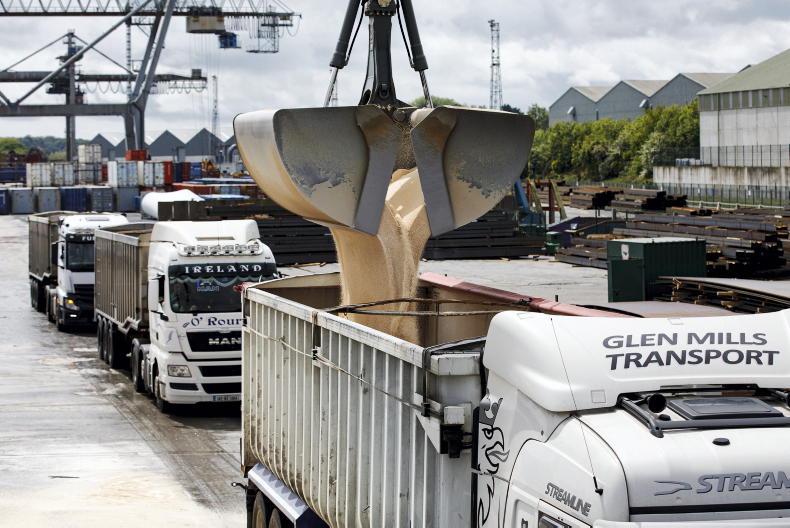
For context, Ireland does not produce any fertiliser, apart from lime. It is all imported. About 80% of urea used in the EU is imported.
From 1 January 2026, CBAM will place a tax on fertiliser produced outside of the EU, based on the levels of emissions from that fertiliser production.
However, real figures for these emissions are not yet available and according to the trade, their collection is unlikely to start before mid-2026, so for now, default figures are being used plus a mark-up of 1%.
Estimates
Table 1 shows estimated default emissions figures for CBAM which were leaked in recent weeks.
It also shows estimated calculations for the CBAM taxes for different products and countries. As an example, based on these figures, a CBAM tax of €43.34/t could be added to the cost of urea from Egypt in 2026.
According to the trade, this figure could go as high as €280/t by 2034, meaning €280/t would be added to the price of urea due to the CBAM tax.
This increase is caused by a reduction in the CBAM free allowances up to 2034 and an expected increase in the cost of carbon credits (or CBAM certificates) due to an increase in demand for those credits.
CAN carries the highest default emissions values and therefore the highest tax. In table 1 the tax on CAN from all regions is coming in at, or close to, €130/t.
These figures are estimates and agreements are still to be made at EU level.
EU production
CBAM aims to reduce emissions produced from EU food production and should protect EU fertiliser producers.
However, EU producers will also face cost increases as CBAM and the EU Emissions Trading System (ETS) align. CBAM is effectively mirroring the EU ETS. EU fertiliser companies have to pay for the carbon they emit. As the EU continues to target emissions reductions this legislation will see EU fertiliser companies lose free allowances on carbon and purchase more carbon certificates, therefore increasing their costs and the cost of fertiliser to the farmer.
This week, a carbon credit costs about €85/t on the EU ETS. CBAM also applies to products like cement, aluminium and steel, and once all are aligned with the EU ETS demand for carbon certificates is likely to increase and so too is their price.
CBAM taxes are due to come into effect come 1 January. However, it should be noted that final agreement is yet to be reached on some of the regulations.
There have been delays on these decisions, and this week industry and farm organisations are still calling for the postponement of these taxes.
Comment
The aim of CBAM looks to be to reduce global carbon emissions, but what will happen is the cost of fertiliser will rise in the EU.
By adding as much as €280/t to the price of a tonne of urea and adding an inhibitor to produce protected urea this is likely to cause a reduction in fertiliser use and therefore food production within the EU.
It is also likely that the competitive advantage protected urea has had on CAN, on a price per kg of nitrogen basis, will be reduced.
In the meantime, big grain producing countries outside of the EU will purchase fertiliser without any CBAM tax, making their fertiliser costs lower and helping them to compete in global markets as they can make a profit at lower commodity prices than EU farmers. We might then find EU farmers reducing production due to higher costs and lower profits and food being imported from outside of the EU, produced from fertiliser without a CBAM tax.
This food is likely to carry a higher carbon footprint than EU food and may be produced under much less regulation than the EU.
Ireland, for example, has some of the lowest carbon footprints in the world for grain, meat and milk. Irish farmers can produce high yields under strict EU rules.
CBAM and its regulations could cause more emissions than it prevents.




SHARING OPTIONS