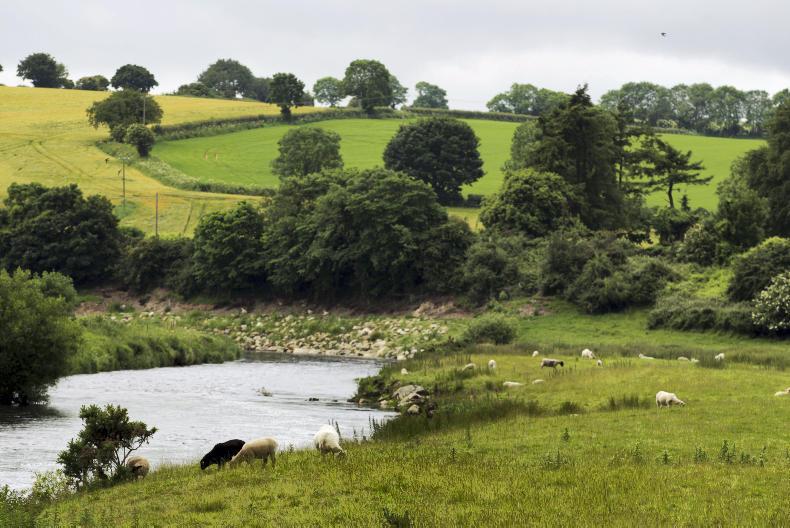
Sheep grazing by the river Slaney, Co Wexford. \ Ramona Farrelly
ADVERTISEMENT
This week we focus on improving water standards for human and livestock consumption. A lot of the water we use on our farms and in our homes comes from group water schemes, with their catchments spanning across vast areas of agricultural land.
These catchments are heavily influenced by the standards we hold on our farms when spreading fertiliser, managing weeds, and grazing livestock. Bad farm practice can have serious implications for water quality. Through good farm practice, we can confidently ensure contamination is prevented and we achieve the highest standard of water quality.
The relevancy of maintaining a good water standard is growing as we learn more about its effect on the health of our ecosystems and our ability to maintain a high level of biodiversity. Agriculture accounts for over two-thirds of the land in Ireland overlapping many of these vital catchments. Simple measures taken within these sensitive areas will secure biodiversity for generations to come.
ADVERTISEMENT
We take a trip to the hills of Donegal to meet suckler and sheep farmer Paul Wilson. We learn about the various measures he has installed on farm to prevent contamination of the Glashagh River, which runs through his land.
William Conlon went west to catch up with Mayo farmer Timmy Quinn. He found out more about the Agricultural Sustainability Support and Advisory Programme (ASSAP) and what it takes to participate in the scheme.
This content is available to digital subscribers and loyalty code users only. Sign in to your account, use the code or subscribe to get unlimited access.
The reader loyalty code gives you full access to the site from when you enter it until the following Wednesday at 9pm. Find your unique code on the back page of Irish Country Living every week.
CODE ACCEPTED
You have full access to the site until next Wednesday at 9pm.
CODE NOT VALID
Please try again or contact support.
This week we focus on improving water standards for human and livestock consumption. A lot of the water we use on our farms and in our homes comes from group water schemes, with their catchments spanning across vast areas of agricultural land.
These catchments are heavily influenced by the standards we hold on our farms when spreading fertiliser, managing weeds, and grazing livestock. Bad farm practice can have serious implications for water quality. Through good farm practice, we can confidently ensure contamination is prevented and we achieve the highest standard of water quality.
The relevancy of maintaining a good water standard is growing as we learn more about its effect on the health of our ecosystems and our ability to maintain a high level of biodiversity. Agriculture accounts for over two-thirds of the land in Ireland overlapping many of these vital catchments. Simple measures taken within these sensitive areas will secure biodiversity for generations to come.
We take a trip to the hills of Donegal to meet suckler and sheep farmer Paul Wilson. We learn about the various measures he has installed on farm to prevent contamination of the Glashagh River, which runs through his land.
William Conlon went west to catch up with Mayo farmer Timmy Quinn. He found out more about the Agricultural Sustainability Support and Advisory Programme (ASSAP) and what it takes to participate in the scheme.
If you would like to speak to a member of our team, please call us on 01-4199525.
Link sent to your email address
We have sent an email to your address. Please click on the link in this email to reset your password. If you can't find it in your inbox, please check your spam folder. If you can't find the email, please call us on 01-4199525.
ENTER YOUR LOYALTY CODE:
The reader loyalty code gives you full access to the site from when you enter it until the following Wednesday at 9pm. Find your unique code on the back page of Irish Country Living every week.








SHARING OPTIONS