


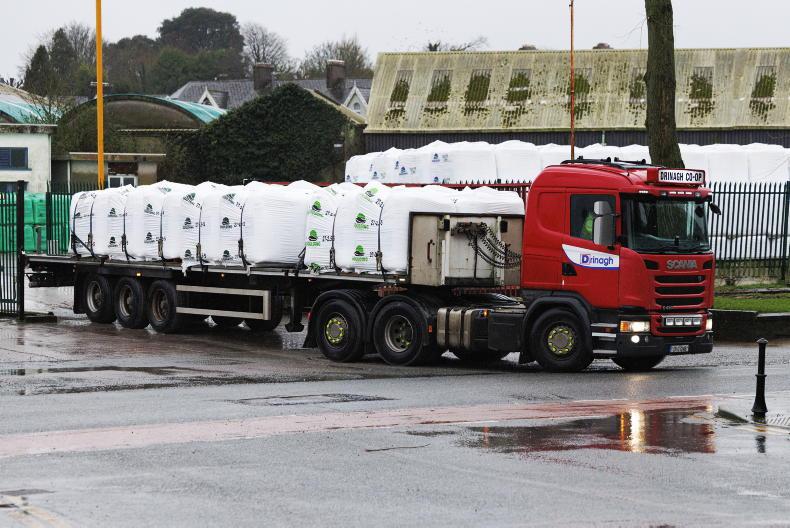
The effective closure of the Strait of Hormuz, now into its third week, is causing a race for supplies of fertiliser among the main importing countries as the northern hemisphere planting season gets underway. The strait accounts for around a third of global seaborne urea trade, with other key fertiliser components such as sulphur, used in phosphate, also reliant on the region.
The world also relies on the strait for passage of liquid natural gas and oil. That gas is critical for fertiliser production, so the closure of the seaway is a double-whammy for fertiliser prices, reducing both the supply of the product and the components needed to manufacture it.
Asian countries had been particularly reliant on shipments from the Middle East to meet both its energy and fertiliser needs. The crisis in the region means major importers there, such as India, are now shopping around for alternative sources. They are not alone, with the US also seeking to find new sources of key minerals.
White House National Economic Council Director Kevin Hassett said on Monday that the country had held discussion with Morocco on reducing barriers to imports of fertilisers from the North African nation. Meanwhile, India secured contracts for 2.5m tonnes from Morocco, as well as 3m tonnes from Russia. It had agreed to buy 3.1m tonnes from Saudi Arabia, which the country’s government says remains active. India imports around 30% of its fertiliser requirements, with 40% of that coming from the Middle East.
India’s government said it currently has adequate fertiliser stocks. However, three of the country’s urea production facilities have announced output cuts due to plummeting supplies of gas from Qatar. Bangladesh, another major user of urea, has shut four of its five fertiliser factories, as the country prioritises gas supplies for domestic needs.
Elsewhere on the production side, Egypt, which supplies 8% of global urea, is facing gas shortages as Israel declared force majeure on its gas exports to the country. China has restricted fertiliser exports as the country tries to ensure adequate domestic supplies.
The immediate impact of these disruptions to global trade has been a spike in fertiliser and gas prices. At the time of going to press, European gas prices were holding above €50 per MWh, up around 60% from their pre-conflict levels. Protected urea, where it is available, is at around €800/t, while CAN is well over €500/t, both price rises of around 20% in a few weeks.
While the world is still in the early phase of the fallout from the conflict, it is already clear that a fast resolution is needed for prices and supply to return to pre-conflict levels. The longer it drags out, the greater the risk to both gas and fertiliser production infrastructure in the region, which could mean that an end to hostilities would not lead to an immediate resumption of production.
Speaking earlier this week, Svein Tore Holsether, CEO of Yara International, the world’s largest producer of ammonia, nitrates and NPK fertilisers, said: “This is a regional conflict with global implications that goes straight into the food system.” Adding that “if the Strait of Hormuz was closed for a year it would be catastrophic. For some crops, if they don’t get the fertiliser, you can see a reduction of up to 50% in the first harvest”.
He said that the countries which would be hardest hit by the rising cost are the world’s poorest, as Europe would always be able to outbid poorer countries for available supplies.
In a statement last week, Fertilizers Europe, the umbrella body for fertiliser manufacturers in Europe, said that there currently are “no issues with the availability of fertilisers on the EU market given the relatively high output of European producers and very high import levels in Q4 2025”.
The body added that urea imports from Iran over the past three years were virtually zero. However, it acknowledged that fertiliser markets are global and “disruptions anywhere in the system can quickly have a knock-on effect on the input costs”.
EU foreign policy chief Kaja Kallas said she had discussed with the UN the possibility of freeing up oil and gas transport through the Strait of Hormuz by copying a deal that allowed Ukrainian grain through the Black Sea following the Russian invasion
It said that if the situation persists or further exacerbates, EU institutions should consider reinforcing aid and assistance to European farmers. EU policymakers have been relatively quiet on the farmer support front since the outbreak of hostilities. EU foreign policy chief Kaja Kallas said she had discussed with the UN the possibility of freeing up oil and gas transport through the Strait of Hormuz by copying a deal that allowed Ukrainian grain through the Black Sea following the Russian invasion.
There seems to be little appetite among European national governments to send military assets to the region to help reopen the trade route, despite a request over the weekend from President Trump for help. German Defence Minister Boris Pistorius dismissed the idea of sending ships to the region saying: “This is not our war. We have not started it.”
Comment
Almost three weeks into the conflict in the Middle East and there still is very little clarity on how much longer it will last, or even what is needed for it to end. While the biggest risks and disruptions from the conflict are being felt by the people living in the region, the effects have already rippled through global markets which directly hit costs to farmers.
Fertiliser is a globally traded commodity, and a scarcity in one part of the world leads to price increases for everyone. The double-whammy effect from increasing gas prices means that even where production is far removed from direct urea supply constraints, the cost of manufacture will rise. At the moment in Europe we are seeing the effects of those price rises. Data for the region, and for Ireland, suggest there is no immediate risk of a supply shortage. It is perhaps ironic that supplies are in such good shape after so much fertiliser was imported out of season in the final months of 2025 to get ahead of the introduction of CBAM charges.
But without a resolution to the conflict, those supplies will eventually start to run short, which would turn a short-term jump into prices into a longer-term reset of the cost of fertiliser to a higher level.






SHARING OPTIONS