


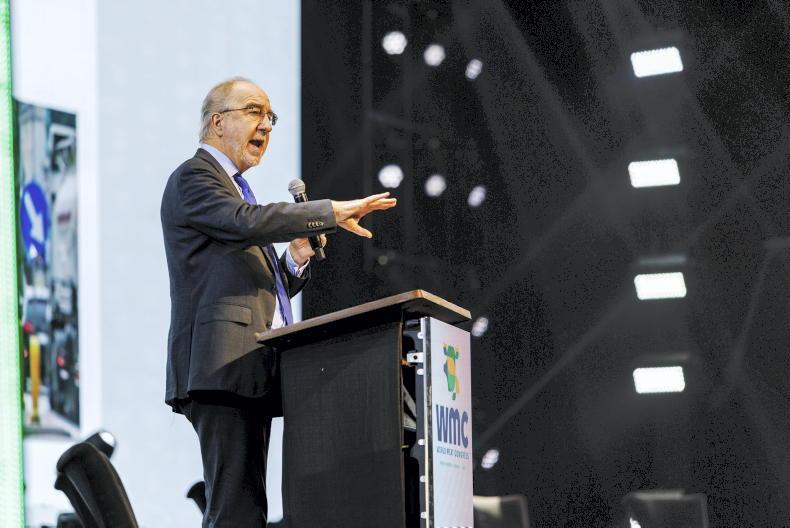
With the Mercosur trade deal due to come into effect at the beginning of next month and the latest EU trade deal with Australia just concluded, the question has been posed: just how were the beef and sheepmeat quotas calculated? The Irish Farmers Journal spoke to John Clarke, who led the EU negotiation on agriculture in the Mercosur deal and the Australian negotiation prior to his retirement from DG Agri to find out.
“It isn’t a mathematical science” was his frank initial comment when the question was put to him earlier this week. He added that “the EU calculated a long time ago that the quantity of beef it could offer to third countries [in trade negotiations] was limited”.
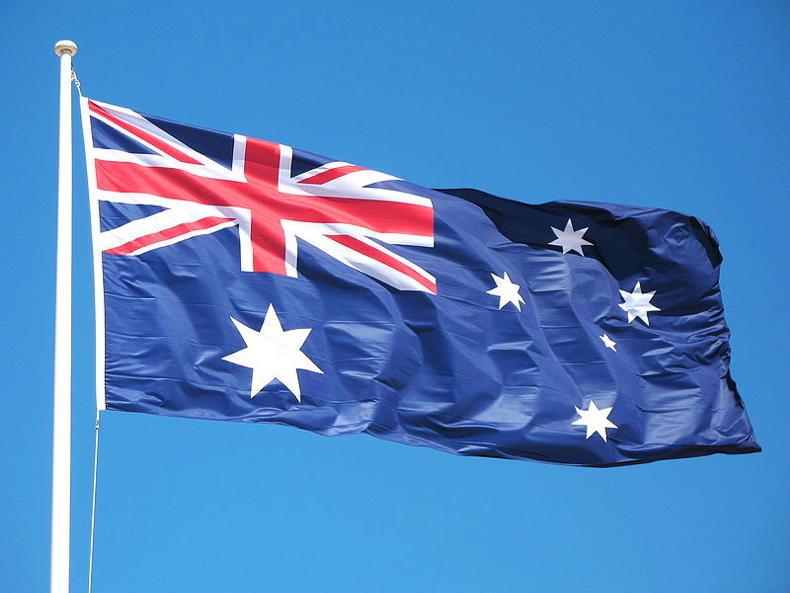
In the two most recent examples, Mercosur secured more than three times as much beef quota as Australia, which – despite its meat industry’s wishes – settled for a lower beef quota than Canada did in an earlier negotiation.
How did this happen?
Clarke said the starting point was that Australia is not as big a beef exporter as the Mercosur countries, so it wouldn’t merit getting the same amount. He also highlighted one of the nuances of the deal, pointing out that Australian ambitions on beef were thwarted by their unwillingness to meet EU expectations on removal of luxury car taxation. For EU carmakers, this was as big a priority as beef quotas were for Australian meat and dairy exporters.
Staying with comparing the Mercosur and Australian deals, Clarke also highlighted that it came down to what each could offer the EU in return for their priority requests.
“Australia had less to offer the EU than Mercosur, because it’s a smaller [economy] and also a much more open market already than the Mercosur market as there’s almost no industrial tariffs in Australia,” he said.
The Mercosur countries of Argentina, Brazil, Paraguay and Uruguay are much more closed and protected markets, therefore they had a stronger negotiating hand, as well as offering greater market potential to EU exporters.
Australia had less to offer the EU than Mercosur, because it’s a smaller [economy] and also a much more open market already than the Mercosur market as there’s almost no industrial tariffs in Australia
He had a further interesting recollection in relation to Australia’s beef quota demands – that was that they secured at least three times as much as New Zealand did in its negotiation.
“It’s quite symbolic as a selling point to their industry, although the industry is not very happy,” Clarke said, and he expects that the quota will be used by a small number of large meat processors.
Returning to the Mercosur deal, Clarke again emphasised that ,despite Irish farmers’ view that the EU was soft in that negotiation, this wasn’t the case.
“I was there right to the end and the Mercosur negotiators were holding out for 400,000 tonnes of beef quota. In the end, Phil Hogan put it bluntly to them that a formal decision was taken by the College of Commissioners on 99,000 tonnes and that was it.”
Future deals
Clarke is no longer involved on the frontline of EU trade negotiations, but he remains actively engaged with global trade issues and very much in tune with what is happening in the EU.
When asked about trade deals coming down the track and what they might mean for Irish farmers, he pointed out that impact on sensitive issues for Irish farmers would be minimal.
There are three negotiations ongoing at present with Malaysia, Philippines and Thailand, none of which are significant beef or dairy exporters, though Thailand is a major exporter of poultry meat and that will be sensitive in some parts of the EU.
UK relationship with the EU
It is now almost a decade since the UK voted to leave the EU, and Clarke has an interesting view on both how the UK went about their post-Brexit trade negotiations and the evolution of the UK relationship with the EU.
He is blunt in his assessment of the EU negotiation with Australia and New Zealand, which in time (15 years) will give them unlimited access to the UK market for both beef and sheepmeat.
His bottom line view of these negotiations is that they were textbook examples of how not to negotiate as they were driven by “the UK government at the time, wanting to show that Brexit was a good idea” and that “they completely threw the farming community under a bus with those deals which has been contrasted again recently since the conclusion of the EU deal with Australia”.
Given that the UK has been attempting to rebuild its relationship with the EU, Clarke has an interesting take on how these UK deals might impact that.
In a hypothetical situation of the UK wanting to rejoin the EU, his view is that these deals would have to be “cancelled”.
In such a situation, Clarke’s interpretation of how it might play out is that “the EU then might review and do some renegotiation of the EU Australia agreement”.
However, Clarke reiterated “to take account of the fact that there’s a bigger market now on the EU side and another member state which wants to export to Australia”.
“So there could be some incorporation but basically the free trade in beef which the UK give, that’s over,” he said.
WTO ministerial meeting
Last weekend saw the 14th Ministerial Conference of the World Trade Organization (WTO) ending without agreement. The WTO was formally established in 1995 and is a voluntary coalition of most countries in the world with the objective of regulating global trade and can trace its origins to the post-World War II era when there was international ambition to free up trade between countries.
Clarke’s view, with some regret, is that the WTO is becoming increasingly irrelevant to trade in the 21st century as “the USA ignores it completely, India and China flout the rules and even the EU is starting to disregards its regulations. There is no negotiating function at all; the judicial function has been blocked for six to seven years now [as the US have failed to appoint judges]. The third pillar of the WTO to the kind of monitoring forum discussing issues trundles along but that’s really not where the action is yet.”
His bleak assessment of the WTO concluded by pointing out that bilateral trade deals – in which the EU has become proficient – serve to undermine the ambition for wider global freeing of international trade, but that is the least of the priorities for the main trading countries of the world at present.
Comment: view from the engine room
Irish beef producers in particular have felt let down by the EU concession of favourable quotas for non-EU imports to compete with domestic production.
However, when teasing out the nuances of trade negotiations, it is clear that agriculture is just one piece in a huge jigsaw that has to be fitted into an overall picture.
EU negotiators were clearly tougher than their UK counterparts when it came to agreeing quotas and are confident that what they agreed can be absorbed without harming the market for domestic production
It is clear that sectors with the greatest impact on the economy have greater influence, and it was particularly interesting to learn that Australia could have probably had a bigger beef quota if they had been more generous with their tariffs on EU luxury cars.
EU negotiators were clearly tougher than their UK counterparts when it came to agreeing quotas and are confident that what they agreed can be absorbed without harming the market for domestic production.
In time, we will get the definitive answer on whether or not that is the case. Irish beef producers will be hoping that they have called it correctly.


SHARING OPTIONS