



A recent report from Davy Group highlights how much wealth has been generated in Ireland over the past decade and the numbers contained in it are quite staggering.
It calculated that household net wealth in this country doubled to €1.32tn in the decade to the end of 2024.
It is worth taking a moment to note how large that number is. If we were to travel back in time by one million seconds, we’d move less than two weeks into the past.
One billion seconds would take us back to the early 1990s, when The Lion King was big at the cinema and Albert Reynolds was Taoiseach.
A trillion seconds into the past would take us back almost 32,000 years to the stone age and a long time before even the earliest known buildings were constructed.
A trillion is a very, very big number.
This leads to the obvious question – if Irish households have so much wealth, why aren’t we all driving around in sports cars and sipping champagne?
They might be asset rich, but they are not rich is any sense that changes their lifestyle
The answer lies in the nature of the wealth Irish households hold. The majority of it is in housing, particularly people’s principle private residence.
People generally are not motivated to access this wealth – after all they need somewhere to live – and when they do access it, the process is long and difficult.
For farmers the story is generally the same. The land they own has grown in value considerably over the past decade (see Figure 1).
Interestingly, the rise in the value of land sold seems to have had almost influence on the number of acres sold each year (see Figure 2).
In fact, as prices increased since 2020, the amount of land being sold has fallen. This suggests that land sales are not generally driven by price at all.
Value
For farmers, the value of their holding is more likely to be useful to their heirs than to themselves. They might be asset rich, but they are not rich is any sense that changes their lifestyle.
However, this is not true of all assets that farmers hold. We saw earlier this year how much wealth had been transferred to holder of shares in Kerry Co-op as part of the takeover of Kerry Dairy Ireland (KDI).
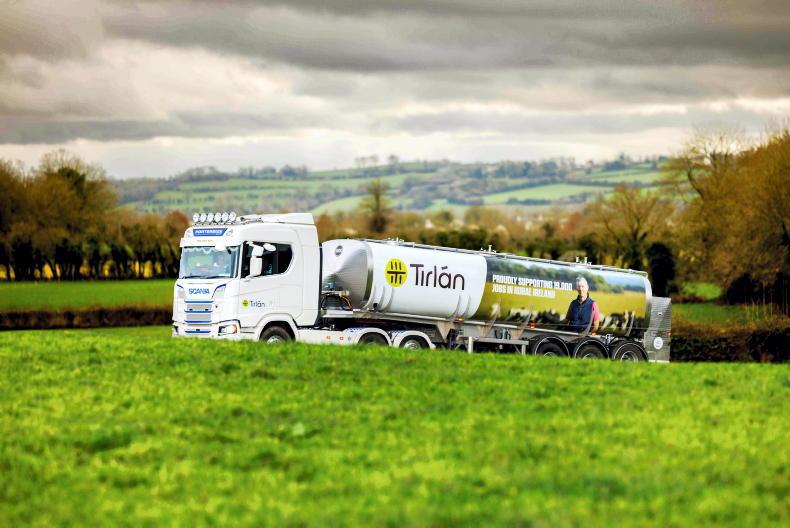
There was a similar transfer completed for shareholders in Tirlán who had shares in the co-op swapped for shares in Glanbia plc.
In both cases, these were value-for-value asset swaps, where no money changed hands. But an important change was made for those co-op shareholders.
They now had an asset which could be very easily swapped for cash. These shareholdings had been transformed into something with a value which could be easily realised.
The interesting thing is the shareholders who got access to these new assets seem to generally be treating them the same way as they treated their co-op shares – put them in a drawer and forget about them. Perhaps as trading shares was never something they thought much about in the past, there is little motivation to start now.
Missed opportunity
This is a missed opportunity for those shareholders. While they might not want the cash to spend now, they should at least sell their shares in a single company to buy a wider index of shares to protect themselves from the volatility that comes from owning just one type of share.
Since the start of the year to mid-December, shares in Glanbia were up just over 10%. Shares in Kerry Group had dropped by 19%.
The wider ISEQ all-share index of Irish companies listed in Dublin had year-to-date gains of 32%.
To put that another way, the €1.4bn of Kerry Group shares transferred as part of the KDI deal is now worth €1.13bn, whereas €1.4bn invested in the ISEQ at the start of the year would now be worth €1.85bn.
The report from Davy highlights the lack of financial knowledge in Ireland when it comes to managing wealth.
People tend to leave money on deposit at the bank rather than investing it for the chances of a better return (depending on their risk appetite).
This lack of financial knowledge is also present in Irish farming, where people with shares are often unaware of the risk they are taking by holding their wealth in a single company.





SHARING OPTIONS