


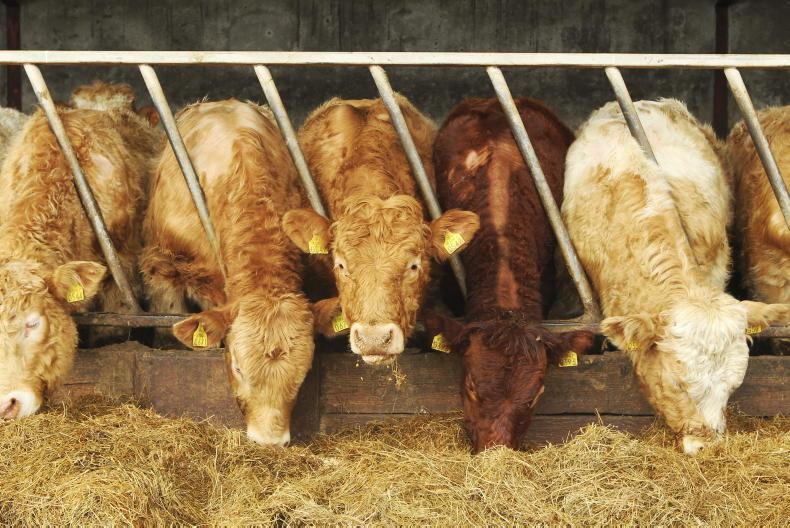
Finishing diets
Most forward store-type animals are now indoors, with their diet being adjusted on a rising plane of nutrition. Ideally, concentrates will have been introduced outdoors pre-housing to allow cattle to acclimatise and reduce digestive upsets. Where cattle have not been receiving concentrates outdoors, then minimal feeding (2kg max) should be introduced to start and incrementally built up.
The level of feeding will vary depending on breed, sex and silage quality. Ideally, bullocks and heifers (both suckler and dairy beef breeds) will be able to be finished on a diet of 70+ DMD silage and 4-5kg of concentrates.
Where silage quality is in the 60s, adjustments will have to be made to increase the energy intake of the animal; likely through increased concentrate levels. Rations with barley and maize in high volumes are favoured by farmers, with these being high-energy feeds. However, recent work by Teagasc Grange has shown that the inclusion of oats in-lieu of a percentage of the barley had no negative effect on cattle thrive or slaughter performance, with some finishers anecdotally pointing out the inclusion of oats in you bull beef diets being a major benefit in meeting fat specifications.
Shed space
Sheds are now full with the recent poor weather. Lying space is generally okay in sheds, with feed space being the primary problem. A standard 4.8m long bay with feeding on one side only has sufficient feed space for eight cows/finished animals to eat at one time, though our pen size often allows more animals to be housed.
Even with ad-lib feeding, bullying can occur when fresh feed is put out, resulting in first-calved heifers or older cows being bullied away from the feed face. Assess your feed and lying space, using the table below. Where feed space is inadequate, changes should be made. If possible, feed both sides of the pen, or separate cows based on body condition or age.
Forage crops
With some frost and snow forecast for parts of the country over the next few days, vigilance is needed around feeding forage crops. It is not recommended to feed frozen crops, as sudden deaths can occur from feeding. Best advice is to wait until frost or snow has thawed.
Changing the time you move the fence until the afternoon can help in some situations. Try and wait until the sun has thawed the crop in the afternoon to move the fence. If the crop doesn’t thaw out, feed extra silage to get you over the frosty period. Make sure drinkers are flowing and not frozen.




SHARING OPTIONS