


Finishing lambs indoors
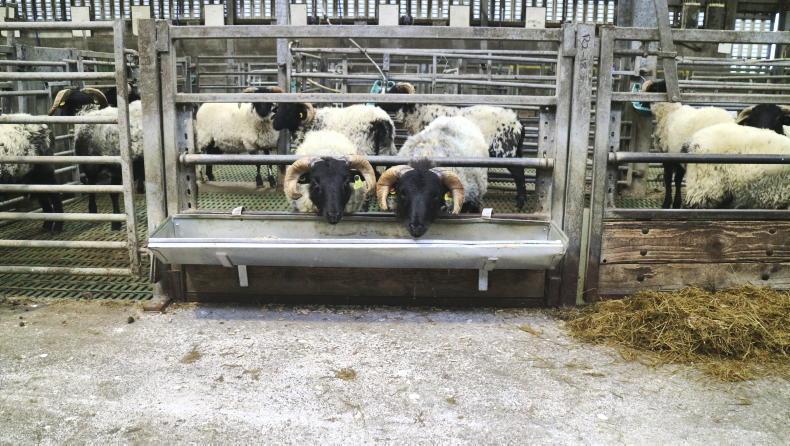
Inclement weather and poor ground conditions are making it increasingly challenging to finish lambs outdoors, with a significant portion of energy intake apportioned to maintenance. It is not surprising that many farmers have turned to indoor finishing where feasible for short-keep lambs. There have been some queries in recent weeks regarding typical performance in an indoor system.
Extensive research has been completed in Teagasc Athenry exploring finishing systems for hill and crossbred lambs. Typical intake of hill store lambs is in the region of 1.1kg, rising to 1.2kg for crossbred lambs.
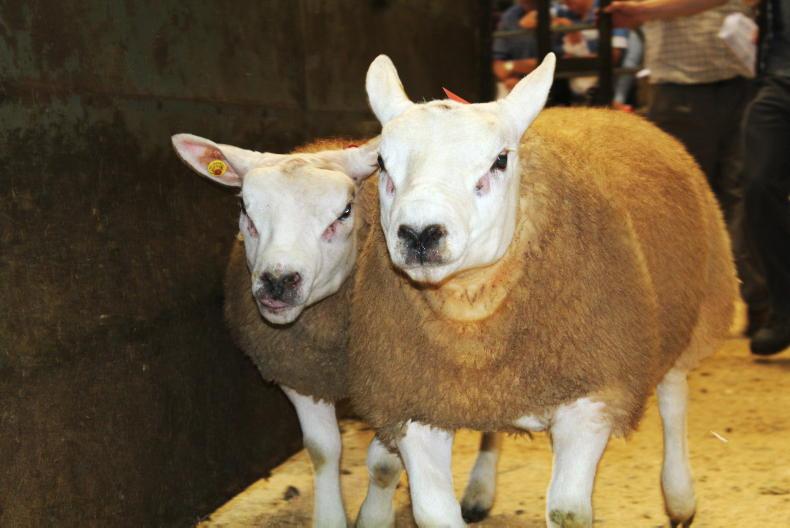
Crossbred lambs have a higher growth rate potential on an intensive finishing diet (250g/head/day), better food conversion efficiency (FCE of approx. 5:1) and superior slaughter performance when compared to hill lambs. There is significant variation in the performance of individual animals, with some lambs gaining upwards of 400g daily on the back of a much higher intake.
For this reason, it is important to weigh lambs regularly and to draft accordingly – with some lambs coming fit for slaughter much quicker. Lambs should be drafted on a combination of fat cover and liveweight. Ram lambs will be capable of being fed to heavier weights and for longer without going overfat but will achieve a slightly lower kill-out.
Hill lambs are also capable of achieving favourable performance (average 200g/hd/day) with a lower FCE of 6.5kg concentrates to 1kg liveweight. The typical killout from lambs finished intensively indoors over numerous years of trials in Teagasc is in the region of 44% to 45%.
Some farmers are also facing the prospect of lambs grazing forage crops running out of crop before lambs are finished. It is important to review the volume of feed remaining and lamb performance, and to take steps early. This includes introducing concentrate supplementation to boost performance or to lead to a smoother transition, where lambs will be transferred from a forage-based diet to concentrates.
Reviewing straw supplies
Earlier-than-anticipated housing of ewes or lambs for finishing could require some farmers to increase their straw supplies. On average, a lowland ewe housed on straw for a 100-day period will require approximately half a 4x4 round bale weighing about 140kg, or four standard square bales. On a weekly basis, lowland ewes require 7kg straw bedding per week to absorb all urine, while hill ewes require 4kg to 5kg.
A good rule of thumb is that a 4x4 round bale weighing 140kg will be sufficient to provide bedding for 18 to 20 lowland ewes per week, or 30 to 35 hill ewes. Account must also be taken of lambing pens. The volume of straw required to bed individual pens is recommended by Teagasc at four to five round bales for 100 ewes, where there is a typical turnaround time in lambing pens of 24 to 36 hours. This figure increases by 20% to 30% for high-prolificacy flocks.
If working with square bales, large 8x4x3 bales weigh about 360kg (350kg to 380kg) ,while 8x4x4 bales vary more in weight, ranging from just under 500kg to upwards of 600kg. The typical weight is often 520kg to 540kg. The diet fed to ewes will have a big influence on straw usage, with ewes fed hay/high dry matter haylage requiring upwards of 20% less straw. Chopping straw can also reduce usage by upwards of 10%.




SHARING OPTIONS