On 19 November, Queen’s University Belfast and Dundalk Institute of Technology (DkIT) announced a major new partnership that will establish Dundalk Institute of Technology as a University College of Queen’s University Belfast. It is anticipated a formal agreement will be signed this month, with the aim of having the new university college fully operational for the start of the 2026-2027 academic year.
According to Nigel Scollan, the head of the school of biological sciences in Queen’s, this partnership will provide a significant opportunity for both colleges.
“This will help to deliver high-quality education in agricultural science to more students and strengthen our opportunities for the northeast region and beyond.”
He also acknowledged that this collaboration has come during a time of transformation in the agricultural sector.
“With increasing matters around productivity, environmental sustainability, welfare, food quality and safety against a backdrop of climate change, this collaboration will assist both institutions to support excellence in research, innovation and education to address challenges in agriculture,” he said.
Readers might be wondering what this collaboration means and how it changes things for current students. To break it down, from September 2026, students enrolling in DkIT will graduate with a Queen’s University Belfast degree or postgraduate qualification.
However, what it means for current students is still unknown as those details are still under development. There is an update expected over the next few months.
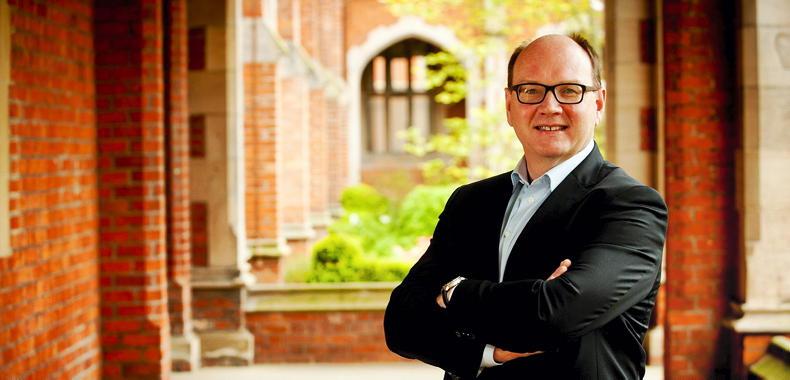
Nigel Scollan, the head of school of biological science in Queens University Belfast.
Strengthening education
The partnership will see DkIT embedded within Queen’s academic and quality assurance frameworks, ensuring students in Dundalk receive the same standard of education and award as those studying in Belfast.
The institute will keep control of its own finances, staffing, and governance, much like how St Mary’s University College and Stranmillis University College work alongside Queen’s at the moment.
This is called a collegiate model, which means several semi-independent colleges or institutions are linked under a larger university, in this instance, Queen’s.
All undergraduate and postgraduate programmes will lead to university awards, which will give graduates increased global visibility.
It is envisaged that DkIT will remain an autonomous institution of higher education in Ireland under the remit of the HEA.
It is said that the collaboration between the two colleges will generate economic and social development within the Dublin to Belfast corridor and enhance higher education, research and innovation provision for the region.
The Minister for Further and Higher Education, James Lawless, welcomed this partnership model as a ‘landmark initiative with the potential to strengthen and advance higher education across the island’.
He also highlighted how programmes, including agricultural science, stand to benefit from close collaboration between institutions.
This is made possible by sharing data infrastructure and equipment, recognising the importance of research-informed teaching and learning in the sector, and forming diverse research teams to understand the different regional contexts within agriculture.
Minister Lawless also spoke about the uniqueness of the initiative. “As the first all-island initiative of its kind, the proposed partnership reflects the pivotal role higher education has in driving collaboration in research, innovation, teaching and learning, delivering benefits for students, educators and wider society. My department will work closely with DKIT as this strategic partnership develops.”
DkIT and Queen’s both offer a range of programmes in the area of agricultural science which are relevant to the larger agri food sector in the region.

Minister for higher and further education, James Lawless.
According to Dr Siobhán Jordan, head of the department of agriculture, food and animal health in DkIT, the partnership will help both parties address cross-border challenges more effectively, “by combining our expertise, sharing data and infrastructure, and working in diverse research teams that understand each region’s agricultural needs”.
“Projects in key areas such as health and life sciences, energy and sustainability, are set to be explored through the establishment of a joint research and innovation hub on the Dundalk campus, which would be of huge benefit to us in the area of agriculture.
Siobhán says future students will have increased mobility as a result of a globally recognised university award. “As part of their placement, many of our sustainable agriculture students choose to go overseas to New Zealand, the US and Europe.
“Our courses are constantly adapting in response to our ever-changing world, and having additional expertise from our colleagues in Queen’s can only further enhance the learning experiences of our students.”
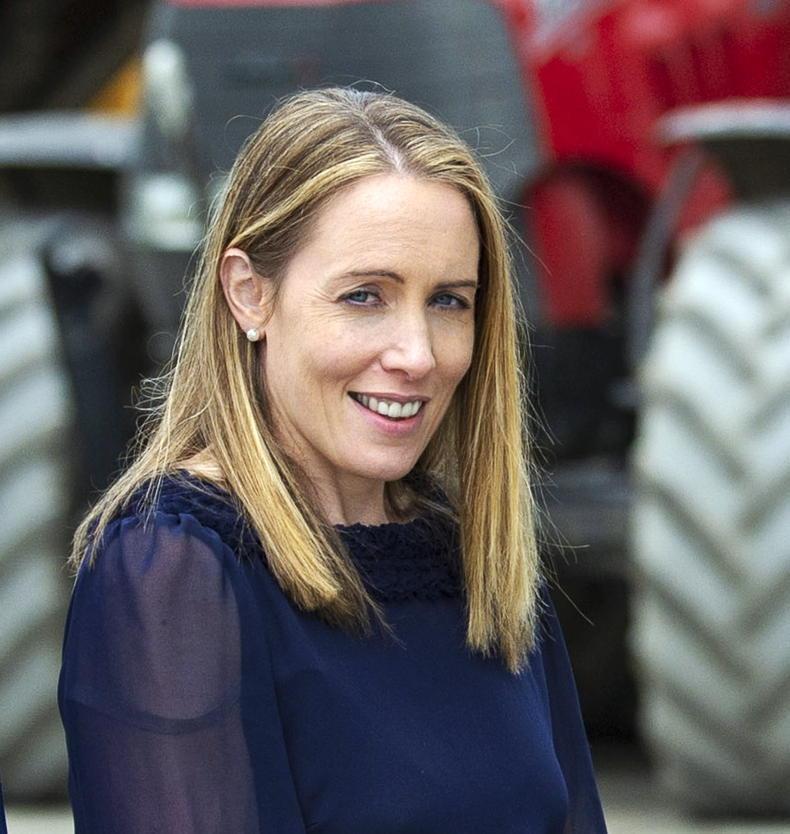
Dr Siobhán Jordan, head of department of agriculture, food and animal health, Dundalk Institute of Technology.
“The college’s current collaborations with Teagasc and Ballyhaise Agricultural College are widely renowned in the sector, and collaborating with The Queen’s School of Biological Sciences, which is a leading institution for agricultural research, would be another huge benefit for our students on their learning journey,” she concludes.
On 19 November, Queen’s University Belfast and Dundalk Institute of Technology (DkIT) announced a major new partnership that will establish Dundalk Institute of Technology as a University College of Queen’s University Belfast. It is anticipated a formal agreement will be signed this month, with the aim of having the new university college fully operational for the start of the 2026-2027 academic year.
According to Nigel Scollan, the head of the school of biological sciences in Queen’s, this partnership will provide a significant opportunity for both colleges.
“This will help to deliver high-quality education in agricultural science to more students and strengthen our opportunities for the northeast region and beyond.”
He also acknowledged that this collaboration has come during a time of transformation in the agricultural sector.
“With increasing matters around productivity, environmental sustainability, welfare, food quality and safety against a backdrop of climate change, this collaboration will assist both institutions to support excellence in research, innovation and education to address challenges in agriculture,” he said.
Readers might be wondering what this collaboration means and how it changes things for current students. To break it down, from September 2026, students enrolling in DkIT will graduate with a Queen’s University Belfast degree or postgraduate qualification.
However, what it means for current students is still unknown as those details are still under development. There is an update expected over the next few months.
Nigel Scollan, the head of school of biological science in Queens University Belfast.
Strengthening education
The partnership will see DkIT embedded within Queen’s academic and quality assurance frameworks, ensuring students in Dundalk receive the same standard of education and award as those studying in Belfast.
The institute will keep control of its own finances, staffing, and governance, much like how St Mary’s University College and Stranmillis University College work alongside Queen’s at the moment.
This is called a collegiate model, which means several semi-independent colleges or institutions are linked under a larger university, in this instance, Queen’s.
All undergraduate and postgraduate programmes will lead to university awards, which will give graduates increased global visibility.
It is envisaged that DkIT will remain an autonomous institution of higher education in Ireland under the remit of the HEA.
It is said that the collaboration between the two colleges will generate economic and social development within the Dublin to Belfast corridor and enhance higher education, research and innovation provision for the region.
The Minister for Further and Higher Education, James Lawless, welcomed this partnership model as a ‘landmark initiative with the potential to strengthen and advance higher education across the island’.
He also highlighted how programmes, including agricultural science, stand to benefit from close collaboration between institutions.
This is made possible by sharing data infrastructure and equipment, recognising the importance of research-informed teaching and learning in the sector, and forming diverse research teams to understand the different regional contexts within agriculture.
Minister Lawless also spoke about the uniqueness of the initiative. “As the first all-island initiative of its kind, the proposed partnership reflects the pivotal role higher education has in driving collaboration in research, innovation, teaching and learning, delivering benefits for students, educators and wider society. My department will work closely with DKIT as this strategic partnership develops.”
DkIT and Queen’s both offer a range of programmes in the area of agricultural science which are relevant to the larger agri food sector in the region.
Minister for higher and further education, James Lawless.
According to Dr Siobhán Jordan, head of the department of agriculture, food and animal health in DkIT, the partnership will help both parties address cross-border challenges more effectively, “by combining our expertise, sharing data and infrastructure, and working in diverse research teams that understand each region’s agricultural needs”.
“Projects in key areas such as health and life sciences, energy and sustainability, are set to be explored through the establishment of a joint research and innovation hub on the Dundalk campus, which would be of huge benefit to us in the area of agriculture.
Siobhán says future students will have increased mobility as a result of a globally recognised university award. “As part of their placement, many of our sustainable agriculture students choose to go overseas to New Zealand, the US and Europe.
“Our courses are constantly adapting in response to our ever-changing world, and having additional expertise from our colleagues in Queen’s can only further enhance the learning experiences of our students.”
Dr Siobhán Jordan, head of department of agriculture, food and animal health, Dundalk Institute of Technology.
“The college’s current collaborations with Teagasc and Ballyhaise Agricultural College are widely renowned in the sector, and collaborating with The Queen’s School of Biological Sciences, which is a leading institution for agricultural research, would be another huge benefit for our students on their learning journey,” she concludes.






SHARING OPTIONS