Longer and drier days over the last week have helped get farms back into the swing of grazing, while growth rates have jumped into the 20’s in places.
Drying has been good, with drier soil types in particular recovering rapidly. Cows are going out full-time now on a lot of those farms.
Where possible, farms should be out full-time grazing, to get through farm area. Target for area grazed on St Patrick’s Day is around 66% for drier farms, but the majority of herds are still well behind this target.
Any farm with less than 40% grazed by this stage should be going hammer and tongs to get paddocks cleaned off and re-growing for the second round.
For farms that are close to target or ahead of target already – of which there aren’t many, cows will need to be slowed down. If average farm cover (AFC) is dipping below 850kg DM/ha, or over 50-55% of farm area is grazed today, it’s probably time to start applying the brakes.
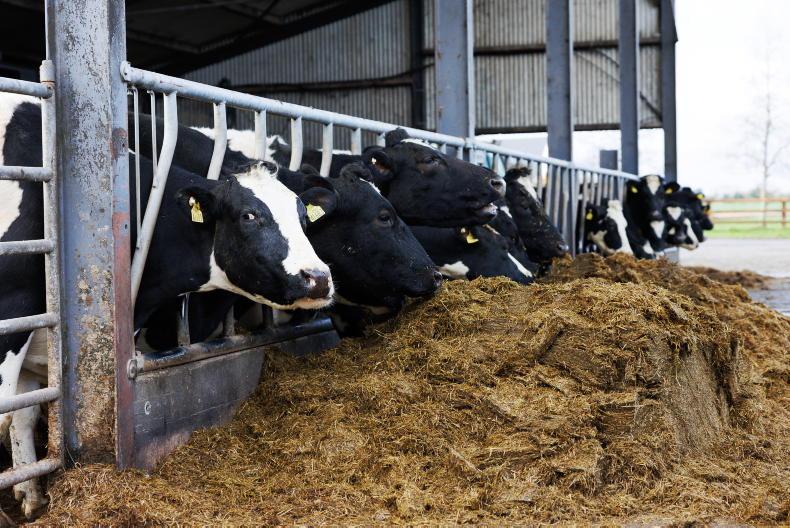
This means putting some silage into the diet now, while its impact on milk production is lower.
Teagasc research shows silage fed from the second half of March on, has a significant negative impact on peak milk yield. Milk protein will be reduced up to 0.1%, while milk yield will be reduced by 1kg/day. This impact can last for up to three months and the loss won’t be recovered.
Silage fed before 20 March will have no real impact on yield and milk composition.
Therefore, if it’s necessary, slowing cows down now over the next seven days will prevent any setbacks in milk for the rest of the year.
For any farm in-between, monitor average farm cover closely. If it’s dropping too quickly, start adjusting management.
The target for nitrogen spread by the start of April is 60 units/acre. If none has gone out to this point, the farm is falling behind. Aim to get at least 30 units/acre spread in the coming days.
Where fertiliser has gone out, assess how far the farm is away from the beginning of April target and use this to determine how much to spread later in this month.
Swardwatch
Assess farm cover and area grazed to determine how to manage the next three weeks.If AFC is falling too quickly or it’s below 850kg DM/ha, supplement cows now to slow them down.Silage fed in the second half of March reduces peak milk productionUse the target of 60 units of nitrogen/acre total, by the start of April to decide how much to spread over the coming weeks.Cathal Comiskey, Drumakinneo, Co Cavan
We were due to start calving on 20 February, but began on 5 February. We have over 80% calved to this point and cows are out at grass since the beginning of March. February was very wet here and ground conditions were just too poor to get cows out before that. Average farm cover is quite high, but with a lot of cows calved we should get through it quickly enough. There was a brief dry spell in early February when we managed to get out with fertiliser. We went with 30 units of nitrogen/acre at that stage and we plan to go again in the next couple of weeks. Roughly 20% of the milking platform has also gotten slurry.
Stocking rate (LU/ha):-
Growth (kg/ha): 3
Average farm cover (kg/ha):1,239
Yield (l/cow): 20
Fat (%): 5.19
Protein (%): 3.57
Milk solids (kg/cow): 1.8
Concentrates (kg/cow): 4
Tommie Devine, Frenchpark, Co Roscommon
We have 70% of the herd calved to date and the cows are out on/off grazing since mid- February. We’re currently at 27% grazed, which is on target for a third of the farm by St Patrick’s Day. This is a heavy farm, so we won’t be starting the second round until mid-April.
The cows are going out to a fresh break after each milking and we have the batt latch set to open three hours later. They have the option of staying out or coming in, and are being offered three kilos of silage – should they decide to come back in.
Protected urea went out at the start of this week across the farm, at a rate of 28.5 units/acre.
Stocking rate (LU/ha): 2.45
Growth (kg/ha): 9
Average farm cover (kg/ha): 1,110
Yield (l/cow): 21.5
Fat (%): 5
Protein (%): 3.8
Milk solids (kg/cow): 1.95
Concentrates (kg/cow): 3.5
Darragh Scully, Mallow, Co Cork
The cows are out on/off grazing and we’ve 44% of the farm area grazed to date. Cover is strong, but demand for grass is high, as we’ve 85% of the herd calved at this stage. The cows are getting a full day grazing and three or four hours in the evening, before coming back into the shed. They are being offered 2kg of silage by night. Grazing is going very well now, cleanouts are good and the cows are starting to motor on. We have fertiliser out on two-thirds of the platform and slurry out on the other third. We plan to start the second rotation on 5 April, when the first grazed covers are back at around 1,400kg DM/ha.
Stocking rate (LU/ha): 2.73
Growth (kg/ha): 20
Average farm cover (kg/ha): 1,107
Yield (l/cow): 21
Fat (%): 4.83
Protein (%): 3.44
Milk solids (kg/cow): 1.75
Concentrates (kg/cow): 4
Longer and drier days over the last week have helped get farms back into the swing of grazing, while growth rates have jumped into the 20’s in places.
Drying has been good, with drier soil types in particular recovering rapidly. Cows are going out full-time now on a lot of those farms.
Where possible, farms should be out full-time grazing, to get through farm area. Target for area grazed on St Patrick’s Day is around 66% for drier farms, but the majority of herds are still well behind this target.
Any farm with less than 40% grazed by this stage should be going hammer and tongs to get paddocks cleaned off and re-growing for the second round.
For farms that are close to target or ahead of target already – of which there aren’t many, cows will need to be slowed down. If average farm cover (AFC) is dipping below 850kg DM/ha, or over 50-55% of farm area is grazed today, it’s probably time to start applying the brakes.
This means putting some silage into the diet now, while its impact on milk production is lower.
Teagasc research shows silage fed from the second half of March on, has a significant negative impact on peak milk yield. Milk protein will be reduced up to 0.1%, while milk yield will be reduced by 1kg/day. This impact can last for up to three months and the loss won’t be recovered.
Silage fed before 20 March will have no real impact on yield and milk composition.
Therefore, if it’s necessary, slowing cows down now over the next seven days will prevent any setbacks in milk for the rest of the year.
For any farm in-between, monitor average farm cover closely. If it’s dropping too quickly, start adjusting management.
The target for nitrogen spread by the start of April is 60 units/acre. If none has gone out to this point, the farm is falling behind. Aim to get at least 30 units/acre spread in the coming days.
Where fertiliser has gone out, assess how far the farm is away from the beginning of April target and use this to determine how much to spread later in this month.
Swardwatch
Assess farm cover and area grazed to determine how to manage the next three weeks.If AFC is falling too quickly or it’s below 850kg DM/ha, supplement cows now to slow them down.Silage fed in the second half of March reduces peak milk productionUse the target of 60 units of nitrogen/acre total, by the start of April to decide how much to spread over the coming weeks.Cathal Comiskey, Drumakinneo, Co Cavan
We were due to start calving on 20 February, but began on 5 February. We have over 80% calved to this point and cows are out at grass since the beginning of March. February was very wet here and ground conditions were just too poor to get cows out before that. Average farm cover is quite high, but with a lot of cows calved we should get through it quickly enough. There was a brief dry spell in early February when we managed to get out with fertiliser. We went with 30 units of nitrogen/acre at that stage and we plan to go again in the next couple of weeks. Roughly 20% of the milking platform has also gotten slurry.
Stocking rate (LU/ha):-
Growth (kg/ha): 3
Average farm cover (kg/ha):1,239
Yield (l/cow): 20
Fat (%): 5.19
Protein (%): 3.57
Milk solids (kg/cow): 1.8
Concentrates (kg/cow): 4
Tommie Devine, Frenchpark, Co Roscommon
We have 70% of the herd calved to date and the cows are out on/off grazing since mid- February. We’re currently at 27% grazed, which is on target for a third of the farm by St Patrick’s Day. This is a heavy farm, so we won’t be starting the second round until mid-April.
The cows are going out to a fresh break after each milking and we have the batt latch set to open three hours later. They have the option of staying out or coming in, and are being offered three kilos of silage – should they decide to come back in.
Protected urea went out at the start of this week across the farm, at a rate of 28.5 units/acre.
Stocking rate (LU/ha): 2.45
Growth (kg/ha): 9
Average farm cover (kg/ha): 1,110
Yield (l/cow): 21.5
Fat (%): 5
Protein (%): 3.8
Milk solids (kg/cow): 1.95
Concentrates (kg/cow): 3.5
Darragh Scully, Mallow, Co Cork
The cows are out on/off grazing and we’ve 44% of the farm area grazed to date. Cover is strong, but demand for grass is high, as we’ve 85% of the herd calved at this stage. The cows are getting a full day grazing and three or four hours in the evening, before coming back into the shed. They are being offered 2kg of silage by night. Grazing is going very well now, cleanouts are good and the cows are starting to motor on. We have fertiliser out on two-thirds of the platform and slurry out on the other third. We plan to start the second rotation on 5 April, when the first grazed covers are back at around 1,400kg DM/ha.
Stocking rate (LU/ha): 2.73
Growth (kg/ha): 20
Average farm cover (kg/ha): 1,107
Yield (l/cow): 21
Fat (%): 4.83
Protein (%): 3.44
Milk solids (kg/cow): 1.75
Concentrates (kg/cow): 4








SHARING OPTIONS