With milk prices set to be well back in spring 2026 compared to spring 2025, reducing costs is going to be a very important consideration for farmers next year. Identifying some of the bigger input costs and reducing these where possible will be a good starting point. Speaking at the Teagasc National Dairy conference in November, Joe Patton said the biggest cost change on Irish farms since 2020 is meal feeding.
All input prices, particularly variable costs have risen post COVID-19 but Joe said that the increasing cost of meal in the system is primarily due to higher feeding levels. The Teagasc data shows that in 2020 Irish dairy farmers were feeding 2.61kg of concentrate for every kilogram of milk solids produced. This figure increased to 3.17kg of concentrate in 2024.
There are a number of excuses for feeding this higher level of concentrate. Regulation change has meant less nitrogen being used on farms leading to less grass growth. Climate change has brought greater extremes in weather which is affecting growth rates at important times in the year. However, the big one in 2025 was a high milk price encouraging farmers to feed extra concentrate.
So, without doubt there’s been external factors affecting this statistic but now it might be time to re-evaluate the system. With all the reasons for reductions in grass production, many farms have still not adjusted stocking rates to adapt to what the farm is now growing.
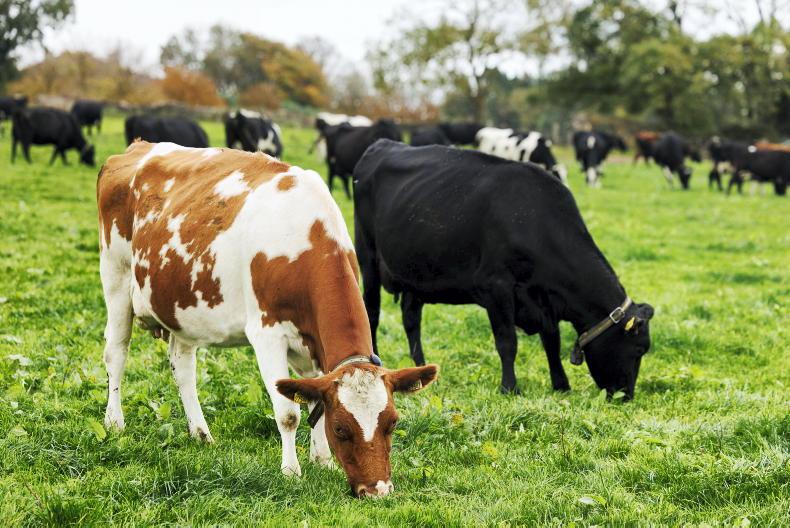
The stocking rate for the farm should be matched to the amount of feed available as grazed grass.
The research from Teagasc and New Zealand shows time and again that grass utilised per hectare is the greatest determinant of profitability regardless of milk price or any other external factors. There is a limit to this, while farms that are understocked are not making the most efficient use of grass on the farm, those that are overstocked are also losing out.
That is because once you go beyond a certain point, which is individual to the farm and its growing capability the level of utilisation drops.
This is because more supplementary feed is brought on to the farm in the shoulders of the year at high cost, while the high supplementation level reduces grazing performance of the animals.
Added to this, the farm is unable to manage grass quality to the same standard, reseeding 10-15% of the platform annually becomes impossible and profitability starts to drop.

Brendan Horan, Teagasc speaking about optimum stocking rate, during the Irish Farmers Journal Dairy Day in the UL Sports Arena, Limerick. \ Donal O' Leary
Optimum stocking rate
At Dairy Day 2025, on the topic of stocking rate, Brendan Horan, grassland researcher at Teagasc provided a simple equation to calculate optimum farm stocking rate.
“A 570kg cow will require roughly 5.7t/DM per year to produce around 500kgs of milk solids.
We can break this down to 1t/DM silage, 700kg/DM of concentrates and 4t/DM in the form of grazed grass” he said. According to Brendan and Teagasc’s research, this breakdown will be the most profitable farm and sustainable farm system, regardless of milk price and input costs.
Getting as close to this 4t DM/cow as possible is the key target. This number can be used to work back and calculate the optimal farm stocking rate.
When calculating the available grass, use the five-year average for tonnes grown per hectare.
Ten-year average or last year’s growth are not fair evaluations. Table 1 to the left, outlines different milking platform stocking rates and the required tonnage grown per hectare, to fulfil the demands of a cow at 4t/DM of grazed grass. Where silage is also being made on the milking platform, the stocking rate will have to be adjusted accordingly. Not all of the grass grown on a farm is utilised, the average utilisation on farms is 85% giving the available grass per hectare figure.
Farmer A
Take farmer A who is milking 150 cows on a 45ha milking platform. The farms five-year average grass production is 13t DM/ha.
Heifers are contract-reared off farm, so current platform stocking rate is 3.3 cows/ha.
Costs in 2025 were higher than Farmer A would like and they are looking to lower the cost of production going into 2026.
Based on the calculation in Table 2, farmer A would have to drop cow numbers by 26 cows to get up to 4t DM/cow of grazed grass.
A drop of this number is significant, but if it’s the right thing to do then there is never a bad time to do it. While four tonnes is the optimum figure, a farm that is below that but making progress towards it, will be becoming more profitable.
Argument
The argument is, the business is losing the income from 26 cows or 17% of the herd.
While the argument might look justified, all of the other costs associated with carrying the extra cows for the year must be considered.
On top of this there are the hidden costs that appear when higher levels of supplement are fed, like poorer grass utilisation and greater labour demand.
With a lower stocking rate per hectare, the remaining cows will perform better with greater availability of quality feed, particularly outside the peak growing months when growth is typically lower than demand.
The likelihood is, many farms are carrying some passengers anyway. High milk prices have papered over the cracks for those cows.
Low yielders, high cell count cows, lame cows and animals with poor fertility are a part of every farm and these cows are going to cost more than they earn in low milk price years. Culling these animals while beef price is high may be of more benefit to the farm than one realises.
With investments to be made on most farms before 2028 to increase slurry storage requirement by over 20%. The business could be better off to get rid of more of the problem cows now who are costing both time and money and shift the focus to those that are already there and performing well.
In short
Too many farms are currently overstocked relative to what they can grow. This has led to an increase in the level of meal-feeding nationally.Optimising stocking rate to get 4t/DM of grazed grass into each cow with less meal fed, will have a very positive effect on overall farm profitability.A calculation based on the farms annual grass production is required to identify the correct stocking rate for the farm.Majority of herds are carrying a percentage of cows into 2026 that will cost more than they earn anyway.
With milk prices set to be well back in spring 2026 compared to spring 2025, reducing costs is going to be a very important consideration for farmers next year. Identifying some of the bigger input costs and reducing these where possible will be a good starting point. Speaking at the Teagasc National Dairy conference in November, Joe Patton said the biggest cost change on Irish farms since 2020 is meal feeding.
All input prices, particularly variable costs have risen post COVID-19 but Joe said that the increasing cost of meal in the system is primarily due to higher feeding levels. The Teagasc data shows that in 2020 Irish dairy farmers were feeding 2.61kg of concentrate for every kilogram of milk solids produced. This figure increased to 3.17kg of concentrate in 2024.
There are a number of excuses for feeding this higher level of concentrate. Regulation change has meant less nitrogen being used on farms leading to less grass growth. Climate change has brought greater extremes in weather which is affecting growth rates at important times in the year. However, the big one in 2025 was a high milk price encouraging farmers to feed extra concentrate.
So, without doubt there’s been external factors affecting this statistic but now it might be time to re-evaluate the system. With all the reasons for reductions in grass production, many farms have still not adjusted stocking rates to adapt to what the farm is now growing.
The stocking rate for the farm should be matched to the amount of feed available as grazed grass.
The research from Teagasc and New Zealand shows time and again that grass utilised per hectare is the greatest determinant of profitability regardless of milk price or any other external factors. There is a limit to this, while farms that are understocked are not making the most efficient use of grass on the farm, those that are overstocked are also losing out.
That is because once you go beyond a certain point, which is individual to the farm and its growing capability the level of utilisation drops.
This is because more supplementary feed is brought on to the farm in the shoulders of the year at high cost, while the high supplementation level reduces grazing performance of the animals.
Added to this, the farm is unable to manage grass quality to the same standard, reseeding 10-15% of the platform annually becomes impossible and profitability starts to drop.
Brendan Horan, Teagasc speaking about optimum stocking rate, during the Irish Farmers Journal Dairy Day in the UL Sports Arena, Limerick. \ Donal O' Leary
Optimum stocking rate
At Dairy Day 2025, on the topic of stocking rate, Brendan Horan, grassland researcher at Teagasc provided a simple equation to calculate optimum farm stocking rate.
“A 570kg cow will require roughly 5.7t/DM per year to produce around 500kgs of milk solids.
We can break this down to 1t/DM silage, 700kg/DM of concentrates and 4t/DM in the form of grazed grass” he said. According to Brendan and Teagasc’s research, this breakdown will be the most profitable farm and sustainable farm system, regardless of milk price and input costs.
Getting as close to this 4t DM/cow as possible is the key target. This number can be used to work back and calculate the optimal farm stocking rate.
When calculating the available grass, use the five-year average for tonnes grown per hectare.
Ten-year average or last year’s growth are not fair evaluations. Table 1 to the left, outlines different milking platform stocking rates and the required tonnage grown per hectare, to fulfil the demands of a cow at 4t/DM of grazed grass. Where silage is also being made on the milking platform, the stocking rate will have to be adjusted accordingly. Not all of the grass grown on a farm is utilised, the average utilisation on farms is 85% giving the available grass per hectare figure.
Farmer A
Take farmer A who is milking 150 cows on a 45ha milking platform. The farms five-year average grass production is 13t DM/ha.
Heifers are contract-reared off farm, so current platform stocking rate is 3.3 cows/ha.
Costs in 2025 were higher than Farmer A would like and they are looking to lower the cost of production going into 2026.
Based on the calculation in Table 2, farmer A would have to drop cow numbers by 26 cows to get up to 4t DM/cow of grazed grass.
A drop of this number is significant, but if it’s the right thing to do then there is never a bad time to do it. While four tonnes is the optimum figure, a farm that is below that but making progress towards it, will be becoming more profitable.
Argument
The argument is, the business is losing the income from 26 cows or 17% of the herd.
While the argument might look justified, all of the other costs associated with carrying the extra cows for the year must be considered.
On top of this there are the hidden costs that appear when higher levels of supplement are fed, like poorer grass utilisation and greater labour demand.
With a lower stocking rate per hectare, the remaining cows will perform better with greater availability of quality feed, particularly outside the peak growing months when growth is typically lower than demand.
The likelihood is, many farms are carrying some passengers anyway. High milk prices have papered over the cracks for those cows.
Low yielders, high cell count cows, lame cows and animals with poor fertility are a part of every farm and these cows are going to cost more than they earn in low milk price years. Culling these animals while beef price is high may be of more benefit to the farm than one realises.
With investments to be made on most farms before 2028 to increase slurry storage requirement by over 20%. The business could be better off to get rid of more of the problem cows now who are costing both time and money and shift the focus to those that are already there and performing well.
In short
Too many farms are currently overstocked relative to what they can grow. This has led to an increase in the level of meal-feeding nationally.Optimising stocking rate to get 4t/DM of grazed grass into each cow with less meal fed, will have a very positive effect on overall farm profitability.A calculation based on the farms annual grass production is required to identify the correct stocking rate for the farm.Majority of herds are carrying a percentage of cows into 2026 that will cost more than they earn anyway. 






SHARING OPTIONS