With milk price back a whopping 16c/l on this time last year, many farmers are fearful about what 2026 will bring in terms of cashflow and profitability. Speaking to suppliers in early January, Tirlán CEO Sean Molloy said he predicted base milk prices to be close to the mid-30 cent per litre range for the next number of months.
Whether prices hold or go up or down after this remains to be seen. The Global Dairy Trade auction results are showing positive signs, but this seems to be driven by increased demand from buyers willing to buy dairy at cheaper prices.
European prices remain low and the negative sentiment which dogged the market at the back end of 2025 continues. While market prices for most products are expected to increase in the second half of 2026, there are no forecasts for a return to 2025 peaks.
Based on the drop in milk prices, margin from dairy farming in 2026 is expected to be very tight. In this piece, we take a look at some of the steps dairy farmers can take to get their farm businesses through 2026 and come out in better shape.
In high milk price years the importance of early spring grazing can seem less important. Many farmers, for various reason, have made the decision that they’re going to put less work into early spring grazing.
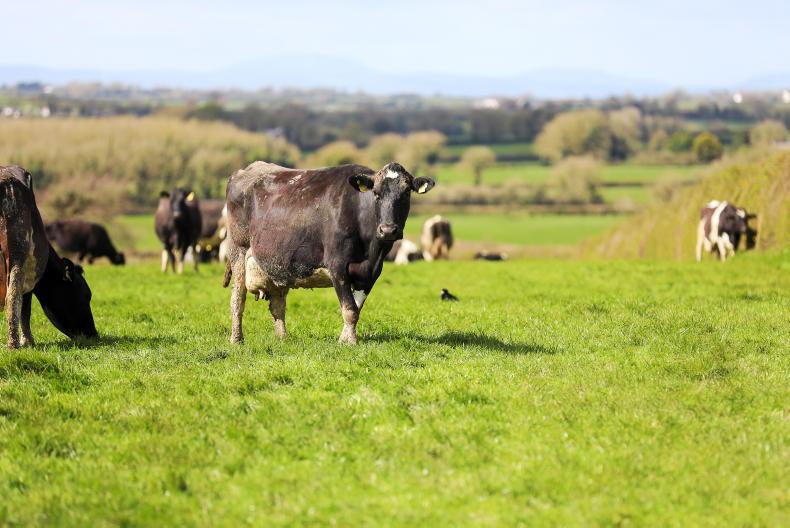
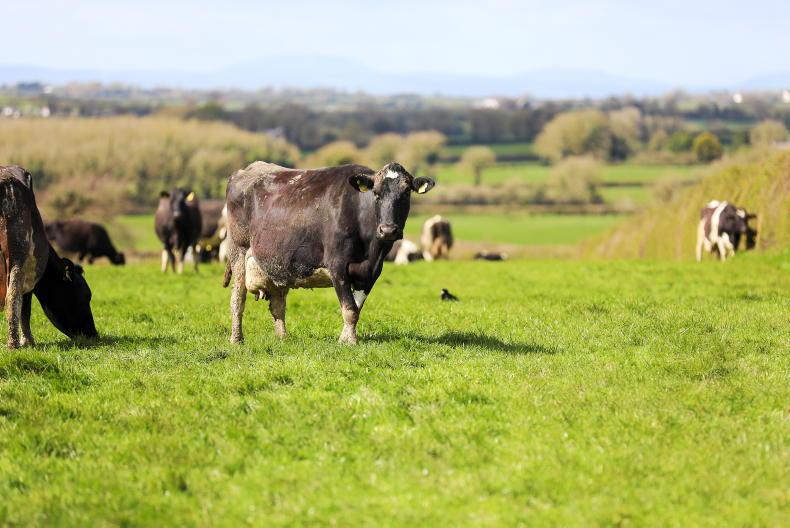
There are 28 days in February 2026, which means there are 56 opportunities to get cows out to grass. How many of these will be met, how will this be achieved and what are the consequences of not achieving it?
Based on ground conditions right now, this will be a big challenge, even for those on dry land. Achieving it will involve countless hours putting up reels, making spur tracks, on/off grazing, bringing cows in at night, etc. It’s tough going but its rewarding, because it means cows will be eating the highest quality feed available in the world during February and March. It will also be by far the cheapest.
The real benefits will be seen in April, May and June, with the double benefit of better quality grass in front of the herd, plus animal performance won’t be tainted by having fed excessive silage in the early lactation period.
Previous research by Teagasc showed that milk protein was still negatively affected from having silage in the diet in early spring, eight weeks after the silage was excluded from the diet.
2. Cut back on concentrate
Of all costs incurred on dairy farms, feed costs are the ones most in a farmer’s control. According to Teagasc, input cost inflation between 2020 and 2024 was 27%, but over the same period feed costs increased by 43%. This shows that yes, feed prices increased but so too did the amount of feed being used, and this is also borne out in the data.
Will 2026 be a reset year for feed usage? Many farmers rightly point out that much of the reason for concentrate to go up was because of poor weather leading to poor grass growth.
This is definitely a factor, with the poor autumn in 2023 followed by the poor spring in 2024 and the dry spells in summer 2024 and 2025 limiting grass growth.
Nobody can say what the weather is going to be like in 2026, but farmers can decide what they are going to feed their herd on a weekly or daily basis.
Last spring, many farmers were feeding 5kg of meal per cow for February, March and April. Based on a typical calving curve, that’s approximately 365kg of meal fed per cow costing €110/cow. If the meal was reduced to 2.5kg per cow, there would be €55/cow saved straight away.
At current milk prices, there is no economic return from feeding concentrate to produce more milk.
3. Correct the stocking rate
Every farm has an optimum stocking rate based on grass growth. On some farms, the reduction in chemical nitrogen combined with more variable weather means that the same level of grass cannot be consistently grown now, compared to five or 10 years ago. This is one of the reasons why more concentrate is being fed now.
With strong prices for dairy stock, 2026 could be an ideal opportunity to offload surplus cows and get stocking back to a more optimum level.
For some farmers this requires a shift in mindset. It was easy to make a profit in 2025 because milk price was high, so costs didn’t need to be as low. But when milk price is low, costs need to be lower again. The problem with exceeding the optimum stocking rate is that it’s hard to be low cost. On a per hectare basis, higher stocked farms have higher feed, vet, contractor and labour costs.
The counter-argument is that higher stocked farms have more output and this is true, but in low milk price years the value of that is eroded.
In other words, producing more of something with a low or even a negative margin doesn’t make sense. For me, an optimum stocking rate for someone growing 14t DM/ha is in or around 2.8 cows/ha.
Even at this, a high proportion of the silage will be coming from outside land. For farms growing less grass or on trickier farms, a stocking rate of 2.5 cows/ha or less is probably optimal.
4. Reduce contractor costs
Thankfully, most farmers are heading into spring 2026 with ample silage stocks. I’m generally of the view that an opportunity to make silage and bank feed should be taken, especially as many farmers have found themselves tight for silage at various times over the last few years.
However, silage is expensive to make with contractor costs running 40% to 50% higher than six or seven years ago. It’s an area that needs to be looked at in light of low margins in 2026. It may not be the year to plan to make surplus silage.
Making surplus bales is a particular activity that needs to be questioned. For many farmers it’s a tool for managing grass quality, but farming in a way that deliberately creates a surplus needs to be questioned. Can stocking rate be tightened up when grass growth rates are good and instead make a bigger second cut for the pit?
Alternatively, can fertiliser use during the main season be reduced to better match grass growth with herd demand? Ultimately, if the stocking rate is appropriate in the first place, then the requirement for high quality silage for feeding at the shoulders is minimised.
There’s no doubt about it, the last decade has been good for dairy farmers. The ability to grow cow numbers, combined with higher milk prices have seen margins increase. Debt levels are low yet investment continues. According to the National Farm Survey, depreciation on buildings and machinery has increased by 47% since 2020.
Yet, debt levels remain the same so farmers are obviously paying for capital expenditure out of cash. The feasibility of doing this in a low milk price year is questionable. Given where breakeven milk price is on average, then it’s unlikely that there will be much surplus cash available in 2026.
That’s not to say that all capital expenditure should cease, but farmers need to have finance arranged to pay for it, whether that’s from reserves or new debt. Talking recently to some of the agri-lenders, there seems to be an increase in farmers retro-financing capital expenditure from recent years. This brings more liquidity into bank accounts.
In other cases, farmers are applying for overdrafts and temporary finance. Ultimately, whether cap-ex is to be delayed or borrowed for is a question for each individual to answer, but having a budget in place for the year will help to inform decisions.
Many farmers are now in the habit of spending 20% to 30% of profits back into the business, but 2026 may be the year to revisit that.
With milk price back a whopping 16c/l on this time last year, many farmers are fearful about what 2026 will bring in terms of cashflow and profitability. Speaking to suppliers in early January, Tirlán CEO Sean Molloy said he predicted base milk prices to be close to the mid-30 cent per litre range for the next number of months.
Whether prices hold or go up or down after this remains to be seen. The Global Dairy Trade auction results are showing positive signs, but this seems to be driven by increased demand from buyers willing to buy dairy at cheaper prices.
European prices remain low and the negative sentiment which dogged the market at the back end of 2025 continues. While market prices for most products are expected to increase in the second half of 2026, there are no forecasts for a return to 2025 peaks.
Based on the drop in milk prices, margin from dairy farming in 2026 is expected to be very tight. In this piece, we take a look at some of the steps dairy farmers can take to get their farm businesses through 2026 and come out in better shape.
In high milk price years the importance of early spring grazing can seem less important. Many farmers, for various reason, have made the decision that they’re going to put less work into early spring grazing.
There are 28 days in February 2026, which means there are 56 opportunities to get cows out to grass. How many of these will be met, how will this be achieved and what are the consequences of not achieving it?
Based on ground conditions right now, this will be a big challenge, even for those on dry land. Achieving it will involve countless hours putting up reels, making spur tracks, on/off grazing, bringing cows in at night, etc. It’s tough going but its rewarding, because it means cows will be eating the highest quality feed available in the world during February and March. It will also be by far the cheapest.
The real benefits will be seen in April, May and June, with the double benefit of better quality grass in front of the herd, plus animal performance won’t be tainted by having fed excessive silage in the early lactation period.
Previous research by Teagasc showed that milk protein was still negatively affected from having silage in the diet in early spring, eight weeks after the silage was excluded from the diet.
2. Cut back on concentrate
Of all costs incurred on dairy farms, feed costs are the ones most in a farmer’s control. According to Teagasc, input cost inflation between 2020 and 2024 was 27%, but over the same period feed costs increased by 43%. This shows that yes, feed prices increased but so too did the amount of feed being used, and this is also borne out in the data.
Will 2026 be a reset year for feed usage? Many farmers rightly point out that much of the reason for concentrate to go up was because of poor weather leading to poor grass growth.
This is definitely a factor, with the poor autumn in 2023 followed by the poor spring in 2024 and the dry spells in summer 2024 and 2025 limiting grass growth.
Nobody can say what the weather is going to be like in 2026, but farmers can decide what they are going to feed their herd on a weekly or daily basis.
Last spring, many farmers were feeding 5kg of meal per cow for February, March and April. Based on a typical calving curve, that’s approximately 365kg of meal fed per cow costing €110/cow. If the meal was reduced to 2.5kg per cow, there would be €55/cow saved straight away.
At current milk prices, there is no economic return from feeding concentrate to produce more milk.
3. Correct the stocking rate
Every farm has an optimum stocking rate based on grass growth. On some farms, the reduction in chemical nitrogen combined with more variable weather means that the same level of grass cannot be consistently grown now, compared to five or 10 years ago. This is one of the reasons why more concentrate is being fed now.
With strong prices for dairy stock, 2026 could be an ideal opportunity to offload surplus cows and get stocking back to a more optimum level.
For some farmers this requires a shift in mindset. It was easy to make a profit in 2025 because milk price was high, so costs didn’t need to be as low. But when milk price is low, costs need to be lower again. The problem with exceeding the optimum stocking rate is that it’s hard to be low cost. On a per hectare basis, higher stocked farms have higher feed, vet, contractor and labour costs.
The counter-argument is that higher stocked farms have more output and this is true, but in low milk price years the value of that is eroded.
In other words, producing more of something with a low or even a negative margin doesn’t make sense. For me, an optimum stocking rate for someone growing 14t DM/ha is in or around 2.8 cows/ha.
Even at this, a high proportion of the silage will be coming from outside land. For farms growing less grass or on trickier farms, a stocking rate of 2.5 cows/ha or less is probably optimal.
4. Reduce contractor costs
Thankfully, most farmers are heading into spring 2026 with ample silage stocks. I’m generally of the view that an opportunity to make silage and bank feed should be taken, especially as many farmers have found themselves tight for silage at various times over the last few years.
However, silage is expensive to make with contractor costs running 40% to 50% higher than six or seven years ago. It’s an area that needs to be looked at in light of low margins in 2026. It may not be the year to plan to make surplus silage.
Making surplus bales is a particular activity that needs to be questioned. For many farmers it’s a tool for managing grass quality, but farming in a way that deliberately creates a surplus needs to be questioned. Can stocking rate be tightened up when grass growth rates are good and instead make a bigger second cut for the pit?
Alternatively, can fertiliser use during the main season be reduced to better match grass growth with herd demand? Ultimately, if the stocking rate is appropriate in the first place, then the requirement for high quality silage for feeding at the shoulders is minimised.
There’s no doubt about it, the last decade has been good for dairy farmers. The ability to grow cow numbers, combined with higher milk prices have seen margins increase. Debt levels are low yet investment continues. According to the National Farm Survey, depreciation on buildings and machinery has increased by 47% since 2020.
Yet, debt levels remain the same so farmers are obviously paying for capital expenditure out of cash. The feasibility of doing this in a low milk price year is questionable. Given where breakeven milk price is on average, then it’s unlikely that there will be much surplus cash available in 2026.
That’s not to say that all capital expenditure should cease, but farmers need to have finance arranged to pay for it, whether that’s from reserves or new debt. Talking recently to some of the agri-lenders, there seems to be an increase in farmers retro-financing capital expenditure from recent years. This brings more liquidity into bank accounts.
In other cases, farmers are applying for overdrafts and temporary finance. Ultimately, whether cap-ex is to be delayed or borrowed for is a question for each individual to answer, but having a budget in place for the year will help to inform decisions.
Many farmers are now in the habit of spending 20% to 30% of profits back into the business, but 2026 may be the year to revisit that.






SHARING OPTIONS