Many spring-calving herds are either approaching or past the half way mark, when it comes to the number of cows in the herd calved.
Calving pens have seen a lot of traffic over the last month and calf sheds are filling up rapidly.
With this, comes a greater risk of disease and infection amongst calves.
The risk of disease has not been helped by the mild temperatures and damp weather that’s been had over the last number of weeks.
Bacteria tend to thrive in these conditions exposing calves to much greater chances of infection.
Speaking on the Irish Farmers Journal’s Inside Dairy podcast this week, Westmeath vet Caroline Farrell says she is seeing more scours in calves this year than in previous years.
Worryingly, E Coli scour in particular seems to be a greater issue on farms this spring, where fecal samples were taken and tested.
Good practices
Hygiene is one of the biggest factors in preventing these types of health problems. By thoroughly cleaning out the calving pens and calf shed now, it will inevitably help to reduce the number of sick cases a farm will have.
Everyone is busy at this time of year and it’s a lot easier to talk about these jobs than actually put the time aside to get them done but it should be one of the top priorities for every farm over the next week or so.
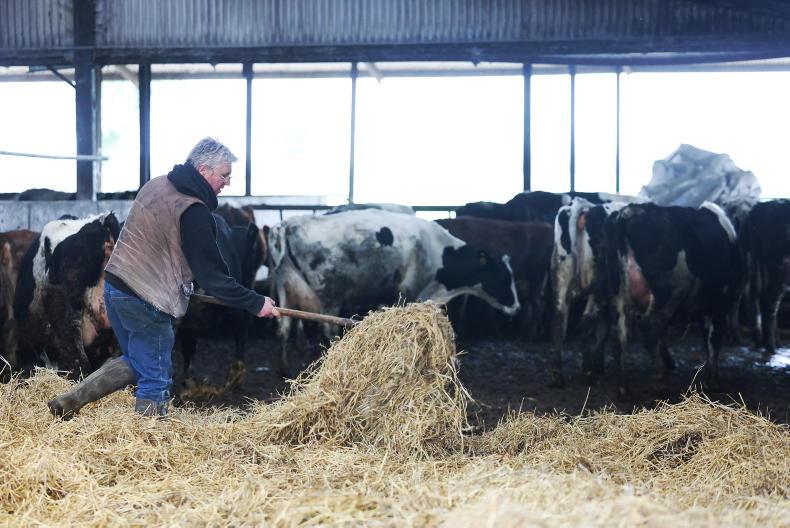
Regularly cleaning out calving sheds and calf houses will significantly reduce disease risk over the coming weeks. \ Odhran Ducie
Power-washing the shed is probably not an option for most farms now with calves already in the shed and it’s important not to make the environment any damper than it already is.
The best option for now, is to clean out all of the old straw and waste, spread a good dusting of lime across the floor to kill bacteria and bed up the shed with a good fresh bed of straw.
As the days are getting busier and energy levels getting lower, standards often start to slip at this time of year when it comes to colostrum management.
For good calf health colostrum is essential. Every calf should still be getting a good feed of at least three litres of good quality colostrum in the couple of hours post-calving.
When feeding calves, thoroughly clean feeders with hot water and a detergent like peracetic acid.
It’s also very important from a health point of view to make sure the calves are getting enough milk. Calves need at least 15% of the birth weight in milk daily and should have access to water and a starter ration.
Older calves born in early February must have access to meal and water by now if they are to have any chance of appropriately developing their rumen.
Many spring-calving herds are either approaching or past the half way mark, when it comes to the number of cows in the herd calved.
Calving pens have seen a lot of traffic over the last month and calf sheds are filling up rapidly.
With this, comes a greater risk of disease and infection amongst calves.
The risk of disease has not been helped by the mild temperatures and damp weather that’s been had over the last number of weeks.
Bacteria tend to thrive in these conditions exposing calves to much greater chances of infection.
Speaking on the Irish Farmers Journal’s Inside Dairy podcast this week, Westmeath vet Caroline Farrell says she is seeing more scours in calves this year than in previous years.
Worryingly, E Coli scour in particular seems to be a greater issue on farms this spring, where fecal samples were taken and tested.
Good practices
Hygiene is one of the biggest factors in preventing these types of health problems. By thoroughly cleaning out the calving pens and calf shed now, it will inevitably help to reduce the number of sick cases a farm will have.
Everyone is busy at this time of year and it’s a lot easier to talk about these jobs than actually put the time aside to get them done but it should be one of the top priorities for every farm over the next week or so.
Regularly cleaning out calving sheds and calf houses will significantly reduce disease risk over the coming weeks. \ Odhran Ducie
Power-washing the shed is probably not an option for most farms now with calves already in the shed and it’s important not to make the environment any damper than it already is.
The best option for now, is to clean out all of the old straw and waste, spread a good dusting of lime across the floor to kill bacteria and bed up the shed with a good fresh bed of straw.
As the days are getting busier and energy levels getting lower, standards often start to slip at this time of year when it comes to colostrum management.
For good calf health colostrum is essential. Every calf should still be getting a good feed of at least three litres of good quality colostrum in the couple of hours post-calving.
When feeding calves, thoroughly clean feeders with hot water and a detergent like peracetic acid.
It’s also very important from a health point of view to make sure the calves are getting enough milk. Calves need at least 15% of the birth weight in milk daily and should have access to water and a starter ration.
Older calves born in early February must have access to meal and water by now if they are to have any chance of appropriately developing their rumen.







SHARING OPTIONS