


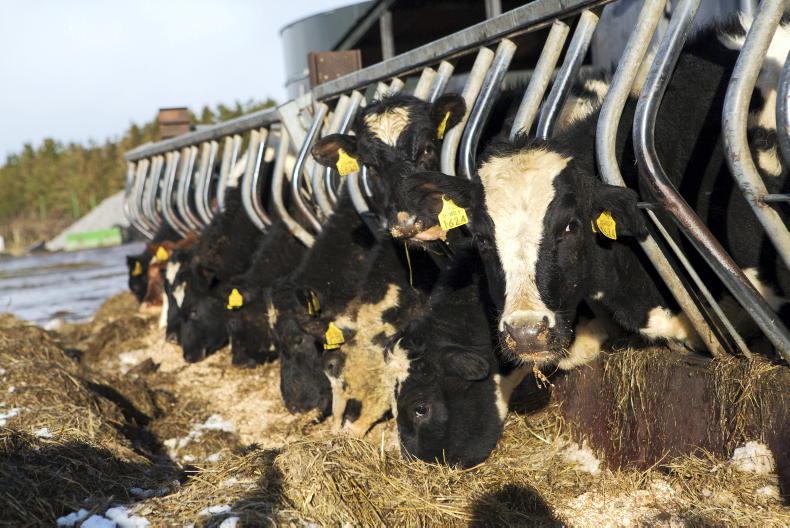
The winter is a very important time of year for replacement heifers on farms.
With cows being dried off and a break in sight for the farmer, heifers can sometimes take a back seat at a time when they need the most attention.
The first thing to do with both the R1s (0-1-year-old) and R2s (1-2-year-old) is to get them weighed. The quote ‘you can’t manage what you don’t measure’ rings true.
Getting an accurate weight will help to identify what nutrition protocol is needed for the next couple of months while the animals are housed.
Weanling heifers
Table 1 shows the target weights for the winter months of 2025 born heifers, based on three different mature cow weights.
For heifers behind target, good quality silage won’t be sufficient to get them back on track.
They will also need 2kg of meal per day depending how far behind target they are. If silage quality is poor at less than 70 DMD, 3kg of meal will be necessary.
Heifers that are on target will still need 0.5 to 1kg of meal to keep them on track, alongside good quality silage at 70 DMD or above.
Heifers above target should be OK on good quality silage, but it’s important to weigh them once a month during housing to ensure they’re still on track.
Heifers getting too heavy is also a problem.
These animals will be quicker to lay down fat and are more likely to have fertility issues as cows. There should certainly be no meal being fed.
As heifers are growing, protein is an important consideration in the diet. Any ration fed should be at least 16% crude protein, unless the silage itself is very high in protein.
In terms of silage, these animals should also be getting the pick of the best quality silage on the farm. They are the future of the herd and should be treated accordingly.
In-calf heifers
Table 2 shows the target weights of in-calf heifers over the winter months, based on the three different mature cow weights.
At this stage it’s going to be difficult to put much extra weight on in-calf heifers. Many of them will be mixed in with dry cows and meal-feeding might not be an option.
If possible, keep these in-calf heifers with the first calvers and ensure they are getting plenty of access to good quality silage.
If there are a selection of in-calf heifers behind target, separating them out and feeding them 2kg/head/day of meal maybe necessary.
These animals will also need attention next spring. It may mean milking them once a day for a period to give them the best chance at going back in-calf next May.
A recent stat at the Teagasc National Dairy Conference stated that approximately 16% of heifers that calve, will not calve down again.
That’s a significant number and shows the importance of management of these animals from calves right through the first lactation. The job is far from done when heifers join the milking herd.




SHARING OPTIONS