


With lambing being such a busy time on farms it is easy to take your eye off the ball and let hygiene standards dip.
This is often when bacteria levels get a chance to multiply and spread, increasing the risk of diseases such as e-coli scour / watery mouth or joint ill establishing.
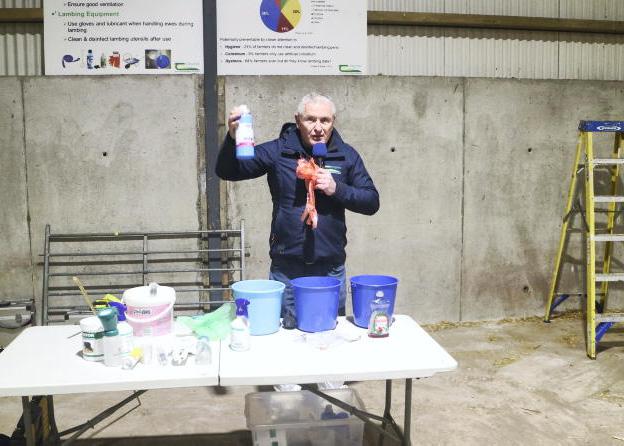
At the recent Teagasc sheep event held in Mountbellew Co Galway, Teagasc sheep specialist Damian Costello demonstrated a practical three bucket or three container routine that can be quickly used to disinfect lambing aids for farmers that do not have access to instant hot water washing facilities in the lambing shed.
The first bucket contains water and washing-up liquid to give an initial wash to items such as a lambing rope/cord, feeding bottles / teats, stomach tube, syringes etc.
The water in this bucket may need to be replaced periodically depending on the level of dirt on items being washed.
The next bucket or container is just clean water used to rinse items while the third is sterilising fluid.
This is the method that was used for generations to clean babies’ bottles and is simply adding the advised volume of sterilising fluid to the water.
Damian says “after 15 minutes anything that’s in the sterilising fluid is sterile, it’s safe to use again and you’re not spreading something like watery mouth through stomach tubing a lamb and running the risk of spreading disease all over the shed”.
“That solution will last for 24 hours so the suggestion would be that once a day or every 24 hours that you clean out your three buckets and you replace your sterilising fluid”.
This also facilitates an easier lambing as equipment is ready to hand when needed at short notice.
Washing
Even where good hot water washing facilities are available it is good practice to carry out step three and have sterilising fluid available to ensure equipment is sterilised.
Damian says that a lot of effort is often placed on washing and sterilising equipment for this work to be undone by a build-up of bacteria on clothes worn for lambing.
Farmers often wear waterproof trousers or jackets that may not be changed or washed / disinfected for the duration of lambing with this becoming a reservoir for bacteria.
“Little things like sitting a lamb up on your knee to stomach tube or holding a lamb in under your arm when opening lambing gates may seem fine but it increases the risk of infection being taken in via the navel or the mouth.
“Clean and disinfecting waterproofs etc is just as important as equipment.”


SHARING OPTIONS