


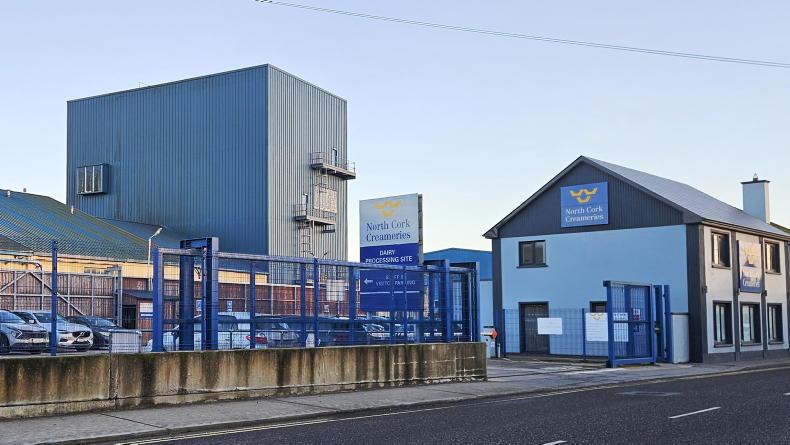
After weeks of silence, the board of North Cork Creameries made an announcement on Thursday, indicating that they had entered into a commercial milk supply agreement with Carbery Group.
There was a sense of déjà vu about this, coming as it did just a few weeks after a previous deal with Carbery was agreed and then torn up.
That original deal was set to be for 10 years, with a new five-year milk supply agreement to be signed by milk suppliers.
The terms of the new agreement are yet to be made public, with the statement saying that “for commercial reasons, the specifics of the deal will not be disclosed by either party”.
However, the statement from North Cork claimed that the deal “will deliver value to farmer shareholders across both organisations”.
As an observer, it’s difficult to see how the highest value for both sets of shareholders could be derived from this deal.
Private company
For its part, Carbery is a private company owned indirectly by farmers through the four farmer-owned west Cork co-ops, while North Cork is directly a farmer-owned co-op.
The processing assets of Carbery are owned by its shareholders. Farmer suppliers to the four west Cork co-ops are heavily invested in Carbery in order to have the right to supply milk to the plant.
I remember talking to plenty of expanding dairy farmers, both young and old, who were put to the pin of their collar in order to buy shares or processing rights in Carbery in the years after quotas went.
It wasn’t unique for farmers to invest in processing facilities, but it was unique that they would have to invest as much as Carbery suppliers had to, with a spend of over €300/cow required for every additional cow.
It’s worth remembering that Tirlán and Lakeland farmers did not have to invest anything in processing capacity, although few disagree with the fact that the business ultimately paid for it through milk price.
The whole milk processing landscape has obviously changed and all co-ops are now worried about their milk pool and Carbery is more exposed than others in terms of the nitrates derogation.
However, it’s legitimate to ask the question as to how Carbery suppliers will feel about a large group of north Cork and Kerry farmers who will now be sending their milk to Carbery, receiving a similar milk price and using the assets acquired and paid for by west Cork farmers.
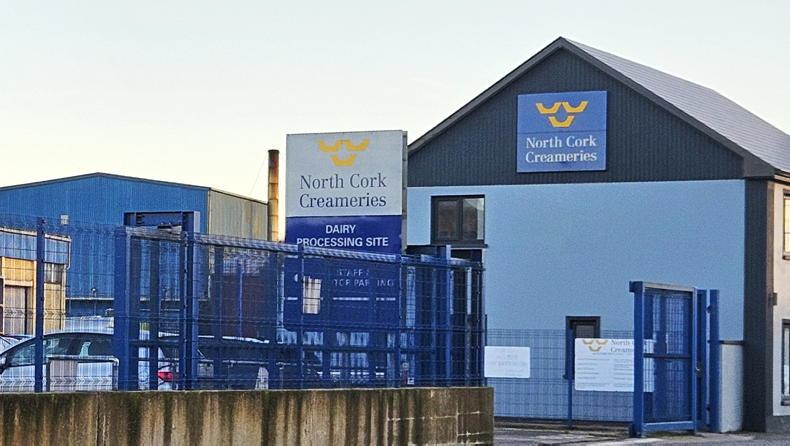
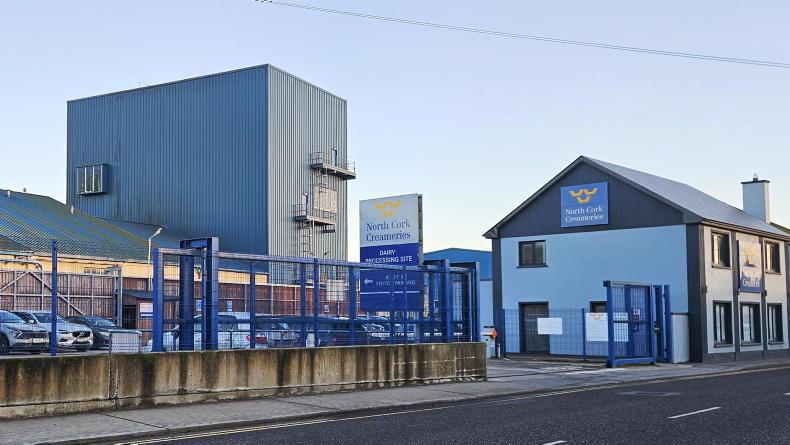
What will happen to the North Cork Creameries plant at Kanturk?
The fact that the reason they have to do this in the first place is due to a lack of investment in their own milk processing plant adds to the irony of the situation.
Another question is what will happen to the North Cork Creameries plant at Kanturk?
Based on the statement released by North Cork last week, the co-op says it is making progress on improvements to the milk processing plant.
“The facility is continuing to meet customer needs. It is operating at a reduced capacity while improvements are being made to effluent treatment facilities. This is in order to achieve compliance with EPA requirements,” the statement read.
It’s a big turnaround in the space a few weeks, considering staff were told by management that their jobs were at risk just a few weeks ago.
The question is, if the plant is operating at limited capacity, are all staff on full pay or have any been laid off and, if not, why not?
What products are being manufactured at Kanturk and what margin are they generating that justifies keeping the plant open?
If work is taking place on the treatment plant, what level of investment is required and where is this money coming from – is it additional debt or is there some sort of an angel investor backing the co-op?
In the original deal with Carbery, it was widely rumoured that an annual payment of up to €5m was to be paid by Carbery to North Cork for milk collection costs, milk testing and for running the co-op itself.
Across an 80m litre milk pool, that works out at 6.25c/l cost to get milk to the Carbery plant at Ballineen.
If this is part of the new deal, it remains to be seen whether or not North Cork is planning to use some of this funding to invest in the plant at Kanturk or even to keep it running and keep staff paid.
Split
Earlier last week, a group of disgruntled North Cork milk suppliers based in the Moyvane and Feale Bridge area handed in their notice to North Cork.
If, as expected, they leave during the summer and start supplying other co-ops, what happens to the Carbery deal?
The Irish Farmers Journal understands that the deal reached with Carbery last week is for 70m litres annually for a five-year period.
However, if the Moyvane suppliers leave, the North Cork milk pool will be down to around 40m litres annually, so what does this mean for the deal?
Carbery has declined to comment on any of this.
The next question is, if these Moyvane suppliers do leave North Cork, where will they go?
Geographically, they are located very close to the Kerry Dairy Ireland (KDI) plant at Listowel, so no doubt KDI would be interested in taking them.
However, word on the ground is that KDI is more interested in the entire North Cork business, including the plant, as opposed to just picking up additional suppliers.
It would definitely suit Dairygold Co-op to pick up some new members, even though Moyvane is a bit outside of its current catchment.
Best opportunity
Arratipp is not afraid of traveling for milk either and it already has suppliers west of Cork city and as far east as Waterford.
No other co-op has poached any supplier up to now, despite requests from North Cork suppliers to join them.
That could change now though, particularly as there has always been rivalry between Kerry and Carbery.
Carbery’s synergy business is in direct competition with Kerry Group’s taste and flavours division, while the core dairy businesses are also fishing in the same pond.
Carbery CEO Jason Hawkins spent 20 years as a senior executive at Kerry Group before eventually joining Carbery as CEO.
The big question for North Cork suppliers is, what deal presents the best opportunity for them?
The ability to get a milk price linked to Carbery will be welcomed by many, even if it is at a discount to the Carbery price.
What about the implications for quality and sustainability bonus payments? Will North Cork suppliers be able to get the same SCC and sustainability payments as Carbery suppliers?
Together, they amount to over 2c/l, the most of which is included in the Irish Farmers Journal milk league.
Another area North Cork suppliers are concerned about is what happens to the plant.
The co-op membership is very split on this issue, with the original suppliers around Kanturk loyal to the creamery. They want to see it remain as a big employer in the locality.
This is less of an issue for the Moyvane-based suppliers and many actually see retaining the dairy plant as a hindrance to progress and a distraction for management, particularly when the vast majority of the milk will be processed by Carbery.
Whatever way we look at it, the deal with Carbery is likely to offer some certainty to suppliers and buy the co-op time, so the board and management need to be commended for getting this far.
Their next steps will be watched closely.


SHARING OPTIONS