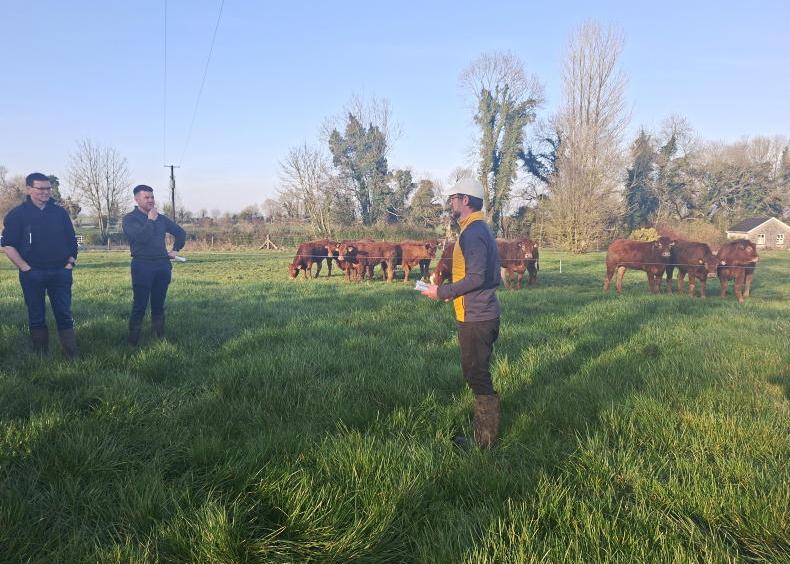
Michael Cunniffe runs over 150 high-quality continental heifers in a specialised in-calf heifer system. The farm comprises of 53 hectares with 48ha owned and the remainder rented based in Fuerty, Co Roscommon. The farm recently played host to a Teagasc drystock early spring grass workshop. Michael has a key focus on grass with no meal fed to any heifers he sold in-calf,
“We maybe feed a tonne of meal in the year with this only being fed to heifers who don’t go in-calf or for whatever reason end up as beef.”
The unique part about Michael’s system is that all heifers are sold from the yard. He does not hold a specialised sale, instead every year farmers can come and view the 150 heifers and buy what they like.
“I have farmers who will just buy one heifer to customers seeking 10 heifers, my average sale is generally two to three heifers with a lot of repeat
customers.
It’s generally either word of mouth or from advertising that I’ve sold heifers this year I intend to run social media channels under the name Brackloon bó so keep an eye out”.
The in-calf heifer system in action
With over 150 heifers to offer for sale every year it is a credit to Michael and his team, including Alan Kearns who works on the farm and is an important part of Michael’s success story.
The cycle begins in mid-October when Michael starts purchasing as he sells for the following year.
Michael has strict selection requirements – heifers must be of continental breeding with good conformation (frame, shape and pelvis width), but not extreme, and where possible have a good replacement index.

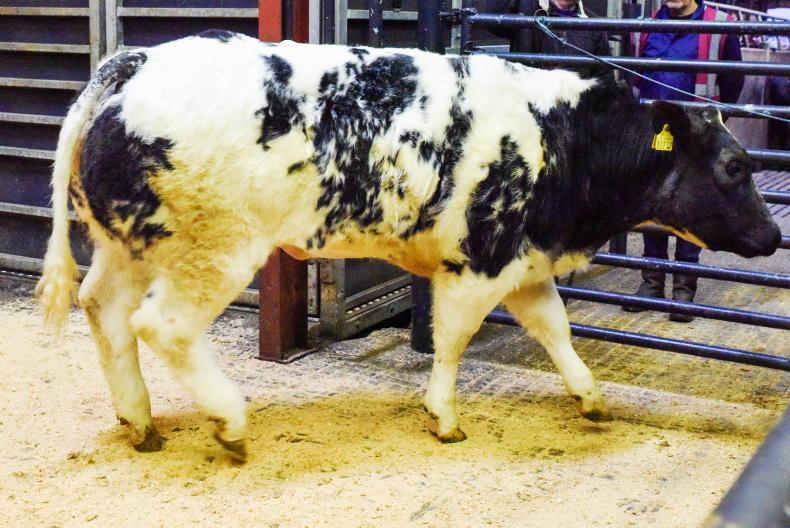
Some of Michael's 2025 crop of heifers which are now all sold but similar will be available the end of this year.
Once they arrive on farm they are on a grass-silage diet only over the winter with a grass-only diet for the summer. No concentrate is fed to heifers unless they are deemed not suitable for breeding. An extensive animal health programme is in place with all heifers vaccinated for BVD, IBR, leptospirosis, clostridial diseases and, as of this year, they will also be vaccinated for bluetongue virus.
Heifers will receive pre-breeding and pre-calving minerals supplementation alongside any parasite treatment.
All heifers are scanned twice with accurate due dates and predicetd sex.
A small number of heifers are calved down each year and these are also sold with their calves at foot.
It’s no simple job to get 150 heifers in-calf every year.
Previous to this year’s breeding season, Michael used to run four easy-calving Limousin bulls with the heifers.
This year he’s changed things up by introducing AI into the breeding programme. AI inseminations started the second week in January and continued up to the end of February – 105 heifers out of 110 were served to AI, all on standing natural heats.
Breeding recommenced on 23 March and will continue until June, during which heifers will be served to AI and three limousine stock bulls will mop up any repeat breeders.
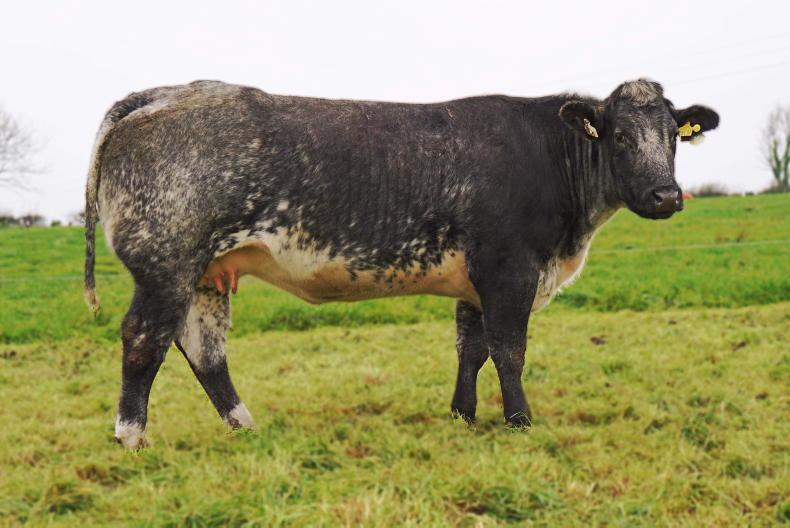
Some of Michael's 2025 crop of heifers which are now all sold but similar will be available the end of this year.
Michael has used conventional and sexed female semen on heifers – the bulls used were Shannon Stan, Powerful Proper and Shannon Samurai, while the sexed female semen used was from Shannon Stan and Powerful Proper.
“We went with the sexed semen on the Belgian Blue and Roan-coloured heifers hoping to potentially add value for our customers if they can get heifer calves from these type of cows,” Michael added.
Michael uses careful planning in matching sires to particular heifers. He employs a number of tools including ICBF for ancestry of heifers to avoid inbreeding. One of his big concerns is that up to 20% of heifers purchased have no sire recorded.
When choosing bulls they must be easy-calving and a myostatin double F gene carrier, he does not use bulls carrying the NT or Q gene as the aim is to have all heifers calve themselves.
“We will visually access each heifer, look at her breeding and myostatin and from there we will try match the most appropriate bulls whether it’s AI or dividing them up with the stockbulls.”
At this year’s premier Limousin sale in Roscrea, Michael added a new bull to his team, Ballyline Andrew. Stacked with easy calving he is a son of Shannon Stan going back to a Lodge Hamlet dam with Castleview Gazelle also in his back pedigree.
With a massive terminal index of €161, he ranks in the top 10% of the breed and at just 6% calving difficulty on beef heifers he is 2% below the Limousin breed average on heifers. He will join the team of Creggpark Noddy – an Ampertaine Commander son and Ovaun Michigan ET – a Neuf son.
Spring 2026 has been a difficult one on farms with most spring rotation planners needing adjustment up and down the country and that is no different on Michael’s farm.
Michael places a key focus on early grazing with 24 February kicking off the 2026 grazing season. This hasn’t come without challenges.
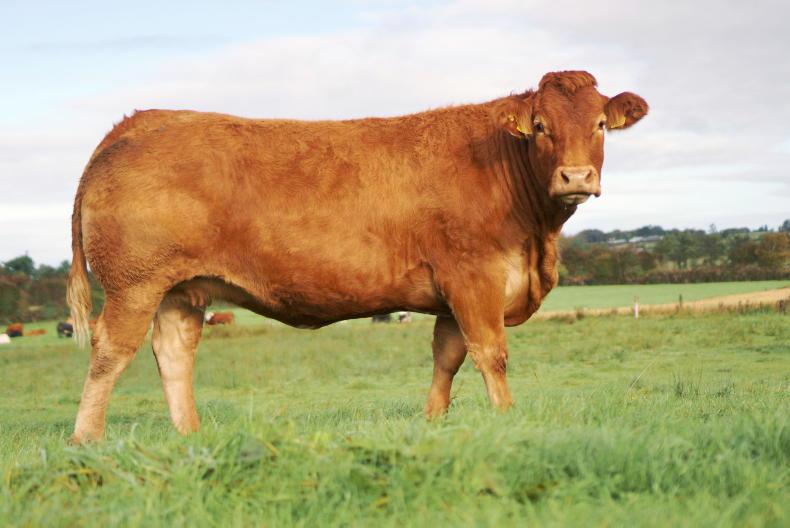
Some of Michael's 2025 crop of heifers which are now all sold but similar will be available the end of this year.
“We have managed to keep one group of heifers out since turn out, these weighed in the region of 450kg but it’s taken a lot of work keeping them moved and setting up wires daily. We have a second group that was turned out the same time but they had to be housed a number of times whether it’s for 12 hours or 24 hours. These are a heavier group up around the 580kg mark,” Michael says.
Currently Michael has 50% of the farm grazed with 150 cattle currently at grass grazed in three groups .
70% of the silage ground has now been grazed and has received 2,500gls slurry/acre. We failed to graze 20% with heavy covers and this will now be baled the first week of May which is earlier than planned. The majority of the silage block is on target for pit silage in the third week of May. The farm is well set up with grazing infrastructure and 20% of the farm was reseeded in 2025.
He’s not afraid to try new approaches having experimented with clover swards and hybrid grass varieties.
Over the last two years Michael has focused on increasing his soil pH to a farm average of between 6.5 and 7.
By raising soil pH it will allow him to try and incorporate in clover – he tried over-sowing paddocks with white clover with great success in 2024, but poor uptake in 2025.
Michael is hoping that by incorporating clover he will displace up to 70 units of N/acre on his grazing ground.
The soil indexes are good on the farm especially for phosphorus (P).However, he has tried hard to increase his farm’s potassium (K) index over the last few years but soil sample results have stayed fairly stagnant.
Silage ground is where results are staying stagnant and Michael is putting it down to high off-takes with over 16 t/DM/ha coming of most the silage ground in the year.
He has identified increasing his farm’s K index as one of his main goals over the next two years.
However, the whole farm is performing well with an average of 13t/dm/ha grown in 2025 which is exceptional for a drystock system.
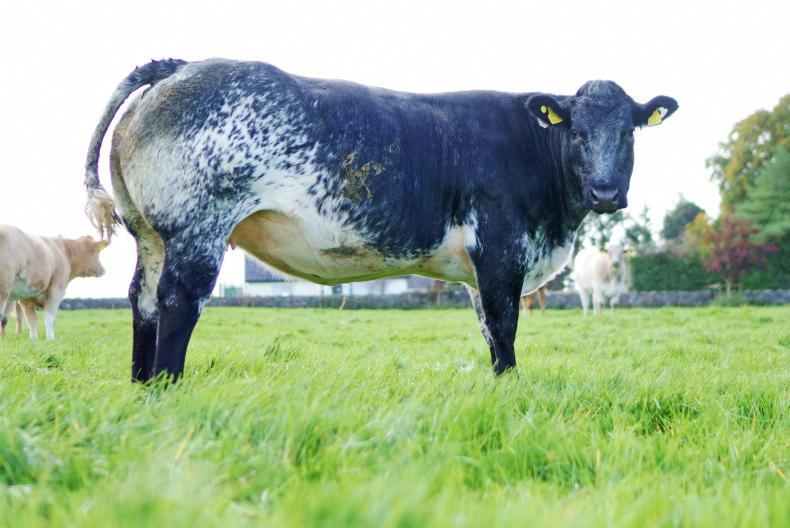
Some of Michael's 2025 crop of heifers which are now all sold but similar will be available the end of this year.
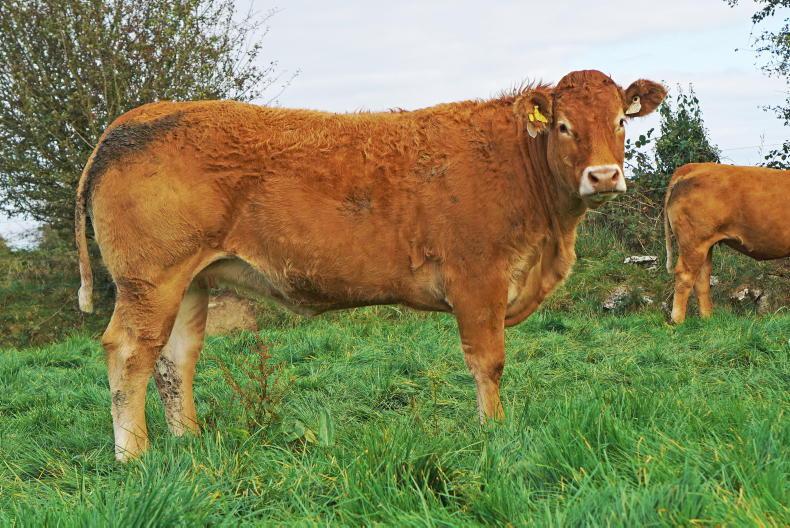
Some of Michael's 2025 crop of heifers which are now all sold but similar will be available the end of this year.
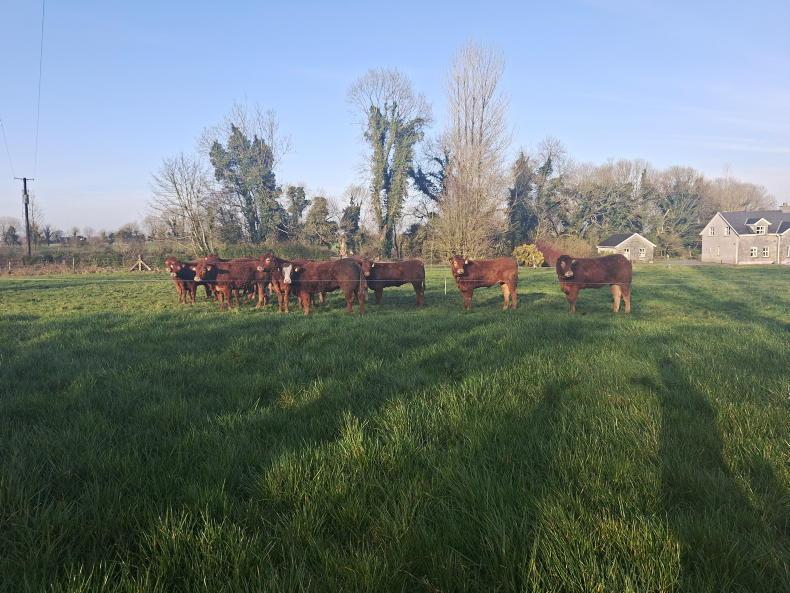
Madian Heifers that were turned out to grass on the 24th of Feburary and have been kept at grass since, these heifers will now be served to Limousin bulls over the coming weeks.
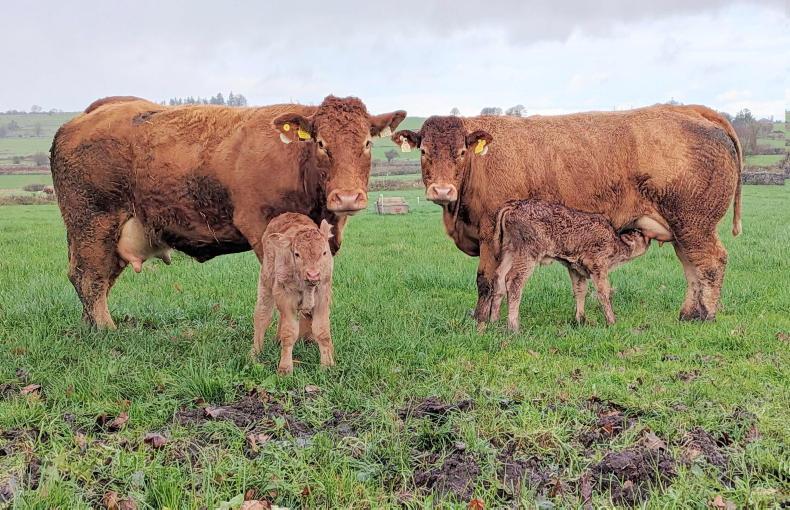
Limousin-cross heifers that calved down in 2025 and were sold with their calves at foot
Michael Cunniffe runs over 150 high-quality continental heifers in a specialised in-calf heifer system. The farm comprises of 53 hectares with 48ha owned and the remainder rented based in Fuerty, Co Roscommon. The farm recently played host to a Teagasc drystock early spring grass workshop. Michael has a key focus on grass with no meal fed to any heifers he sold in-calf,
“We maybe feed a tonne of meal in the year with this only being fed to heifers who don’t go in-calf or for whatever reason end up as beef.”
The unique part about Michael’s system is that all heifers are sold from the yard. He does not hold a specialised sale, instead every year farmers can come and view the 150 heifers and buy what they like.
“I have farmers who will just buy one heifer to customers seeking 10 heifers, my average sale is generally two to three heifers with a lot of repeat
customers.
It’s generally either word of mouth or from advertising that I’ve sold heifers this year I intend to run social media channels under the name Brackloon bó so keep an eye out”.
The in-calf heifer system in action
With over 150 heifers to offer for sale every year it is a credit to Michael and his team, including Alan Kearns who works on the farm and is an important part of Michael’s success story.
The cycle begins in mid-October when Michael starts purchasing as he sells for the following year.
Michael has strict selection requirements – heifers must be of continental breeding with good conformation (frame, shape and pelvis width), but not extreme, and where possible have a good replacement index.
Some of Michael's 2025 crop of heifers which are now all sold but similar will be available the end of this year.
Once they arrive on farm they are on a grass-silage diet only over the winter with a grass-only diet for the summer. No concentrate is fed to heifers unless they are deemed not suitable for breeding. An extensive animal health programme is in place with all heifers vaccinated for BVD, IBR, leptospirosis, clostridial diseases and, as of this year, they will also be vaccinated for bluetongue virus.
Heifers will receive pre-breeding and pre-calving minerals supplementation alongside any parasite treatment.
All heifers are scanned twice with accurate due dates and predicetd sex.
A small number of heifers are calved down each year and these are also sold with their calves at foot.
It’s no simple job to get 150 heifers in-calf every year.
Previous to this year’s breeding season, Michael used to run four easy-calving Limousin bulls with the heifers.
This year he’s changed things up by introducing AI into the breeding programme. AI inseminations started the second week in January and continued up to the end of February – 105 heifers out of 110 were served to AI, all on standing natural heats.
Breeding recommenced on 23 March and will continue until June, during which heifers will be served to AI and three limousine stock bulls will mop up any repeat breeders.
Some of Michael's 2025 crop of heifers which are now all sold but similar will be available the end of this year.
Michael has used conventional and sexed female semen on heifers – the bulls used were Shannon Stan, Powerful Proper and Shannon Samurai, while the sexed female semen used was from Shannon Stan and Powerful Proper.
“We went with the sexed semen on the Belgian Blue and Roan-coloured heifers hoping to potentially add value for our customers if they can get heifer calves from these type of cows,” Michael added.
Michael uses careful planning in matching sires to particular heifers. He employs a number of tools including ICBF for ancestry of heifers to avoid inbreeding. One of his big concerns is that up to 20% of heifers purchased have no sire recorded.
When choosing bulls they must be easy-calving and a myostatin double F gene carrier, he does not use bulls carrying the NT or Q gene as the aim is to have all heifers calve themselves.
“We will visually access each heifer, look at her breeding and myostatin and from there we will try match the most appropriate bulls whether it’s AI or dividing them up with the stockbulls.”
At this year’s premier Limousin sale in Roscrea, Michael added a new bull to his team, Ballyline Andrew. Stacked with easy calving he is a son of Shannon Stan going back to a Lodge Hamlet dam with Castleview Gazelle also in his back pedigree.
With a massive terminal index of €161, he ranks in the top 10% of the breed and at just 6% calving difficulty on beef heifers he is 2% below the Limousin breed average on heifers. He will join the team of Creggpark Noddy – an Ampertaine Commander son and Ovaun Michigan ET – a Neuf son.
Spring 2026 has been a difficult one on farms with most spring rotation planners needing adjustment up and down the country and that is no different on Michael’s farm.
Michael places a key focus on early grazing with 24 February kicking off the 2026 grazing season. This hasn’t come without challenges.
Some of Michael's 2025 crop of heifers which are now all sold but similar will be available the end of this year.
“We have managed to keep one group of heifers out since turn out, these weighed in the region of 450kg but it’s taken a lot of work keeping them moved and setting up wires daily. We have a second group that was turned out the same time but they had to be housed a number of times whether it’s for 12 hours or 24 hours. These are a heavier group up around the 580kg mark,” Michael says.
Currently Michael has 50% of the farm grazed with 150 cattle currently at grass grazed in three groups .
70% of the silage ground has now been grazed and has received 2,500gls slurry/acre. We failed to graze 20% with heavy covers and this will now be baled the first week of May which is earlier than planned. The majority of the silage block is on target for pit silage in the third week of May. The farm is well set up with grazing infrastructure and 20% of the farm was reseeded in 2025.
He’s not afraid to try new approaches having experimented with clover swards and hybrid grass varieties.
Over the last two years Michael has focused on increasing his soil pH to a farm average of between 6.5 and 7.
By raising soil pH it will allow him to try and incorporate in clover – he tried over-sowing paddocks with white clover with great success in 2024, but poor uptake in 2025.
Michael is hoping that by incorporating clover he will displace up to 70 units of N/acre on his grazing ground.
The soil indexes are good on the farm especially for phosphorus (P).However, he has tried hard to increase his farm’s potassium (K) index over the last few years but soil sample results have stayed fairly stagnant.
Silage ground is where results are staying stagnant and Michael is putting it down to high off-takes with over 16 t/DM/ha coming of most the silage ground in the year.
He has identified increasing his farm’s K index as one of his main goals over the next two years.
However, the whole farm is performing well with an average of 13t/dm/ha grown in 2025 which is exceptional for a drystock system.
Some of Michael's 2025 crop of heifers which are now all sold but similar will be available the end of this year.
Some of Michael's 2025 crop of heifers which are now all sold but similar will be available the end of this year.
Madian Heifers that were turned out to grass on the 24th of Feburary and have been kept at grass since, these heifers will now be served to Limousin bulls over the coming weeks.
Limousin-cross heifers that calved down in 2025 and were sold with their calves at foot





SHARING OPTIONS