Glorious Exploits, by Ferdia Lennon.
Published by Fig Tree, €14.99
Confession time. When I read the blurb on this debut novel, I decided it wasn’t for me, which proved to be a big mistake. Now I find myself recommending it highly. The change of heart resulted from the book, Glorious Exploits, being awarded the prestigious Rooney Prize for Irish literature which celebrates emerging Irish writers under the age of 40.
The accolade does not only have significant monetary value, €10,000, but when you look at the list of winners since the prize was first awarded in 1976, with the aim of fostering new voices and supporting writers’ development at a crucial career stage, it is clearly a signpost to future acclaim for recipients. This has added to the prestige of the Rooney Prize, with its roll of honour featuring a ‘who’s who’ of Irish literature.
With apologies to those omitted, past winners, in chronological order, include Peter Sheridan, Kate Cruise O’Brien, Bernard Farrell, Neil Jordan, Frank McGuinness, Paul Mercier, Anne Enright, Hugo Hamilton, Colum McCann, Mike McCormack, Mark O’Rowe, Claire Keegan, Kevin Barry, Colin Barrett, Mark O’Connell, Sean Hewitt and Michael Magee. Add to that, Ferdia Lennon, this year’s winner.
Glorious Exploits is such a joyous debut from Lennon. The book opens in Syracuse, south-east Sicily, in the year 412BC.
The city has successfully defended itself against a military expedition from Athens, and thousands of surviving invaders have been thrown into quarries to die. Two locals, Gelon and Lamp, one day come up with an idea to cast the prisoners in a play by Euripides.
So much humour is to be found in the ‘Irish’ voice of the wisecracking Lampo, who asks an almost dead Athenian, “and would you be knowing any passages?” as he seeks someone to play Jason in Medea. The melancholy Gelon and his friend Lampo sneak down daily to rehearse the troupe for a double bill to which the whole town is invited. The unlikely premise for the play and the Irish accents make the book seem far-fetched, but there is a serious side to it too.
The novel is funny and the writing is exquisite. Some lines are so beautiful you will reread them. Lampo does terrible things, and yet in an instance of optimism, says: “I’m pouring water in the desert, hoping flowers grow.” So too will your love for the book.
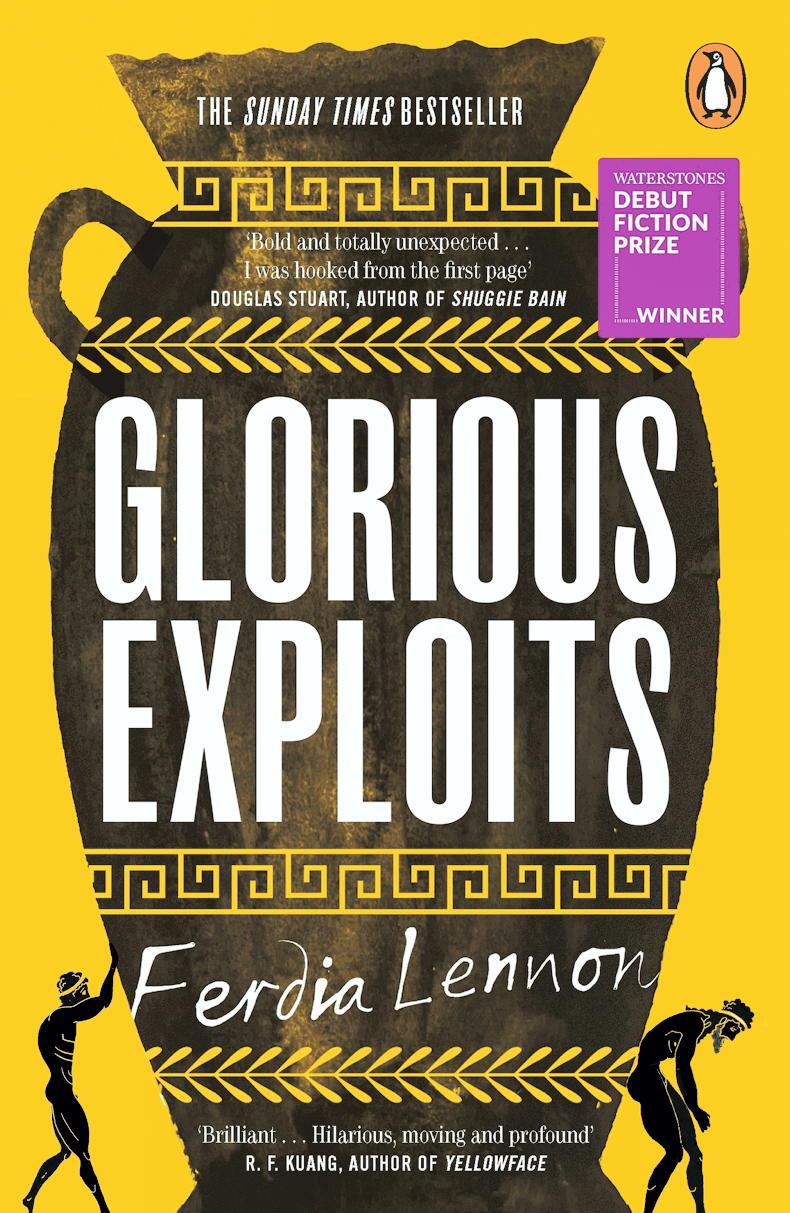
Rooney prize winner 2025 Glorious Exploits by Ferdia Lennon.
Dark Horse, by Felix Francis.
Published by Zaffre, €22
Apart from having the pleasure of the company of Felix Francis at a recent lunch, I was also gifted a copy of his latest work, Dark Horse. His father Dick was an accomplished and popular author, but the beauty of his writing was that a reader did not need to know anything about racing to enjoy his novels.
Dick and Mary’s son Felix joined his father 20 years ago in the writing of four novels. Felix’s 14th book in his own name may be his best. Dark Horse has an Irish theme and the central character is a young Tipperary jockey, Imogen Duffy who is in an abusive relationship with fellow jockey, Liam Carson. Imogen is catapulted into the limelight after riding a winner at Cheltenham.
The opportunity to leave Liam and start a new life in England is scuppered when Liam is found dead, and Imogen is arrested and charged with his murder.

A racing thriller, Dark Horse by Felix Francis.
The Dublin Coffee Guide, by Paddy Kirk. Published by The Lilliput Press, €24.85
Growing up, all I wanted was to educate my palate about wine, and with practice I believe I mastered the art.
Then along came coffee, something that was for many an anathema, as we were a nation of tea drinkers. Now, an explosion in the number of coffee shops has led to many of us being labelled coffee snobs.
A vast majority of these outlets produce perfectly adequate coffee (and I am not including the major chains in that), but the art of coffee making has grown, and support for independent operators is at a high.
Paddy Kirk tells the story of 47 coffee shops across our nation’s capital, including two of my personal favourites, Two Boys Brew and Two Fifty Square.
A great read to enjoy with, yes you guessed it, a cup of coffee.

Fair City delight for coffee lovers of Dublin, The Dublin Coffee Guide by Paddy Kirk.
Pygmalion, by George Bernard Shaw. Published by Penguin, €11
A century ago, in 1925, George Bernard Shaw won the Nobel Prize for Literature – okay, we’re just into 2026 now, but it is appropriate to acknowledge the fact, and celebrate it by recommending something a little different, Pygmalion. This is a remarkable piece of work, the inspiration for My Fair Lady which starred Rex Harrison and Audrey Hepburn.
Shaw’s central character is not a sculptor as the original Pygmalion of Greek mythology was, but a professor of philosophy by the name of Henry Higgins. The professor boasts that by changing the accent of Eliza Dolittle, a cockney flower girl, he can pass her off in polite society as a refined lady.
It was perhaps ironic that the Irish-born Shaw should write something that was in reality a commentary on the cultural politics of the English language.

An oldie but a goodie, George Bernard Shaw's Pygmalion.
Glorious Exploits, by Ferdia Lennon.
Published by Fig Tree, €14.99
Confession time. When I read the blurb on this debut novel, I decided it wasn’t for me, which proved to be a big mistake. Now I find myself recommending it highly. The change of heart resulted from the book, Glorious Exploits, being awarded the prestigious Rooney Prize for Irish literature which celebrates emerging Irish writers under the age of 40.
The accolade does not only have significant monetary value, €10,000, but when you look at the list of winners since the prize was first awarded in 1976, with the aim of fostering new voices and supporting writers’ development at a crucial career stage, it is clearly a signpost to future acclaim for recipients. This has added to the prestige of the Rooney Prize, with its roll of honour featuring a ‘who’s who’ of Irish literature.
With apologies to those omitted, past winners, in chronological order, include Peter Sheridan, Kate Cruise O’Brien, Bernard Farrell, Neil Jordan, Frank McGuinness, Paul Mercier, Anne Enright, Hugo Hamilton, Colum McCann, Mike McCormack, Mark O’Rowe, Claire Keegan, Kevin Barry, Colin Barrett, Mark O’Connell, Sean Hewitt and Michael Magee. Add to that, Ferdia Lennon, this year’s winner.
Glorious Exploits is such a joyous debut from Lennon. The book opens in Syracuse, south-east Sicily, in the year 412BC.
The city has successfully defended itself against a military expedition from Athens, and thousands of surviving invaders have been thrown into quarries to die. Two locals, Gelon and Lamp, one day come up with an idea to cast the prisoners in a play by Euripides.
So much humour is to be found in the ‘Irish’ voice of the wisecracking Lampo, who asks an almost dead Athenian, “and would you be knowing any passages?” as he seeks someone to play Jason in Medea. The melancholy Gelon and his friend Lampo sneak down daily to rehearse the troupe for a double bill to which the whole town is invited. The unlikely premise for the play and the Irish accents make the book seem far-fetched, but there is a serious side to it too.
The novel is funny and the writing is exquisite. Some lines are so beautiful you will reread them. Lampo does terrible things, and yet in an instance of optimism, says: “I’m pouring water in the desert, hoping flowers grow.” So too will your love for the book.
Rooney prize winner 2025 Glorious Exploits by Ferdia Lennon.
Dark Horse, by Felix Francis.
Published by Zaffre, €22
Apart from having the pleasure of the company of Felix Francis at a recent lunch, I was also gifted a copy of his latest work, Dark Horse. His father Dick was an accomplished and popular author, but the beauty of his writing was that a reader did not need to know anything about racing to enjoy his novels.
Dick and Mary’s son Felix joined his father 20 years ago in the writing of four novels. Felix’s 14th book in his own name may be his best. Dark Horse has an Irish theme and the central character is a young Tipperary jockey, Imogen Duffy who is in an abusive relationship with fellow jockey, Liam Carson. Imogen is catapulted into the limelight after riding a winner at Cheltenham.
The opportunity to leave Liam and start a new life in England is scuppered when Liam is found dead, and Imogen is arrested and charged with his murder.
A racing thriller, Dark Horse by Felix Francis.
The Dublin Coffee Guide, by Paddy Kirk. Published by The Lilliput Press, €24.85
Growing up, all I wanted was to educate my palate about wine, and with practice I believe I mastered the art.
Then along came coffee, something that was for many an anathema, as we were a nation of tea drinkers. Now, an explosion in the number of coffee shops has led to many of us being labelled coffee snobs.
A vast majority of these outlets produce perfectly adequate coffee (and I am not including the major chains in that), but the art of coffee making has grown, and support for independent operators is at a high.
Paddy Kirk tells the story of 47 coffee shops across our nation’s capital, including two of my personal favourites, Two Boys Brew and Two Fifty Square.
A great read to enjoy with, yes you guessed it, a cup of coffee.
Fair City delight for coffee lovers of Dublin, The Dublin Coffee Guide by Paddy Kirk.
Pygmalion, by George Bernard Shaw. Published by Penguin, €11
A century ago, in 1925, George Bernard Shaw won the Nobel Prize for Literature – okay, we’re just into 2026 now, but it is appropriate to acknowledge the fact, and celebrate it by recommending something a little different, Pygmalion. This is a remarkable piece of work, the inspiration for My Fair Lady which starred Rex Harrison and Audrey Hepburn.
Shaw’s central character is not a sculptor as the original Pygmalion of Greek mythology was, but a professor of philosophy by the name of Henry Higgins. The professor boasts that by changing the accent of Eliza Dolittle, a cockney flower girl, he can pass her off in polite society as a refined lady.
It was perhaps ironic that the Irish-born Shaw should write something that was in reality a commentary on the cultural politics of the English language.
An oldie but a goodie, George Bernard Shaw's Pygmalion.





SHARING OPTIONS