Bagenalstown, Co Carlow
Hugh is up to date with his crop management at present.
He is happy enough with how things are going but said it is a backward year and he did not get into some fields for a long time.
He said it is “not an easy year to do anything”, noting that it is too wet, too cold or too windy for many jobs.
He planted all winter crops, so he is at an advantage that he did not have crops to plant in this wet weather.
Some of his winter wheat is on that heavier ground. It received its main split of nitrogen on 1 April and had only received its compound fertiliser about 10 days beforehand. It will receive its last application of nitrogen soon.
The wheat received a tidy up herbicide of Manhattan. It also received a mix of foliar nutrients – nitrogen, sulphur and magnesium. CeCeCe and Moddus were applied for plant growth regulation and prothioconazole, tebuconazole and azoxystrobin for its T0 fungicide too.
Hugh reported that the wheat is clean. He has both Champion and Graham.
Since getting its fertiliser the wheat has recovered quickly and roots have developed really well.
It will receive Ascra and Folpet for its T1 fungicide, along with Terpal for straw strength.
His oilseed rape is coming into full flower. Hugh reported that the application of Caryx evened it up well. Prothioconazole and boron were also applied at the time.
The winter oats are powering ahead and are the most advanced crop. On 8 April they received Modem, Flexity, Upright and Moddus.
No disease was visible and a small bit of nitrogen is to be applied in the coming days.
Ballinasloe, Co Galway
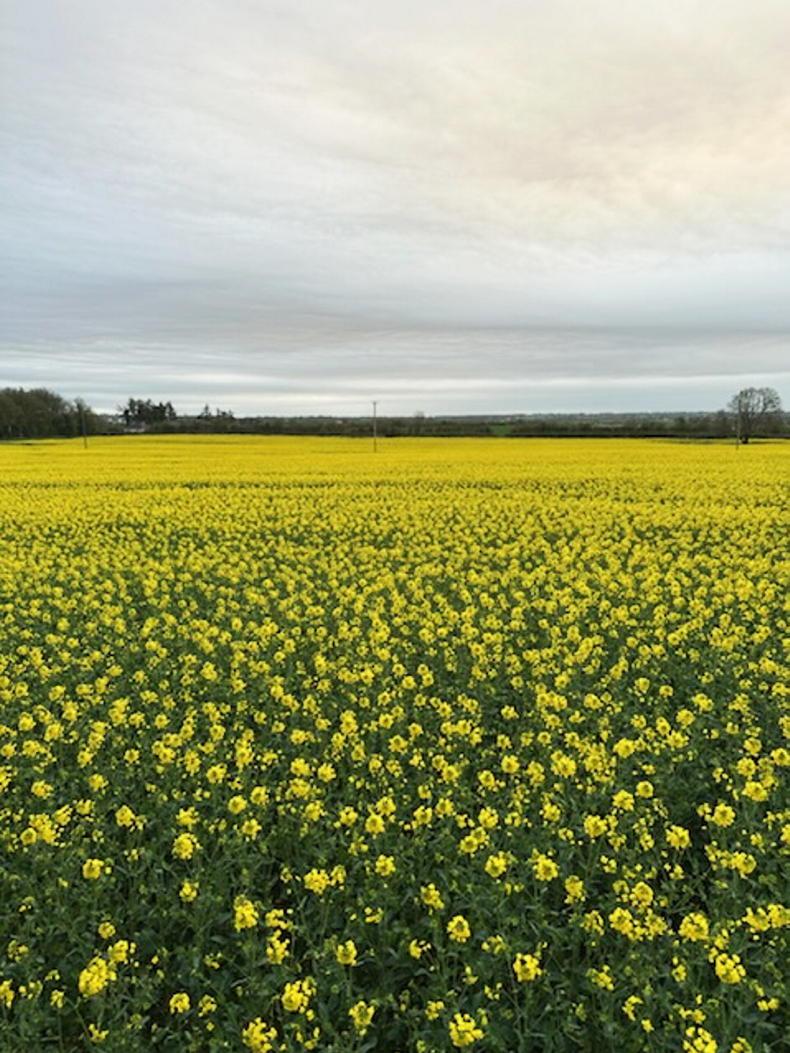
Patrick Daly’s oilseed rape is flowering.
Patrick is farming heavy soils in Co Galway. He explained: “The past two weeks have been marked by an abundance of rain and lack of opportunities to get any real work done.”
Considering all the rain and wet conditions he has done well to get the last split of nitrogen onto his winter cereal crops and the first fungicides sprayed.
Patrick used the three or four dry days last week to catch up on winter crop management. It hasn’t been plain sailing.
Tramlines are very wet and hard to travel in, but crops are healthy. Some crops are suffering from manganese deficiency and not being able to travel has not helped this problem.
There is some nitrogen scorch in crops as well. Liquid nitrogen (24N + 7S) was used and wind, cold and brief windows for application did not help this.
Patrick has not ploughed any land ahead of spring planting. He wants a stretch of dry days to allow land to be ploughed and sowed together.
He says his land would take too long to dry out if it was ploughed in current conditions.
With frosts at night and soil temperatures low it is hard to get land dry, but it also means crops would take a long time to grow as well.
Patrick thinks it could be May before he gets spring crops planted.
On a positive note, the oilseed rape is brightening up the farm as it is in flower, but Patrick said it hasn’t branched out well, despite receiving its nitrogen early and a plant growth regulator in February.
UCD Lyons Farm
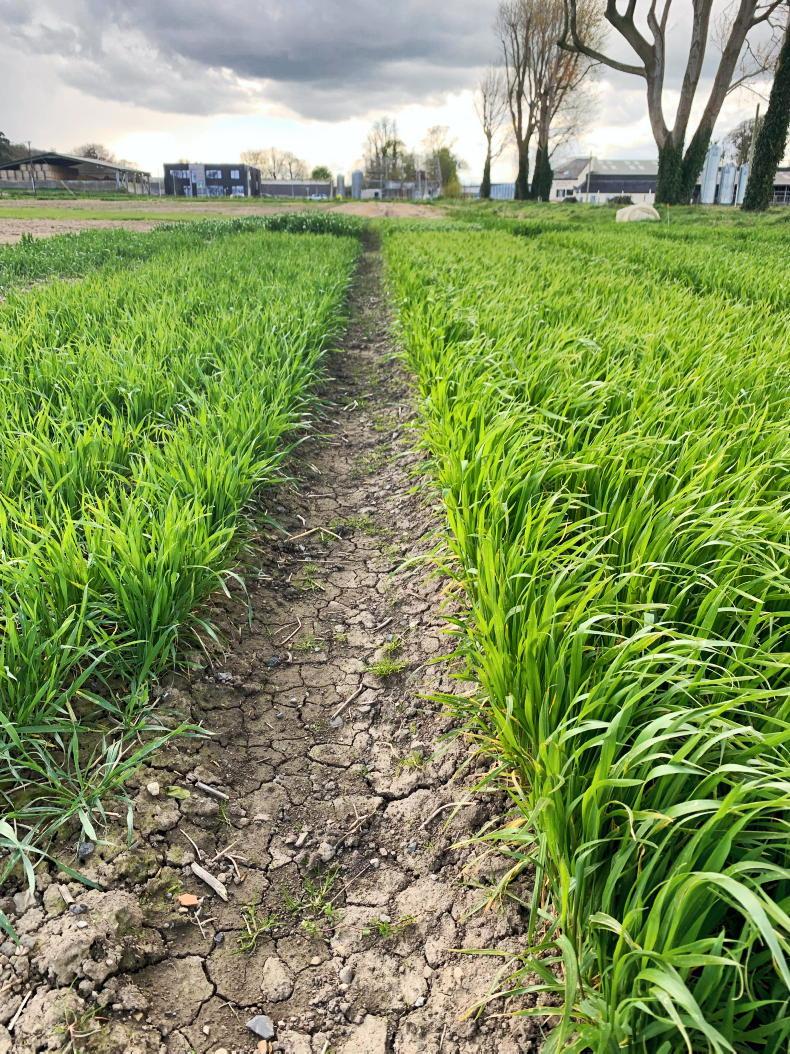
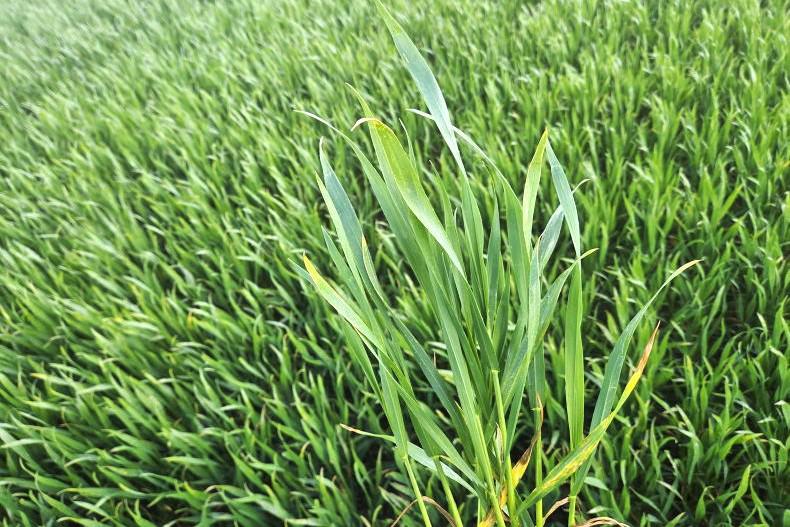
The winter cereal trial plots at UCD Lyons Farm.
Land is slowly coming right for Gary who is hoping to get the first round of spring crops planted next week.
However, some space will be left for spring crop plots to be sown approximately a month later in the hopes that they will still be green for when the students come back in September and can see diseases and yield components with each of the crops.
Gary is busy weighing out seed for each of the individual crops and small plots that are to be sown so that planting can commence as soon as soil preparation is finished.
The lentils that had survived over the winter are still doing well with a number of flowering sites just starting to appear on the crop, however these won’t get a chance to come to anything as the crop will be ploughed in the next few days.
Gary will try the lentils again as a deliberate winter crop to see if they can survive another winter and actually provide a yield.
The winter cereals are looking quite well and are in the early stages of stem extension despite having received no nitrogen or fungicides to date.
There are some signs of mildew appearing on some of the cereal crops and this will be monitored before any action takes place.
The winter oilseed rape is still looking a bit patchy although this is to be expected as again it has received no nitrogen and it is just starting to flower now.
Again, this is a bit behind other winter oilseed rape crops in the locality but was sown approximately a month later than these crops.
Bagenalstown, Co Carlow
Hugh is up to date with his crop management at present.
He is happy enough with how things are going but said it is a backward year and he did not get into some fields for a long time.
He said it is “not an easy year to do anything”, noting that it is too wet, too cold or too windy for many jobs.
He planted all winter crops, so he is at an advantage that he did not have crops to plant in this wet weather.
Some of his winter wheat is on that heavier ground. It received its main split of nitrogen on 1 April and had only received its compound fertiliser about 10 days beforehand. It will receive its last application of nitrogen soon.
The wheat received a tidy up herbicide of Manhattan. It also received a mix of foliar nutrients – nitrogen, sulphur and magnesium. CeCeCe and Moddus were applied for plant growth regulation and prothioconazole, tebuconazole and azoxystrobin for its T0 fungicide too.
Hugh reported that the wheat is clean. He has both Champion and Graham.
Since getting its fertiliser the wheat has recovered quickly and roots have developed really well.
It will receive Ascra and Folpet for its T1 fungicide, along with Terpal for straw strength.
His oilseed rape is coming into full flower. Hugh reported that the application of Caryx evened it up well. Prothioconazole and boron were also applied at the time.
The winter oats are powering ahead and are the most advanced crop. On 8 April they received Modem, Flexity, Upright and Moddus.
No disease was visible and a small bit of nitrogen is to be applied in the coming days.
Ballinasloe, Co Galway
Patrick Daly’s oilseed rape is flowering.
Patrick is farming heavy soils in Co Galway. He explained: “The past two weeks have been marked by an abundance of rain and lack of opportunities to get any real work done.”
Considering all the rain and wet conditions he has done well to get the last split of nitrogen onto his winter cereal crops and the first fungicides sprayed.
Patrick used the three or four dry days last week to catch up on winter crop management. It hasn’t been plain sailing.
Tramlines are very wet and hard to travel in, but crops are healthy. Some crops are suffering from manganese deficiency and not being able to travel has not helped this problem.
There is some nitrogen scorch in crops as well. Liquid nitrogen (24N + 7S) was used and wind, cold and brief windows for application did not help this.
Patrick has not ploughed any land ahead of spring planting. He wants a stretch of dry days to allow land to be ploughed and sowed together.
He says his land would take too long to dry out if it was ploughed in current conditions.
With frosts at night and soil temperatures low it is hard to get land dry, but it also means crops would take a long time to grow as well.
Patrick thinks it could be May before he gets spring crops planted.
On a positive note, the oilseed rape is brightening up the farm as it is in flower, but Patrick said it hasn’t branched out well, despite receiving its nitrogen early and a plant growth regulator in February.
UCD Lyons Farm
The winter cereal trial plots at UCD Lyons Farm.
Land is slowly coming right for Gary who is hoping to get the first round of spring crops planted next week.
However, some space will be left for spring crop plots to be sown approximately a month later in the hopes that they will still be green for when the students come back in September and can see diseases and yield components with each of the crops.
Gary is busy weighing out seed for each of the individual crops and small plots that are to be sown so that planting can commence as soon as soil preparation is finished.
The lentils that had survived over the winter are still doing well with a number of flowering sites just starting to appear on the crop, however these won’t get a chance to come to anything as the crop will be ploughed in the next few days.
Gary will try the lentils again as a deliberate winter crop to see if they can survive another winter and actually provide a yield.
The winter cereals are looking quite well and are in the early stages of stem extension despite having received no nitrogen or fungicides to date.
There are some signs of mildew appearing on some of the cereal crops and this will be monitored before any action takes place.
The winter oilseed rape is still looking a bit patchy although this is to be expected as again it has received no nitrogen and it is just starting to flower now.
Again, this is a bit behind other winter oilseed rape crops in the locality but was sown approximately a month later than these crops.





SHARING OPTIONS