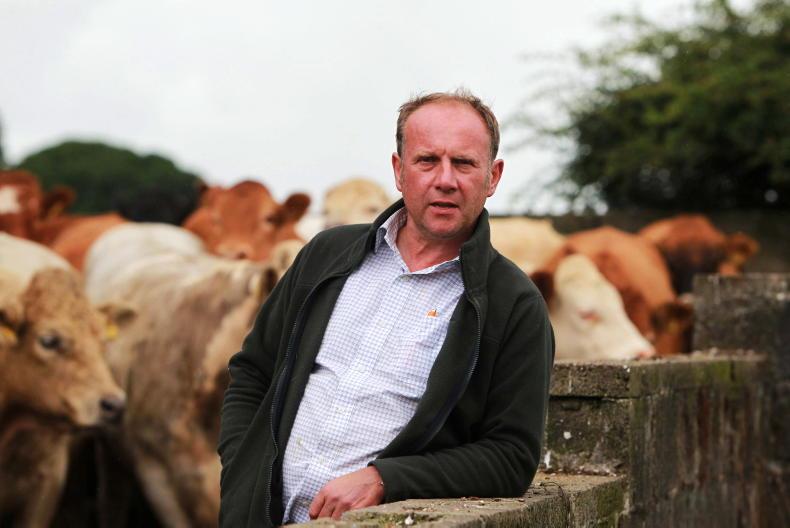
Martin Ennis, Naul, Co Dublin
Martin was applying nitrogen to his winter wheat on Tuesday when we chatted to him. Liquid nitrogen is used across the farm, with the exception of a few fields far from the yard which receive CAN.
This was the main split of nitrogen on the winter wheat. Winter barley has received all its nitrogen and Martin made big savings on his early-sown oilseed rape crops this year. Having measured the Green Area Index, using his phone, he was able to cut back to 70 units on a significant amount of the crop, while some did have to receive twice this amount.
There’s a lot of work to be done. The wheat, which Martin says has potential, is due its T0 fungicide and was being walked on Tuesday.
Some winter wheat also needs a herbicide where it did not receive a pre-emergence application.
Last week the winter barley was sprayed with K2, trace elements and Variano fungicide. It will need another growth regulator next week.
The oilseed rape is very forward and is all in flower. It received tebuconazole and prothioconazole two weeks ago. The tebuconazole has some growth regulator properties.
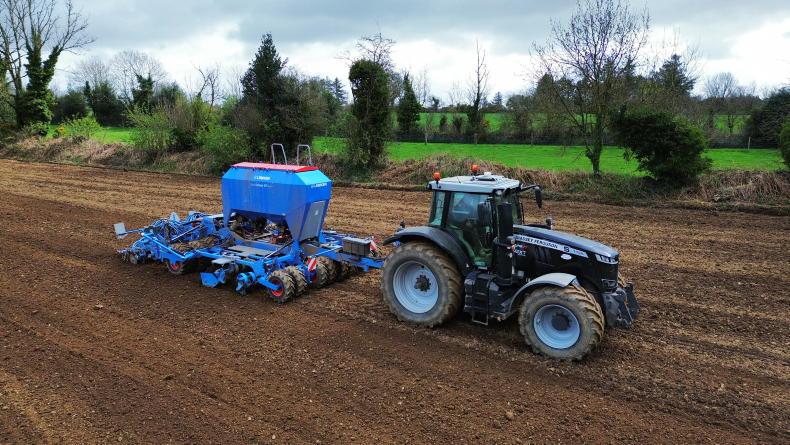
Half of the spring beans were planted last week. Ground was ripped and drilled with a one-pass. The other half will hopefully be sown this week. Some of the ground was ploughed in January and had to be cultivated to try and dry it out. A pre-emergence herbicide will be applied to the beans, but the beans sown last week are unlikely to be rolled ahead of this application. The beans had struck this week.
Spring barley will be the next job. Ploughing was finished last Friday for the crop, but the beans are the priority to get planted and spring barley will follow.
Christopher Gill Caledon Estate, Co Tyrone
Christopher was happy to see a fine day on Tuesday of this week and was out doing some digger work. He has separated solids from digestate to spread on ground ahead of maize and he was planning on spreading that this week. He might not get to plough it for a few more days. Land is marginal.
There is some dry ground around that will be worked earlier, but it is still damp on Christopher’s farm. The maize is for himself.
Christopher also has winter barley, rye and wheat. It has been hard to get fieldwork done. He got slurry and fertiliser onto silage ground last week. The winter cereals have received two applications of urea. The winter wheat and barley will be sprayed in the coming days with growth regulator and fungicide.
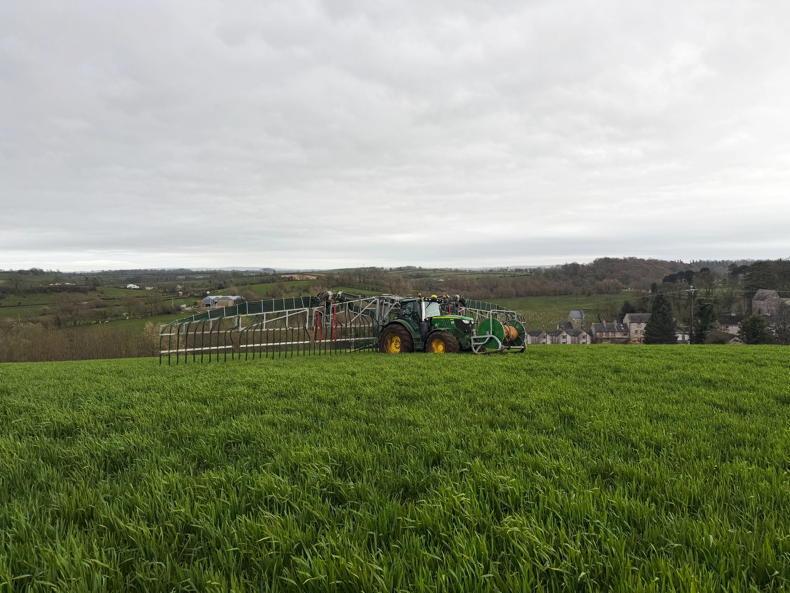
Christopher Gill spreading digestate with a 24m dribble bar.
The winter rye and barley received 2,500 gallons of digestate with a 24m dribble bar on an umbilical system. This works well he says and apart from an odd time rolling up the pipe the dribble bar stays in the tramlines. Ideally Christopher would like to travel twice with digestate on winter cereals, but he needs a dry February to do this. He would like to go little and often with the digestate. He is a fan of digestate or pig and cattle slurry and really sees a difference in crops which receive organic manures.
Christopher has been growing rye for 10 years and finds it is easy to maintain and is bulky for the anaerobic digester plant on the farm.
Some of the winter wheat is a bit backwards and will receive more urea in the coming days. The winter oilseed rape is about 30% flowered and is not far away from mid-flowering. It received boron and Caryx and Trinity for growth regulation and disease control.
Brian Crowley, Ballycotton, Co Cork
Brian was preparing to sow spring barley on Tuesday after a shower had delayed kick-off. He has Laureate and SY Amity malting barley. He had less than one-quarter of spring barley in.
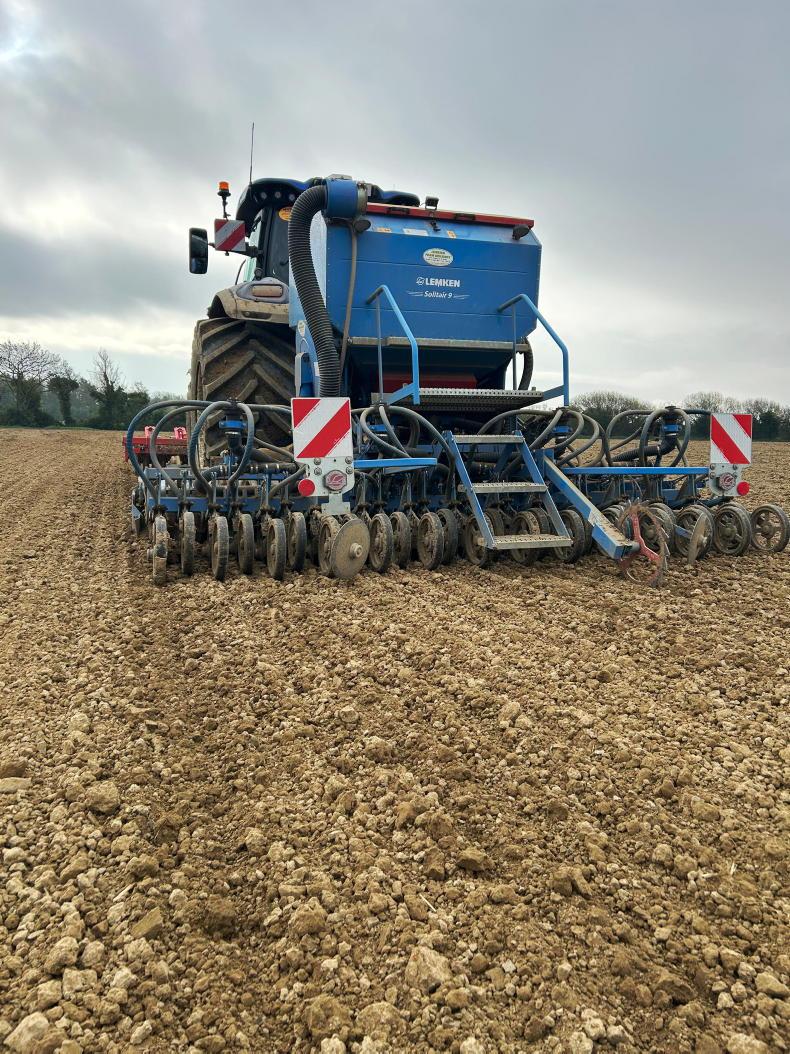
He operates a reduced-tillage system so is waiting for conditions to be right. He uses a tine grubber ahead of the one-pass drill. Compound fertiliser is applied to the seedbed ahead of the drill.
Brian is glad to be working. He would like to have more done in the fields, but the weather hasn’t allowed for it. It has been hard to get out into fields.
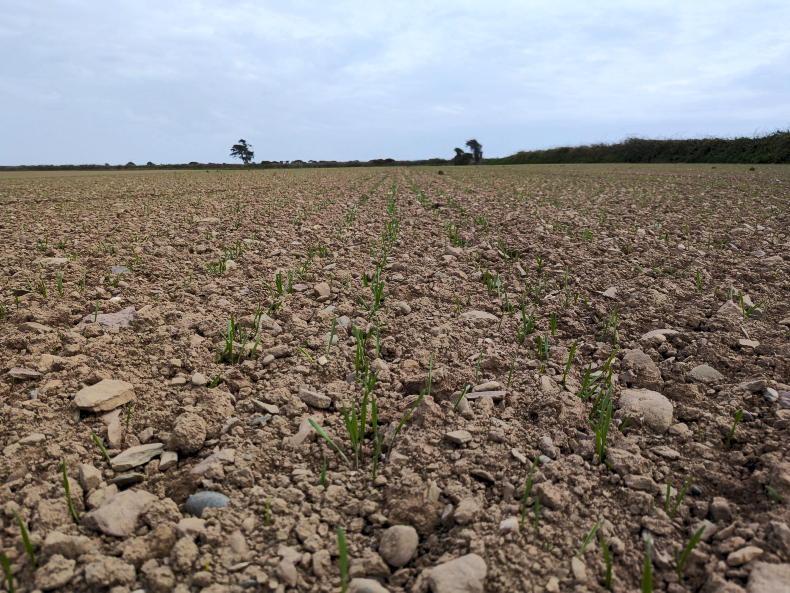
Brian Crowley's Mowgli spring wheat emerging in east Cork.
There is a lot of work to be done and it looks like the forecast is improving so he is positive about getting through that work.
He has all his beans and spring wheat planted. The beans were planted on 9 and 10 March. They are Lynx for seed and were sown at 200kg/ha. Some are sprayed, while Brian is waiting on some moisture to spray the remainder.
The winter barley has received a clean-up herbicide, a fungicide and CeCeCe as a growth regulator. It is due another growth regulator and fungicide shortly. Nitrogen application is finished. He has two seed crops of winter barley – Littoral and KWS Tardis.
The winter cereals have been receiving liquid nitrogen and Brian is happy with it. It has allowed him apply at times he may not with granular fertiliser.
However, Brian says it does put pressure on the sprayer at this time of the year when there is so much spraying and nitrogen application to be done.
Brian has Champion winter wheat and it is up to date with sprays and fertiliser. It may not receive a T0, but will be watched closely.
Martin Ennis, Naul, Co Dublin
Martin was applying nitrogen to his winter wheat on Tuesday when we chatted to him. Liquid nitrogen is used across the farm, with the exception of a few fields far from the yard which receive CAN.
This was the main split of nitrogen on the winter wheat. Winter barley has received all its nitrogen and Martin made big savings on his early-sown oilseed rape crops this year. Having measured the Green Area Index, using his phone, he was able to cut back to 70 units on a significant amount of the crop, while some did have to receive twice this amount.
There’s a lot of work to be done. The wheat, which Martin says has potential, is due its T0 fungicide and was being walked on Tuesday.
Some winter wheat also needs a herbicide where it did not receive a pre-emergence application.
Last week the winter barley was sprayed with K2, trace elements and Variano fungicide. It will need another growth regulator next week.
The oilseed rape is very forward and is all in flower. It received tebuconazole and prothioconazole two weeks ago. The tebuconazole has some growth regulator properties.
Half of the spring beans were planted last week. Ground was ripped and drilled with a one-pass. The other half will hopefully be sown this week. Some of the ground was ploughed in January and had to be cultivated to try and dry it out. A pre-emergence herbicide will be applied to the beans, but the beans sown last week are unlikely to be rolled ahead of this application. The beans had struck this week.
Spring barley will be the next job. Ploughing was finished last Friday for the crop, but the beans are the priority to get planted and spring barley will follow.
Christopher Gill Caledon Estate, Co Tyrone
Christopher was happy to see a fine day on Tuesday of this week and was out doing some digger work. He has separated solids from digestate to spread on ground ahead of maize and he was planning on spreading that this week. He might not get to plough it for a few more days. Land is marginal.
There is some dry ground around that will be worked earlier, but it is still damp on Christopher’s farm. The maize is for himself.
Christopher also has winter barley, rye and wheat. It has been hard to get fieldwork done. He got slurry and fertiliser onto silage ground last week. The winter cereals have received two applications of urea. The winter wheat and barley will be sprayed in the coming days with growth regulator and fungicide.
Christopher Gill spreading digestate with a 24m dribble bar.
The winter rye and barley received 2,500 gallons of digestate with a 24m dribble bar on an umbilical system. This works well he says and apart from an odd time rolling up the pipe the dribble bar stays in the tramlines. Ideally Christopher would like to travel twice with digestate on winter cereals, but he needs a dry February to do this. He would like to go little and often with the digestate. He is a fan of digestate or pig and cattle slurry and really sees a difference in crops which receive organic manures.
Christopher has been growing rye for 10 years and finds it is easy to maintain and is bulky for the anaerobic digester plant on the farm.
Some of the winter wheat is a bit backwards and will receive more urea in the coming days. The winter oilseed rape is about 30% flowered and is not far away from mid-flowering. It received boron and Caryx and Trinity for growth regulation and disease control.
Brian Crowley, Ballycotton, Co Cork
Brian was preparing to sow spring barley on Tuesday after a shower had delayed kick-off. He has Laureate and SY Amity malting barley. He had less than one-quarter of spring barley in.
He operates a reduced-tillage system so is waiting for conditions to be right. He uses a tine grubber ahead of the one-pass drill. Compound fertiliser is applied to the seedbed ahead of the drill.
Brian is glad to be working. He would like to have more done in the fields, but the weather hasn’t allowed for it. It has been hard to get out into fields.
Brian Crowley's Mowgli spring wheat emerging in east Cork.
There is a lot of work to be done and it looks like the forecast is improving so he is positive about getting through that work.
He has all his beans and spring wheat planted. The beans were planted on 9 and 10 March. They are Lynx for seed and were sown at 200kg/ha. Some are sprayed, while Brian is waiting on some moisture to spray the remainder.
The winter barley has received a clean-up herbicide, a fungicide and CeCeCe as a growth regulator. It is due another growth regulator and fungicide shortly. Nitrogen application is finished. He has two seed crops of winter barley – Littoral and KWS Tardis.
The winter cereals have been receiving liquid nitrogen and Brian is happy with it. It has allowed him apply at times he may not with granular fertiliser.
However, Brian says it does put pressure on the sprayer at this time of the year when there is so much spraying and nitrogen application to be done.
Brian has Champion winter wheat and it is up to date with sprays and fertiliser. It may not receive a T0, but will be watched closely.






SHARING OPTIONS