We are hearing more talk locally about collaborative farming to reduce costs, share labour and handle succession issues. Some neighbours are considering partnerships as well as share farming, but there seems to be a lot of confusion about what all of these terms mean.
We are concerned about getting the structure wrong and unintentionally creating tax, legal or Department of Agriculture problems down the line. How do collaborative farming arrangements really work in practice? What is the difference between a partnership and shared farming? Why does choosing the correct structure matter so much for our farm?
ANSWER: Collaborative farming has become a common topic of conversation across Irish agriculture in recent years. Rising costs, labour shortages, pressure on margins and uncertainty around succession are forcing many farmers to rethink how they operate.
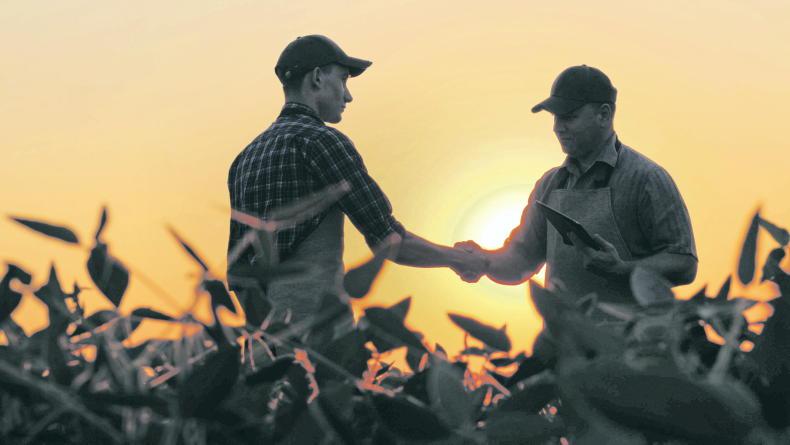
At its simplest, collaborative farming means two or more farmers coming together to pool resources such as land, labour, stock or machinery to farm more efficiently.
While the idea itself is straightforward, the structure chosen to deliver it is anything but. The phrase ‘collaborative farming’ is often used loosely, but in practice it can cover very different legal and tax arrangements. Getting this wrong can have serious and lasting consequences.
Most important is to focus on the relationship between the parties entering the collaborative farming arrangement. Ensuring you are aligned on your goals and desired outcomes will make the process much smoother. Once you are happy that this is the case, bringing on board your accountant and agri advisor will be key in identifying which structure is best for you.
Partnership vs share farming
A farm partnership exists where two or more farmers pool their resources and carry on the business of farming together with a view to making profits. In a partnership, income and expenses belong to the partnership, not the individuals, and profits are divided according to an agreed ratio.
Stock and machinery contributed by the partners generally become partnership assets, even though each partner may be ‘owed’ their original value through their capital account.
Share farming, by contrast, operates very differently. In a genuine share farming arrangement, each farmer remains a separate business. They share gross output, not profits, and each party pays their own costs. Each farmer calculates their own profit independently and takes their own commercial risk.
This distinction may sound subtle, but it is critical. In practice, many arrangements described as share farming are partnerships once you look at how money flows, who owns the assets and how decisions are made.
Each farmer calculates their own profit independently and takes their own commercial risk
Revenue’s view
Revenue does not rely on what farmers call an arrangement. Instead, it looks at how it operates. For an arrangement to qualify as share farming in Revenue’s eyes, several key conditions must apply.
Each farmer must be free to sell their share of produce independently. Each must be responsible for their own costs of production. Each calculates their own profits. Crucially, both parties must be equal risk-takers. There can be no guaranteed income for either side and no master–servant relationship.
There should also be no rent paid for land, no wages paid for labour and no contracting charges for machinery. If any of these elements are present, the arrangement may instead be viewed as a partnership, a lease or even an employment relationship.
Why getting it wrong is risky
Misclassifying a collaborative farming arrangement can trigger serious tax, legal and Department of Agriculture issues. A common problem arises where farmers believe they are share farming, but the arrangement operates as a partnership. In these cases, assets such as stock and machinery may legally belong to the partnership rather than the individuals.
If the arrangement breaks down, this can lead to unintended claims over assets and costly disputes. Guaranteed income can also cause Revenue to reclassify the arrangement as a lease or disguised employment, risking the loss of valuable tax reliefs.
The key is to work with advisors to choose the structure best suited to your farm.
Pick the right structure
There is no single best collaborative model. The right structure depends entirely on what each party wants from the arrangement.
Some farmers want full integration and shared decision-making, which points towards a partnership.
Others want to remain fully independent while sharing output, which may suit share farming.
Before anything is signed, all parties should be clear on two questions: what they want to achieve, and how much risk they are prepared to take. Only then can advisers structure the arrangement correctly.
Collaborative farming can deliver real benefits, but only if it is built on clarity, honesty and proper documentation. Getting the structure right at the start is far easier – and cheaper – than trying to fix it after a problem arises.
Philip O’Connor is head of farm support with ifac, the professional services firm for farming, food and agribusiness.

Philip OConnor, Head of Farm Support ifac.
We are hearing more talk locally about collaborative farming to reduce costs, share labour and handle succession issues. Some neighbours are considering partnerships as well as share farming, but there seems to be a lot of confusion about what all of these terms mean.
We are concerned about getting the structure wrong and unintentionally creating tax, legal or Department of Agriculture problems down the line. How do collaborative farming arrangements really work in practice? What is the difference between a partnership and shared farming? Why does choosing the correct structure matter so much for our farm?
ANSWER: Collaborative farming has become a common topic of conversation across Irish agriculture in recent years. Rising costs, labour shortages, pressure on margins and uncertainty around succession are forcing many farmers to rethink how they operate.
At its simplest, collaborative farming means two or more farmers coming together to pool resources such as land, labour, stock or machinery to farm more efficiently.
While the idea itself is straightforward, the structure chosen to deliver it is anything but. The phrase ‘collaborative farming’ is often used loosely, but in practice it can cover very different legal and tax arrangements. Getting this wrong can have serious and lasting consequences.
Most important is to focus on the relationship between the parties entering the collaborative farming arrangement. Ensuring you are aligned on your goals and desired outcomes will make the process much smoother. Once you are happy that this is the case, bringing on board your accountant and agri advisor will be key in identifying which structure is best for you.
Partnership vs share farming
A farm partnership exists where two or more farmers pool their resources and carry on the business of farming together with a view to making profits. In a partnership, income and expenses belong to the partnership, not the individuals, and profits are divided according to an agreed ratio.
Stock and machinery contributed by the partners generally become partnership assets, even though each partner may be ‘owed’ their original value through their capital account.
Share farming, by contrast, operates very differently. In a genuine share farming arrangement, each farmer remains a separate business. They share gross output, not profits, and each party pays their own costs. Each farmer calculates their own profit independently and takes their own commercial risk.
This distinction may sound subtle, but it is critical. In practice, many arrangements described as share farming are partnerships once you look at how money flows, who owns the assets and how decisions are made.
Each farmer calculates their own profit independently and takes their own commercial risk
Revenue’s view
Revenue does not rely on what farmers call an arrangement. Instead, it looks at how it operates. For an arrangement to qualify as share farming in Revenue’s eyes, several key conditions must apply.
Each farmer must be free to sell their share of produce independently. Each must be responsible for their own costs of production. Each calculates their own profits. Crucially, both parties must be equal risk-takers. There can be no guaranteed income for either side and no master–servant relationship.
There should also be no rent paid for land, no wages paid for labour and no contracting charges for machinery. If any of these elements are present, the arrangement may instead be viewed as a partnership, a lease or even an employment relationship.
Why getting it wrong is risky
Misclassifying a collaborative farming arrangement can trigger serious tax, legal and Department of Agriculture issues. A common problem arises where farmers believe they are share farming, but the arrangement operates as a partnership. In these cases, assets such as stock and machinery may legally belong to the partnership rather than the individuals.
If the arrangement breaks down, this can lead to unintended claims over assets and costly disputes. Guaranteed income can also cause Revenue to reclassify the arrangement as a lease or disguised employment, risking the loss of valuable tax reliefs.
The key is to work with advisors to choose the structure best suited to your farm.
Pick the right structure
There is no single best collaborative model. The right structure depends entirely on what each party wants from the arrangement.
Some farmers want full integration and shared decision-making, which points towards a partnership.
Others want to remain fully independent while sharing output, which may suit share farming.
Before anything is signed, all parties should be clear on two questions: what they want to achieve, and how much risk they are prepared to take. Only then can advisers structure the arrangement correctly.
Collaborative farming can deliver real benefits, but only if it is built on clarity, honesty and proper documentation. Getting the structure right at the start is far easier – and cheaper – than trying to fix it after a problem arises.
Philip O’Connor is head of farm support with ifac, the professional services firm for farming, food and agribusiness.
Philip OConnor, Head of Farm Support ifac.







SHARING OPTIONS