


Cause
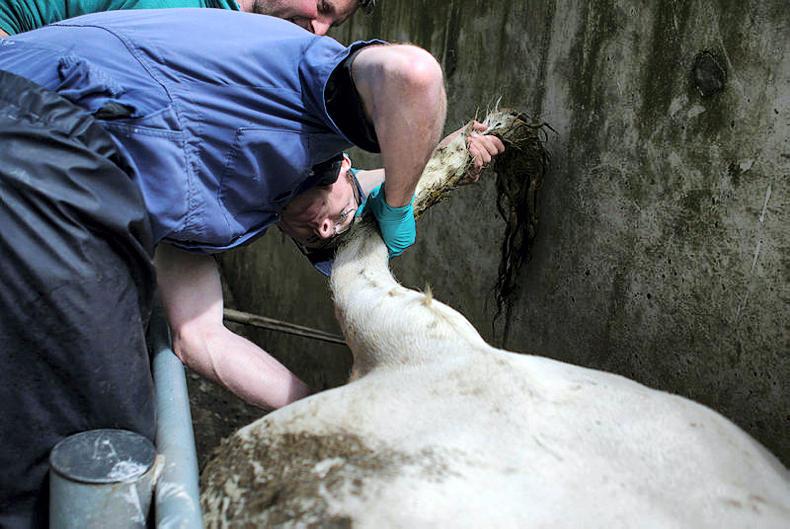
It occurs when tissue damage is done to the birth canal after a difficult calving/lambing. It is caused by Clostridium septicum but there can be involvement from other clostridia also, including C chauvoei; C sordelli and C novyi. These bacteria generally live in the soil but can contaminate wounds they come in contact with.
Clostridial bacteria form robust spores so that they can survive tough environmental conditions such as cold which would kill off other bacteria.
Symptoms
It presents as a rapidly spreading oedema (fluid under the skin), sometimes with emphysema (gas bubbles under the skin) around the site of the wound. The oedema fluid is blood-tinged and death occurs rapidly.
Treatment
This condition most commonly manifests as sudden death, and there is generally no treatment. In animals which are found before death, antibiotic treatment is usually useless. Like all clostridial diseases, prompt administration of a clostridial vaccine to comrades must be done as soon as possible. Your own veterinary surgeon may recommend the administration of prophylactic antibiotics to comrades in the herd/flock.
Prevention and control
Prevention involves a clostridial vaccination on an annual basis. These vaccines require a two-injection course separated by an interval of four to six weeks. It is important to take note the length of protection that the vaccine offers so that booster vaccines are administered at the correct interval.
As there are a wide variety of clostridial diseases out there, a multivalent vaccine which covers several types of clostridial disease is the preferred choice.
If the vaccine is not used immediately after purchase, it should be stored in a fridge. Any vaccine which has been opened but not used by the end of the day of opening should be discarded.





SHARING OPTIONS