With just three weeks to go on most farms before breeding kicks off, managing heifers correctly over this period can impact the future of those animals in the herd.
Obviously, if one’s relying on this time to make or break heifers, they’re already in trouble. That would be the equivalent to cramming the night before an exam, when there were two years prior to prepare.
Now it’s all about getting the finer details right.
The run-up to breeding is about ensuring animals are on target weight, cycling regularly and then making a plan for those who aren’t.
Weight
The biggest factor in determining if heifers have a chance of going in-calf is whether or not they are on target weight.
Speaking on a breeding webinar, Teagasc’s Stephen Butler outlined the weight heifers should be at this stage.
“The only weight that matters now is the weight at breeding. Typically, we talk about 60% of mature body weight at breeding,” he says.
For a mature cow weighing 570kg, at 60%, that equates to a heifer weighing 342kg at breeding, as an example.
“If the heifers are not at that weight, it has implications on the date she hit puberty, how many cycles she’s had, and the likelihood of conception when the breeding season starts,” Stephen continued.
For heifers that are not at target weight, there are a couple of options. The first port of call, if they’re not already at grass is to get them out, according to Doreen Corridan, CEO of NCBC, who was also speaking on the webinar.
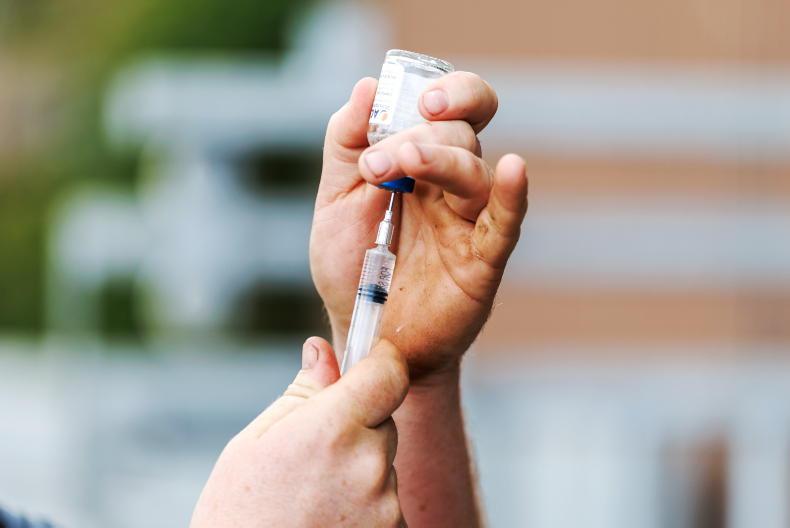
When following a synchronisation protocol, it's crucial each step is done correctly. Use a 1.5-inch needle when injecting GnRH. \ Philip Doyle
Good-quality grass at this time of the year could see heifers put on over a kilo a day in weight gain and so it should be utilised.
“Where heifers are below weight, don’t delay breeding. Weigh them now, get them out and they’ll make it up during the summer and into the autumn. However, it’s probably not worth using a sexed straw on those heifers,” Doreen says.
Pre-breeding is another tool that can be used to help identify which heifers are not cycling and those who are.
Putting scratch cards on this week is an easy thing to do and within a week the farmer will have a fair idea if the heifers are cycling, according to Stephen Butler.
Each week, roughly a third of the heifers should come into heat. If this is not the case and one-third of the scratch cards are not marked, it may be worth doing a scan.
Synchronisation programmes
Synchronisation reduces labour at breeding time, as well as tightening the calving pattern into the space of a couple of days.
The programmes have become particularly prominent in heifer breeding. More often than not, heifers tend to be away on an out-farm, making it more difficult and time consuming to observe them, detect heats and AI.
The advantage of synchronisation is that the workload can be compacted into a number of days, versus weeks of heat detection and AI’ing.
There are essentially three options when it comes to heifers. Natural AI, where heifers are observed and bred as they come on heat naturally.
This means scratch cards or tail paint and checking those heifers at least two to three times a day, for a minimum of three weeks.
The second option is breeding heifers naturally for the first week, before giving a prostaglandin (PG) injection to those heifers who have not yet been mated, seven days after the mating start date. The majority of heifers will then show a heat within two to five days after the injection.
A small number of heifers may not show heat and will need a second shot of PG, 11 days after the first injection.
Using option two, most heifers will be inseminated by day 10 of the protocol. It’s cheaper than fixed-time AI and less intensive than natural heat detection and AI.
The third option is the fixed time AI programme. This protocol is just eight days from start to finish and will see each heifer inseminated on day one of breeding. A progesterone device (CIDR) is placed in the heifers. This is followed by a series of timed injections and the heifers inseminated on day eight of a detailed programme.
This process involves handling heifers four times, but can be timed so that the mating date occurs before the mating start date of the main herd, taking the pressure off.
It’s also a big advantage when using sexed semen as the timing of insemination can be done more accurately.
Any heifers that repeat, will be repeating between days 18-24 after the insemination date. The second, smaller wave at that stage can either be AI’d again or mated with a stock bull.
When using a stock bull, make sure there is a team of bulls big enough to manage the wave of heifers coming together over a couple of days.
Problems
The problem with a fixed time AI programme is that there will be a significant number of animals calving together at the start of calving. Farms need to be equipped and prepared for this.
There is debate over the conception rates to a fixed-timed programme but according to Stephen Butler, if heifers are on target weight, cycling regularly and the protocol of injections is followed to the letter of the law, conception rates should be close to natural levels.
Speaking on fixed-time programmes, Doreen Corridan explained that a fixed time programme gives farmers two chances to get their heifers in-calf in the first 21 days of breeding. The first insemination on day one and the repeats three weeks later.
Doreen also discussed some of the mistakes they see when using such programmes.
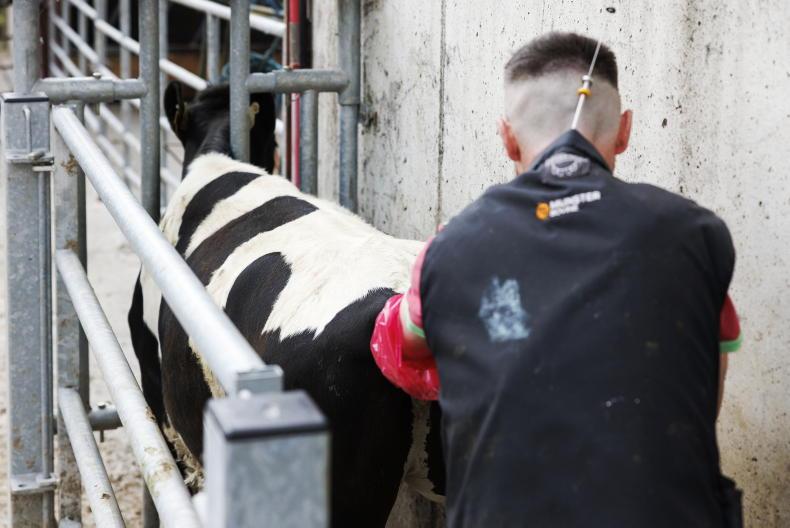
The AI technician should be able to determine whether or not a heifer is on. If there's any doubts don't use a sexed semen straw. \ Donal O'Leary
“We see too many farmers that don’t have enough help when putting in CIDRs or at AI’ing time. Often the environment isn’t clean enough either, which is vital when using the progesterone devices.
“Use a 1.5-inch needle to make sure the GnRH is getting into the system and follow the protocol step by step. The AI man will know if they’re on or not, so ask them. Don’t AI them or use a sexed straw if they’re not on,” Doreen said.
In practice
Also speaking on the webinar, was Kieran Condon, a dairy farmer from Kells, Co Kilkenny. Kieran is milking 130 cows in partnership with his parents in a spring-calving system. The herd has had a 90% six-week calving rate for the last five years, and places a big emphasis on breeding time.
In 2025, the Condon’s ran an eight-week breeding season, with a 14% empty rate.
“The farm is dry, so we calve a bit earlier and like to have a compact calving pattern in order to get cows out to grass early. In 2026, we started calving 20 January and finished by 17 March. We use 100% AI. There are collars on the cows and heifers since 2020 and that has been a big help. We have 100% confidence in them,” Kieran said.
The collars can identify any cows with problems after calving and those who don’t come cycling. The Condons will scan any of those cows with issues, 10 days before breeding to see if there are issues. Each year there are 35 heifers for breeding.
The heifers had an 85% conception rate to first service with sexed semen last year. Kieran puts the success at breeding down to good heifer rearing.
“It starts back at the colostrum stage. The calves get plenty of colostrum and eight litres of milk until eight weeks of age. They go on four-litres once-a-day feeding from there, and are weaned when they are eating 1.5kg of meal,” Kieran says.
“They get 1.5kg each day until at least September. They are weighed every six weeks and weigh 330kg to 340kg at the end of February, when they are turned out to grass.”
There are collars on all of the Condons’ heifers and they are served naturally as they come on heat.
With just three weeks to go on most farms before breeding kicks off, managing heifers correctly over this period can impact the future of those animals in the herd.
Obviously, if one’s relying on this time to make or break heifers, they’re already in trouble. That would be the equivalent to cramming the night before an exam, when there were two years prior to prepare.
Now it’s all about getting the finer details right.
The run-up to breeding is about ensuring animals are on target weight, cycling regularly and then making a plan for those who aren’t.
Weight
The biggest factor in determining if heifers have a chance of going in-calf is whether or not they are on target weight.
Speaking on a breeding webinar, Teagasc’s Stephen Butler outlined the weight heifers should be at this stage.
“The only weight that matters now is the weight at breeding. Typically, we talk about 60% of mature body weight at breeding,” he says.
For a mature cow weighing 570kg, at 60%, that equates to a heifer weighing 342kg at breeding, as an example.
“If the heifers are not at that weight, it has implications on the date she hit puberty, how many cycles she’s had, and the likelihood of conception when the breeding season starts,” Stephen continued.
For heifers that are not at target weight, there are a couple of options. The first port of call, if they’re not already at grass is to get them out, according to Doreen Corridan, CEO of NCBC, who was also speaking on the webinar.
When following a synchronisation protocol, it's crucial each step is done correctly. Use a 1.5-inch needle when injecting GnRH. \ Philip Doyle
Good-quality grass at this time of the year could see heifers put on over a kilo a day in weight gain and so it should be utilised.
“Where heifers are below weight, don’t delay breeding. Weigh them now, get them out and they’ll make it up during the summer and into the autumn. However, it’s probably not worth using a sexed straw on those heifers,” Doreen says.
Pre-breeding is another tool that can be used to help identify which heifers are not cycling and those who are.
Putting scratch cards on this week is an easy thing to do and within a week the farmer will have a fair idea if the heifers are cycling, according to Stephen Butler.
Each week, roughly a third of the heifers should come into heat. If this is not the case and one-third of the scratch cards are not marked, it may be worth doing a scan.
Synchronisation programmes
Synchronisation reduces labour at breeding time, as well as tightening the calving pattern into the space of a couple of days.
The programmes have become particularly prominent in heifer breeding. More often than not, heifers tend to be away on an out-farm, making it more difficult and time consuming to observe them, detect heats and AI.
The advantage of synchronisation is that the workload can be compacted into a number of days, versus weeks of heat detection and AI’ing.
There are essentially three options when it comes to heifers. Natural AI, where heifers are observed and bred as they come on heat naturally.
This means scratch cards or tail paint and checking those heifers at least two to three times a day, for a minimum of three weeks.
The second option is breeding heifers naturally for the first week, before giving a prostaglandin (PG) injection to those heifers who have not yet been mated, seven days after the mating start date. The majority of heifers will then show a heat within two to five days after the injection.
A small number of heifers may not show heat and will need a second shot of PG, 11 days after the first injection.
Using option two, most heifers will be inseminated by day 10 of the protocol. It’s cheaper than fixed-time AI and less intensive than natural heat detection and AI.
The third option is the fixed time AI programme. This protocol is just eight days from start to finish and will see each heifer inseminated on day one of breeding. A progesterone device (CIDR) is placed in the heifers. This is followed by a series of timed injections and the heifers inseminated on day eight of a detailed programme.
This process involves handling heifers four times, but can be timed so that the mating date occurs before the mating start date of the main herd, taking the pressure off.
It’s also a big advantage when using sexed semen as the timing of insemination can be done more accurately.
Any heifers that repeat, will be repeating between days 18-24 after the insemination date. The second, smaller wave at that stage can either be AI’d again or mated with a stock bull.
When using a stock bull, make sure there is a team of bulls big enough to manage the wave of heifers coming together over a couple of days.
Problems
The problem with a fixed time AI programme is that there will be a significant number of animals calving together at the start of calving. Farms need to be equipped and prepared for this.
There is debate over the conception rates to a fixed-timed programme but according to Stephen Butler, if heifers are on target weight, cycling regularly and the protocol of injections is followed to the letter of the law, conception rates should be close to natural levels.
Speaking on fixed-time programmes, Doreen Corridan explained that a fixed time programme gives farmers two chances to get their heifers in-calf in the first 21 days of breeding. The first insemination on day one and the repeats three weeks later.
Doreen also discussed some of the mistakes they see when using such programmes.
The AI technician should be able to determine whether or not a heifer is on. If there's any doubts don't use a sexed semen straw. \ Donal O'Leary
“We see too many farmers that don’t have enough help when putting in CIDRs or at AI’ing time. Often the environment isn’t clean enough either, which is vital when using the progesterone devices.
“Use a 1.5-inch needle to make sure the GnRH is getting into the system and follow the protocol step by step. The AI man will know if they’re on or not, so ask them. Don’t AI them or use a sexed straw if they’re not on,” Doreen said.
In practice
Also speaking on the webinar, was Kieran Condon, a dairy farmer from Kells, Co Kilkenny. Kieran is milking 130 cows in partnership with his parents in a spring-calving system. The herd has had a 90% six-week calving rate for the last five years, and places a big emphasis on breeding time.
In 2025, the Condon’s ran an eight-week breeding season, with a 14% empty rate.
“The farm is dry, so we calve a bit earlier and like to have a compact calving pattern in order to get cows out to grass early. In 2026, we started calving 20 January and finished by 17 March. We use 100% AI. There are collars on the cows and heifers since 2020 and that has been a big help. We have 100% confidence in them,” Kieran said.
The collars can identify any cows with problems after calving and those who don’t come cycling. The Condons will scan any of those cows with issues, 10 days before breeding to see if there are issues. Each year there are 35 heifers for breeding.
The heifers had an 85% conception rate to first service with sexed semen last year. Kieran puts the success at breeding down to good heifer rearing.
“It starts back at the colostrum stage. The calves get plenty of colostrum and eight litres of milk until eight weeks of age. They go on four-litres once-a-day feeding from there, and are weaned when they are eating 1.5kg of meal,” Kieran says.
“They get 1.5kg each day until at least September. They are weighed every six weeks and weigh 330kg to 340kg at the end of February, when they are turned out to grass.”
There are collars on all of the Condons’ heifers and they are served naturally as they come on heat.






SHARING OPTIONS