With lambing well under way or completed on sheep farms across the country, many farmers will have experienced the late night checks, some hard pulls and unavoidable losses.
Ireland is known for its top-class livestock breeding, with some of the best-conformed and highest-performing sheep in the world bred on these shores.
However, despite that strong breeding heritage, many sheep farmers will have assisted upwards of 20% of their flock to lamb this spring.
Some of these assisted lambings are likely down to peace of mind for the farmer, and some gentle assistance may only be required. Still, many ewes struggle to lamb due to their own genetics, that of their lambs, or their feeding.
Australian sheep farmers take an entirely different approach, with the level of assistance at lambing sitting well below 1%, if assistance is needed at all.
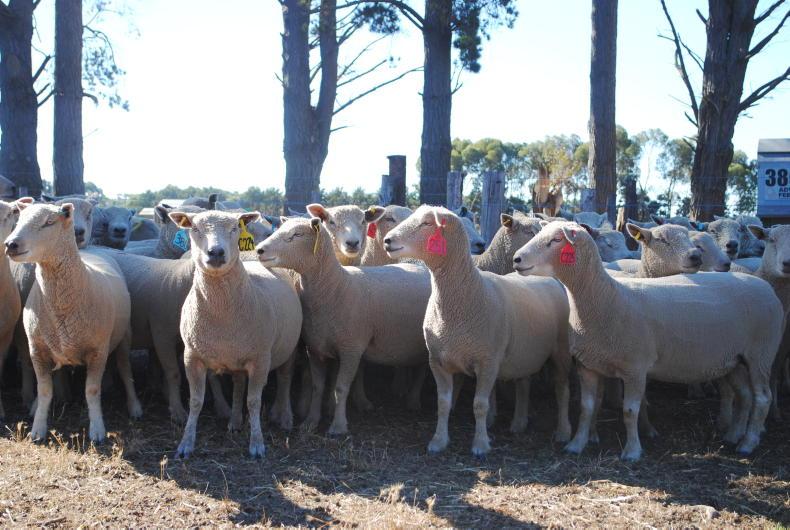
The Southdown ewes run by Ned Nagorcka are very similar to the Vendeen or Charolais seen in Irish flocks. \ Barry Murphy
How have they done this, and what could Irish sheep farmers learn from their approach? While the lack of a requirement to lamb ewes indoors and better weather helps significantly, simply put, a ewe that can’t lamb herself and get two lambs up and sucked, won’t survive on an Australian sheep farm.
Ned Nagorcka runs 1,000 ewes on his 245ha farm at Hawkesdale in southeast Victoria. The flock is made up of 350 pedigree Southdown ewes, 150 White Suffolks and 500 commercials, and last year he claims he didn’t lamb a single ewe.
“The best time to go on holiday is when they start lambing,” Nagorcka said. “I just don’t go near them, that’s honest.”
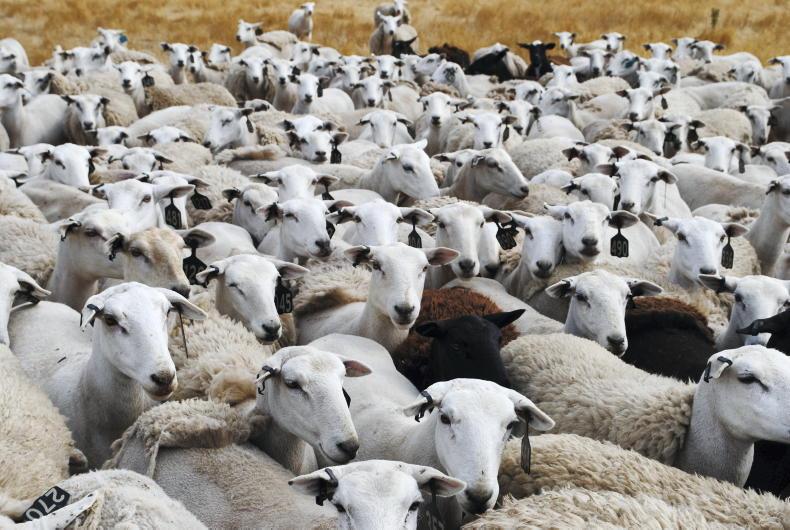
The low-maintenance shedding ewes bred by Matt Kelly. \ Barry Murphy
Nagorcka said disturbing heavily pregnant and lambing ewes, and ewes with young lambs, simply did more harm than good.
“You just don’t have the problems, the ewes are happier,” he said. “As long as you’ve got them set in a paddock with the right [grass] and all that, you can go away for six to eight weeks and then come back.”
Australian farmers gather their ewes and their lambs up at around six weeks post-lambing for what they call ‘marking’ – the process of counting, tagging, and ringing lambs.
Nagorcka said not checking lambing ewes may result in one or two ewe losses, for a particularly unfortunate ewe that was unable to lamb, or none at all.
However, he was adamant that he ends up with 10-15% more lambs at marking having not been around at lambing, compared to if he had.
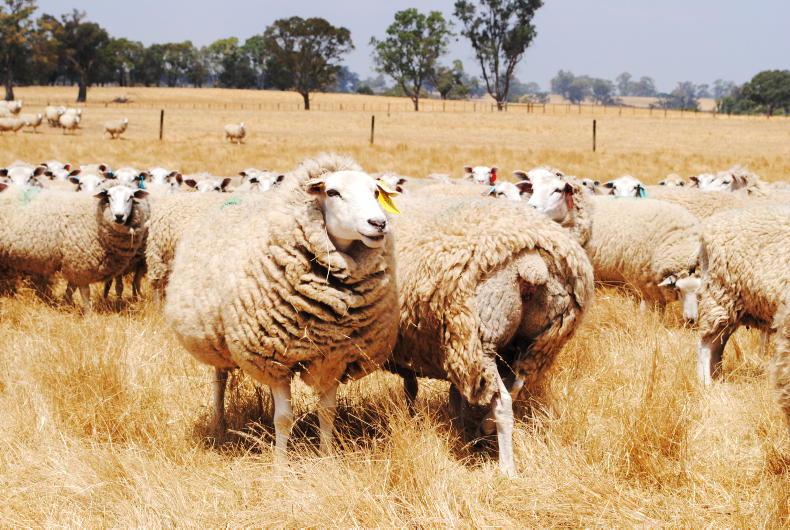
Paradoo Prime ewes run on the farm of Tim Leeming. \ Barry Murphy
“Going into the paddock upsets them, moves them off their lambing pads, and stresses them, especially if you have to chase one down,” he said.
By lambing pads, the Victorian farmer means the spot on which a ewe chooses to lamb.
He said if there is enough grass and shelter in the field, a ewe shouldn’t move from that ‘pad’ for 48 hours, and that’s all newborn lambs need to get them bonded and hardy enough.
It’s no accident that Nagorcka’s ewes lamb successfully this way as he has carefully selected for these desired traits.
Any ewe that was scanned for twins but only brings one lamb to marking is never retained in the pedigree flock, and instead gets a commercial tag.
Any ewe that comes to marking with no lambs gets culled immediately, with no stragglers.
His Southdowns and White Suffolks have arguably plenty of muscle and size, but they have been selected to be born with small heads, and to have ewes with a wide pelvis.
“It’s all about that functionality, that’s the most important thing,” Nagorcka said.
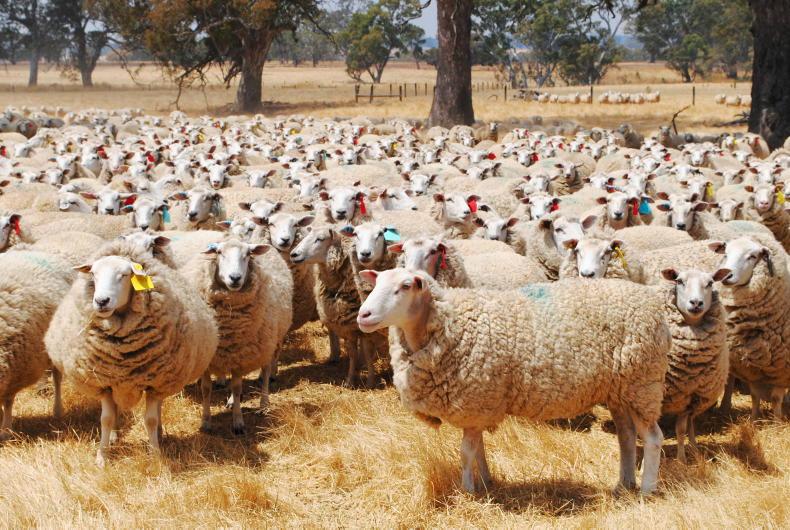
Paradoo Prime ewes run on the farm of Tim Leeming. \ Barry Murphy
He’s not the only farmer refusing to run ewes which require assistance at lambing.
‘Crunching the numbers’
Tim Leeming, Coojar, west Victoria, runs the Paradoo Prime self-replacing maternal composite sheep stud alongside his sheep consultancy business, Precision Lambing.A lambing expert who advises many of Australia’s top sheep producers, Leeming has spent the guts of 30 years “crunching the numbers” when it comes to lamb survival.
He runs 2,700 Paradoo Prime ewes on 480ha, turning off an average of 10 lambs to the hectare, and selling 250 rams privately each year.
He too is certain sheep farmers “absolutely” didn’t need to lamb ewes, and without doing so, he has consistently achieved a weaning rate of 165%, off a scan of 175-180%.
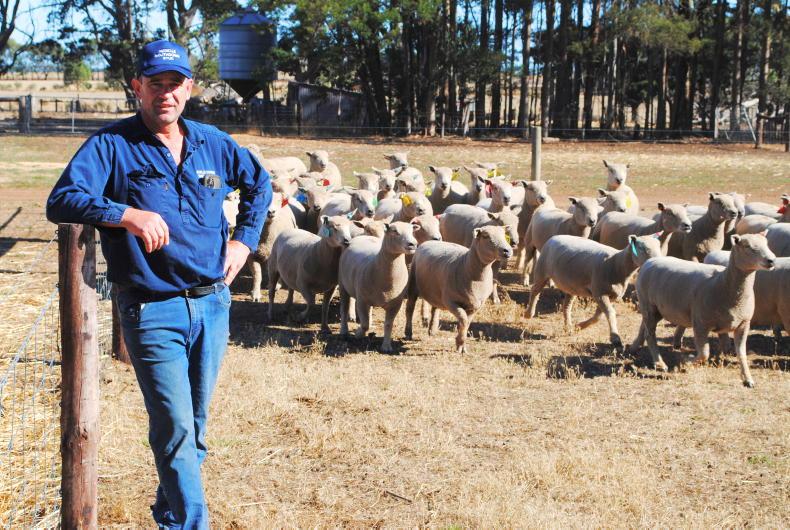
Ned Nagorcka runs 1000 Southdown, White Suffolk, and crossbred ewes at Hawkesdale in south-west Victoria. \ Barry Murphy
“Last year, I don’t think we pulled a lamb at all – none,” he said.
He said all he did during lambing was go through his lambing paddocks once a day, even with the triplets, and turn over the odd ewe that might get stuck on her back, not much more.The lambing paddocks are the biggest factor in lamb survival, he insisted, stating that ewes need multiple options when picking a place to lamb including big trees, plenty of hedgerows, and preferably, the paddock should be in a concave field or valley.
“If you’ve got nothing, you choose a really good lambing paddock,” he said.
“Shelter to my mind is number one.
“You can have a skinny ewe, no grass, and you can put her in a really nice protected paddock and she’s still going to have a relatively good lamb survival.
“You put a fat ewe with heaps of grass and you lamb her in the middle of [winter] and it’s coming in horizontal, 45km winds off the Antarctic, her lambs are going to die.”
Breeding strategy
An avoidance of extremities when breeding his sheep is another key aspect that delivers the results at lambing for Leeming.
“We don’t like using extremities and we like to try and keep a very balanced animal,” he said. “We want our clients to be able to go into our ram paddock, pick any one of our rams, put it out with their ewe lambs and not even worry about the birth weight.”
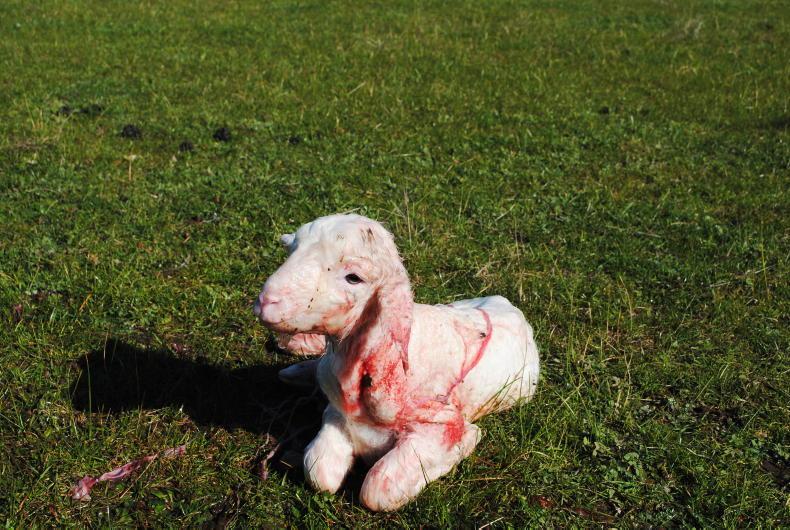
Lambs are born outdoors with little need for a farmer to ensure they get colostrum. \ Barry Murphy
To achieve this ease of lambing, he said he focused on his sheep’s shoulders and heads.
“It’s about looking at the structural things,” he said. “It’s low maintenance, easy care, and we are not pulling lambs.”
Matt Kelly, Croxton East, west Victoria, runs what he has coined as his ‘low footprint lamb’ shedding sheep stud and commercial flock on 100ha.
“The aim is to lamb down 1,000 ewes a year, and that’s a mix of mature ewes and ewe lambs,” he said.
He too does his best to not assist ewes at lambing, and any ewe that needs assistance gets culled.
“The aim is to breed sheep that don’t need humans to manage them,” he said.
Kelly has selected for high maternal traits for the past 20 years and one of the key things he’s pushed for is having a ewe that stands over her two lambs at birth and won’t be moved.
As he performance records the entire flock, all lambs must be tagged soon after birth, and he has bred his ewes to be “breathing down your neck when you’re going in with the tagger”.
“There’s no birthing problems, they’re exceptionally good mothers, they stand their ground with the foxes, that’s just deep in them,” he said.
He said none of this genetic selection – for ewes which lambed themselves and got their lambs up and going – happened without data. In Australia, the vast majority of sheep farmers have huge faith in performance data and many might buy a ram blind, based on their projected figures.
“If you don’t take a scientific approach, you’re just guessing,” Kelly said. “Every sheep breeder has got incredibly excited about some new ram that he’s found that has no data, great ambitions and dreams for that animal, used him for a couple of years and wished they never did.”
He said sometimes the smaller, younger ram, born and reared as a twin out of ewe lamb, might be far more productive than a fine big single ram lamb reared by a mature ewe.
“You’d cull the little twin every day but he could be $30-$40 a mating more valuable than the other big shiny looking lovely ram,” he said.
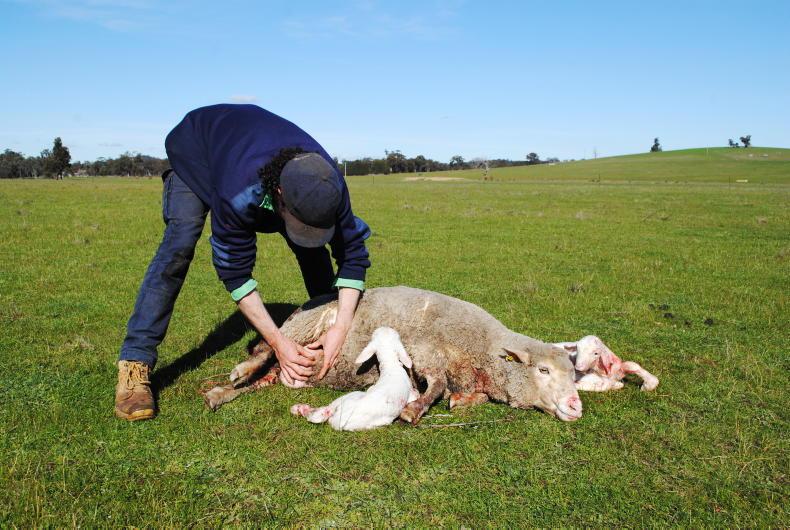
Lambing assistance is rarely required on Australian sheep farms. \ Barry Murphy
With lambing well under way or completed on sheep farms across the country, many farmers will have experienced the late night checks, some hard pulls and unavoidable losses.
Ireland is known for its top-class livestock breeding, with some of the best-conformed and highest-performing sheep in the world bred on these shores.
However, despite that strong breeding heritage, many sheep farmers will have assisted upwards of 20% of their flock to lamb this spring.
Some of these assisted lambings are likely down to peace of mind for the farmer, and some gentle assistance may only be required. Still, many ewes struggle to lamb due to their own genetics, that of their lambs, or their feeding.
Australian sheep farmers take an entirely different approach, with the level of assistance at lambing sitting well below 1%, if assistance is needed at all.
The Southdown ewes run by Ned Nagorcka are very similar to the Vendeen or Charolais seen in Irish flocks. \ Barry Murphy
How have they done this, and what could Irish sheep farmers learn from their approach? While the lack of a requirement to lamb ewes indoors and better weather helps significantly, simply put, a ewe that can’t lamb herself and get two lambs up and sucked, won’t survive on an Australian sheep farm.
Ned Nagorcka runs 1,000 ewes on his 245ha farm at Hawkesdale in southeast Victoria. The flock is made up of 350 pedigree Southdown ewes, 150 White Suffolks and 500 commercials, and last year he claims he didn’t lamb a single ewe.
“The best time to go on holiday is when they start lambing,” Nagorcka said. “I just don’t go near them, that’s honest.”
The low-maintenance shedding ewes bred by Matt Kelly. \ Barry Murphy
Nagorcka said disturbing heavily pregnant and lambing ewes, and ewes with young lambs, simply did more harm than good.
“You just don’t have the problems, the ewes are happier,” he said. “As long as you’ve got them set in a paddock with the right [grass] and all that, you can go away for six to eight weeks and then come back.”
Australian farmers gather their ewes and their lambs up at around six weeks post-lambing for what they call ‘marking’ – the process of counting, tagging, and ringing lambs.
Nagorcka said not checking lambing ewes may result in one or two ewe losses, for a particularly unfortunate ewe that was unable to lamb, or none at all.
However, he was adamant that he ends up with 10-15% more lambs at marking having not been around at lambing, compared to if he had.
Paradoo Prime ewes run on the farm of Tim Leeming. \ Barry Murphy
“Going into the paddock upsets them, moves them off their lambing pads, and stresses them, especially if you have to chase one down,” he said.
By lambing pads, the Victorian farmer means the spot on which a ewe chooses to lamb.
He said if there is enough grass and shelter in the field, a ewe shouldn’t move from that ‘pad’ for 48 hours, and that’s all newborn lambs need to get them bonded and hardy enough.
It’s no accident that Nagorcka’s ewes lamb successfully this way as he has carefully selected for these desired traits.
Any ewe that was scanned for twins but only brings one lamb to marking is never retained in the pedigree flock, and instead gets a commercial tag.
Any ewe that comes to marking with no lambs gets culled immediately, with no stragglers.
His Southdowns and White Suffolks have arguably plenty of muscle and size, but they have been selected to be born with small heads, and to have ewes with a wide pelvis.
“It’s all about that functionality, that’s the most important thing,” Nagorcka said.
Paradoo Prime ewes run on the farm of Tim Leeming. \ Barry Murphy
He’s not the only farmer refusing to run ewes which require assistance at lambing.
‘Crunching the numbers’
Tim Leeming, Coojar, west Victoria, runs the Paradoo Prime self-replacing maternal composite sheep stud alongside his sheep consultancy business, Precision Lambing.A lambing expert who advises many of Australia’s top sheep producers, Leeming has spent the guts of 30 years “crunching the numbers” when it comes to lamb survival.
He runs 2,700 Paradoo Prime ewes on 480ha, turning off an average of 10 lambs to the hectare, and selling 250 rams privately each year.
He too is certain sheep farmers “absolutely” didn’t need to lamb ewes, and without doing so, he has consistently achieved a weaning rate of 165%, off a scan of 175-180%.
Ned Nagorcka runs 1000 Southdown, White Suffolk, and crossbred ewes at Hawkesdale in south-west Victoria. \ Barry Murphy
“Last year, I don’t think we pulled a lamb at all – none,” he said.
He said all he did during lambing was go through his lambing paddocks once a day, even with the triplets, and turn over the odd ewe that might get stuck on her back, not much more.The lambing paddocks are the biggest factor in lamb survival, he insisted, stating that ewes need multiple options when picking a place to lamb including big trees, plenty of hedgerows, and preferably, the paddock should be in a concave field or valley.
“If you’ve got nothing, you choose a really good lambing paddock,” he said.
“Shelter to my mind is number one.
“You can have a skinny ewe, no grass, and you can put her in a really nice protected paddock and she’s still going to have a relatively good lamb survival.
“You put a fat ewe with heaps of grass and you lamb her in the middle of [winter] and it’s coming in horizontal, 45km winds off the Antarctic, her lambs are going to die.”
Breeding strategy
An avoidance of extremities when breeding his sheep is another key aspect that delivers the results at lambing for Leeming.
“We don’t like using extremities and we like to try and keep a very balanced animal,” he said. “We want our clients to be able to go into our ram paddock, pick any one of our rams, put it out with their ewe lambs and not even worry about the birth weight.”
Lambs are born outdoors with little need for a farmer to ensure they get colostrum. \ Barry Murphy
To achieve this ease of lambing, he said he focused on his sheep’s shoulders and heads.
“It’s about looking at the structural things,” he said. “It’s low maintenance, easy care, and we are not pulling lambs.”
Matt Kelly, Croxton East, west Victoria, runs what he has coined as his ‘low footprint lamb’ shedding sheep stud and commercial flock on 100ha.
“The aim is to lamb down 1,000 ewes a year, and that’s a mix of mature ewes and ewe lambs,” he said.
He too does his best to not assist ewes at lambing, and any ewe that needs assistance gets culled.
“The aim is to breed sheep that don’t need humans to manage them,” he said.
Kelly has selected for high maternal traits for the past 20 years and one of the key things he’s pushed for is having a ewe that stands over her two lambs at birth and won’t be moved.
As he performance records the entire flock, all lambs must be tagged soon after birth, and he has bred his ewes to be “breathing down your neck when you’re going in with the tagger”.
“There’s no birthing problems, they’re exceptionally good mothers, they stand their ground with the foxes, that’s just deep in them,” he said.
He said none of this genetic selection – for ewes which lambed themselves and got their lambs up and going – happened without data. In Australia, the vast majority of sheep farmers have huge faith in performance data and many might buy a ram blind, based on their projected figures.
“If you don’t take a scientific approach, you’re just guessing,” Kelly said. “Every sheep breeder has got incredibly excited about some new ram that he’s found that has no data, great ambitions and dreams for that animal, used him for a couple of years and wished they never did.”
He said sometimes the smaller, younger ram, born and reared as a twin out of ewe lamb, might be far more productive than a fine big single ram lamb reared by a mature ewe.
“You’d cull the little twin every day but he could be $30-$40 a mating more valuable than the other big shiny looking lovely ram,” he said.
Lambing assistance is rarely required on Australian sheep farms. \ Barry Murphy








SHARING OPTIONS